
Yeast Inoculation in Coffee: From Wild Fermentation to Designer Strains
Introduction: The Microbial Revolution in Coffee Processing
Coffee processing, the series of operations that transforms harvested coffee cherries into green beans, has historically been viewed through a biochemical and physical lens. The focus has been on parameters such as time, temperature, water volume, and mechanical drying. However, a paradigm shift is underway, recognizing that the post-harvest phase is fundamentally a microbial ecosystem. The spontaneous fermentation that occurs when coffee cherries are depulped and mucilage remains exposed is not merely a step for mucilage degradation; it is a complex microbial succession that directly and indelibly shapes the flavor potential of the final beverage. This process, driven by indigenous yeasts, bacteria, and fungi, has been largely uncontrolled, leading to inconsistent and sometimes undesirable sensory outcomes.
The emerging field of applied microbial ecology in coffee seeks to transition from reliance on unpredictable wild fermentation to the precise application of selected microbial starters, a practice known as inoculation. This represents a move from an artisanal, variable process to one guided by oenological and biotechnological principles. By isolating, characterizing, and selectively reintroducing specific microbial strains—particularly yeasts—processors can exert unprecedented control over the fermentation microenvironment. The goal is no longer simply to remove mucilage but to direct metabolic pathways towards the consistent production of desirable volatile and non-volatile compounds that survive the roasting process and define cup quality. This microbial revolution promises enhanced consistency, novel sensory profiles, and potentially, the mitigation of defects, positioning microbial management as a critical new tool for quality differentiation and value addition in the coffee value chain.
Section 1: Wild Fermentation vs. Controlled Inoculation – Defining the Spectrum
The processing of coffee can be understood as existing on a spectrum of microbial management, defined by the degree of human intervention in the composition and activity of the fermenting microbiota.
Wild (Spontaneous) Fermentation
Wild fermentation relies entirely on the autochthonous microbiota present on the cherry surface, in processing equipment, and in the local environment. This microbiota is highly variable and its succession is influenced by numerous factors:
- Microbial Source and Succession: The process typically begins with a population of diverse yeasts (e.g., Pichia, Hanseniaspora, Candida) and bacteria (e.g., lactic acid bacteria, acetic acid bacteria). As fermentation progresses, a succession occurs, often culminating in the dominance of ethanol-producing strains such as Saccharomyces cerevisiae, though this outcome is not guaranteed.
- Critical Influencing Variables: The trajectory and outcome of wild fermentation are stochastic, heavily dependent on:
- Cherry Ripeness and Health: Overripe or damaged cherries introduce different microbial loads and available substrates.
- Terroir and Climate: Ambient temperature, humidity, and altitude affect microbial growth kinetics.
- Process Hygiene: Residual microbiota from previous batches can inoculate new fermentations.
- Process Parameters: Fermentation duration, tank material, and mucilage-to-water ratio create distinct ecological niches.
- Sensory Implications: This variability leads to inconsistent cup profiles. While exceptional lots can result from optimal wild fermentation, the risk of off-flavors from uncontrolled bacterial growth (e.g., excessive acetic acid, butyric acid) or mycotoxin-producing fungi is significant. The process is difficult to standardize across seasons and locations.
Controlled Inoculation
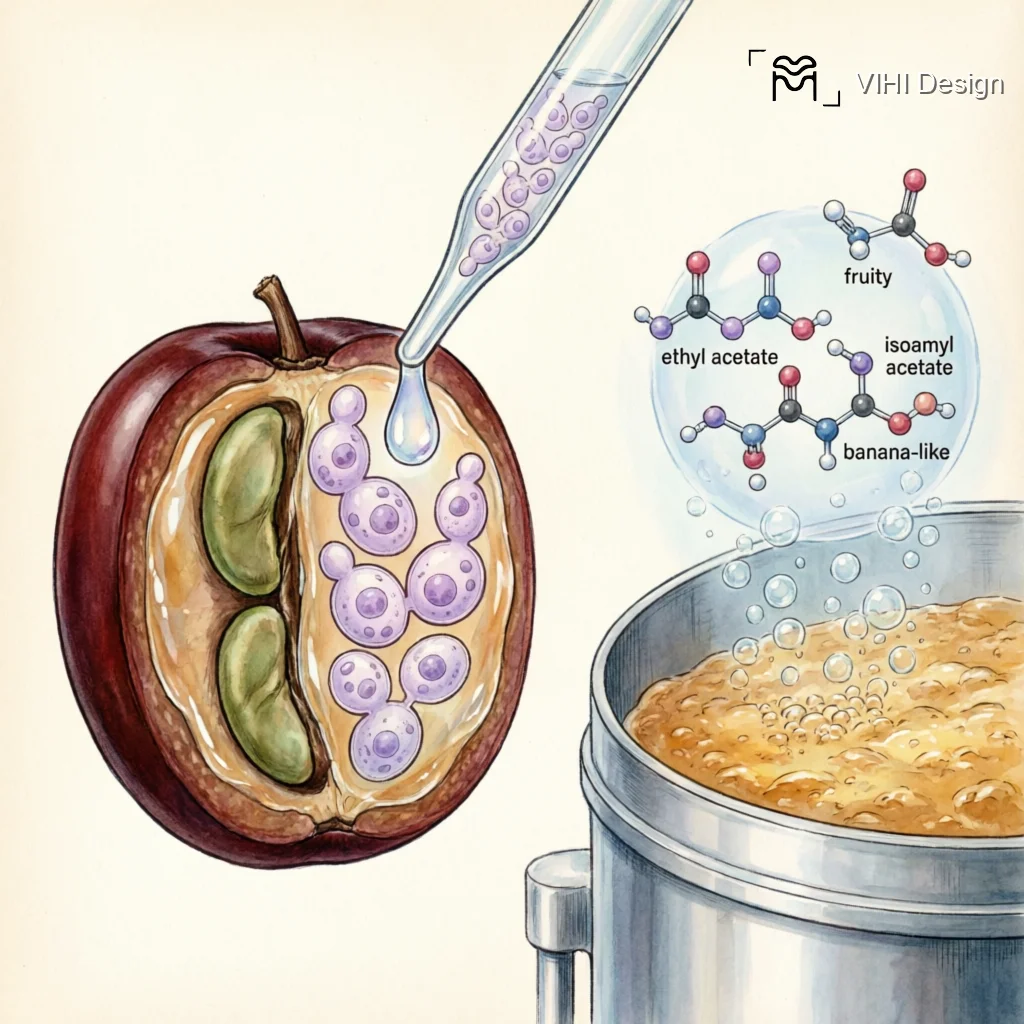
Controlled inoculation intervenes directly in the microbial ecosystem by introducing a high population of a selected strain or defined consortium at the initiation of fermentation. This practice is predicated on the principle of competitive exclusion, where the inoculated strain dominates the substrate, outcompetes wild microbiota, and directs metabolic activity.
- Methodology and Rationale: A starter culture, typically containing 106–107 CFU/mL of a specific yeast strain, is added to the depulped coffee. The primary objectives are:
- Microbial Dominance: To ensure the selected strain becomes the dominant metabolic agent.
- Metabolic Direction: To promote specific enzymatic and fermentative pathways known to generate target flavor precursors.
- Process Standardization: To reduce batch-to-batch variation and increase predictability.
- Strain Selection Criteria: Not all yeasts are suitable. Selection is based on functional traits:
- Stress Tolerance: Ability to thrive in high-sugar, acidic environments with potential antimicrobial compounds from the cherry.
- Enzymatic Profile: Production of pectinolytic enzymes (for mucilage degradation), glycosidases (for releasing bound aroma compounds), and specific esterases.
- Fermentation Metabolism: Control over the production of ethanol, glycerol, and organic acids, and the minimization of off-flavor compounds like volatile acidity.
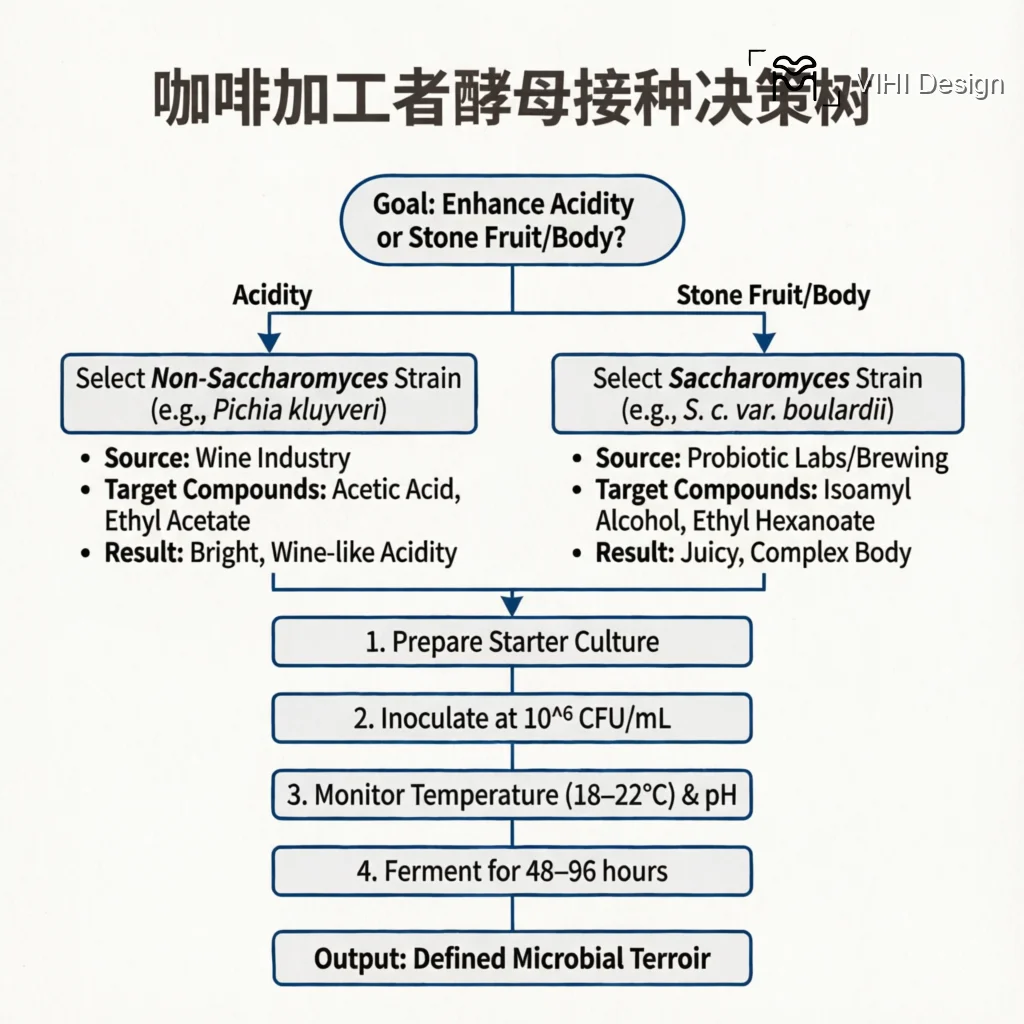
- Non-Saccharomyces vs. Saccharomyces: Research explores both non-Saccharomyces yeasts for unique aromatic profiles (e.g., fruity esters from Pichia kluyveri) and robust Saccharomyces cerevisiae strains for reliable alcoholic fermentation.
- Theoretical Advantages: The controlled approach theoretically allows for the design of flavor profiles. By matching a yeast’s known metabolic output with desired sensory attributes (e.g., specific ester for stone fruit note, high glycerol for body), processors can engineer post-harvest processing with a level of precision previously unattainable, transforming fermentation from a removal process into a flavor-development stage.
From Theory to Practice: The Technical Execution of Inoculated Fermentation
Translating the theoretical advantages of inoculated fermentation into consistent, high-quality results demands rigorous protocol. This is not a simple substitution of wild for tamed microbes; it is the imposition of a controlled biological environment upon an agricultural product. Success hinges on three pillars: strain selection, substrate preparation, and environmental management. The chosen yeast or bacteria strain must possess a known metabolic pathway that aligns with the target flavor. For instance, selecting Saccharomyces cerevisiae var. boulardii for its high ester production requires ensuring the coffee’s mucilage provides the precursor compounds. The processor must then prepare the substrate—the depulped coffee—to favor the inoculated strain, often by managing the initial Brix level and pH to give it a competitive advantage over wild microflora.
Quantifying the Impact: Analytical Differences in the Cup and Extraction
Beyond flavor notes, inoculated fermentation leaves a measurable fingerprint on the coffee’s physical and chemical composition. These analytical shifts directly inform brewing parameters and final cup quality.
- Total Dissolved Solids (TDS): Coffees from robust inoculated fermentations often exhibit a broader optimal TDS range (1.15% – 1.45%) due to increased glycerol and polysaccharide content, which enhances perceived body and sweetness without necessarily increasing bitterness.
- Extraction Yield (EY): The enzymatic activity of specialized strains can modify the cellular structure of the bean, potentially making solubles more accessible. This can raise the optimal EY window, allowing baristas to target extractions of 18% – 22% with greater clarity and reduced risk of astringency.
- Particle Size Distribution: The altered bean density and hardness from specific fermentations may require grind size adjustment. A yeast strain that promotes pectin breakdown can result in a slightly less dense bean, often needing a marginally finer grind to achieve target flow rates and prevent under-extraction.
Barista’s Field Notes: Addressing Common Struggles
Two decades behind the bar and cupping table reveal a gap between academic promise and daily reality. Here is how to navigate the common pitfalls.
- Inconsistent Lots for Roasters: The variation you taste is likely real. Inoculation does not erase terroir; it layers upon it. A “stone fruit” yeast strain will express differently in a Colombian Caturra versus a Kenyan SL28. The roaster must cup blind against a washed or natural control from the same farm and harvest. This isolates the fermentation’s contribution from the origin’s baseline.
- Failed Wild Ferments at Home: Off-flavors like vinegar (acetic acid) or cheese (butyric acid) signal uncontrolled microbial succession. Wild fermentation is not “set and forget.” It requires constant monitoring of temperature and pH to guide the process. Inoculation with a known strain is a tool for dominance, reducing the ecological niche for spoilage microbes.
- Designer Yeast vs. Marketing Hype: The distinction is in the specificity of outcome. Marketing hype uses vague terms like “more complex.” Legitimate “designer” strains provide a documented metabolic profile (e.g., “produces isoamyl acetate at a threshold of X ppm”). Ask for the strain’s genus, species, and known metabolite data. If the producer cannot provide this, the term is likely ornamental.
Pro-Tip: For processors experimenting with inoculation: always run a parallel control batch using the native, wild microflora. The side-by-side cupping is the only way to truly isolate and taste the specific contribution of your inoculated strain, separating its effect from the base terroir of the coffee itself.
The Future Lens: Precision Fermentation as a Cornerstone of Coffee Agronomy
The trajectory points toward fermentation design becoming as integral as variety selection or soil management. We are moving past single-strain inoculation into sequenced, multi-strain fermentations that mimic a desired ecological succession. Research is focusing on starter cultures tailored to specific coffee varieties, recognizing that the mucilage composition of a Geisha differs fundamentally from a Bourbon. The next frontier is leveraging these tools not just for flavor, but for functional outcomes: using microbial consortia to reduce water usage in processing or to pre-digest compounds that contribute to post-harvest defects, thereby raising the quality floor of an entire harvest.
Technical Summary
- Inoculated fermentation applies selected microbial strains to coffee mucilage, transforming fermentation from a mere removal process into a targeted flavor-development stage.
- Successful execution requires precise strain selection based on known metabolites, careful substrate preparation, and tight control of environmental variables like temperature and pH.
- The process alters the coffee’s physical structure, leading to measurable impacts on optimal brewing parameters, including a TDS range of 1.15%–1.45% and an EY window of 18%–22%.
- Practical evaluation demands comparing inoculated lots against a control from the same origin to distinguish the fermentation effect from inherent terroir.
- The field is advancing toward multi-strain, sequenced fermentations and strain-variety pairing, positioning precision fermentation as a core agronomic practice for quality and sustainability.
“`json
“`
“`json
“`
Leave a Reply