
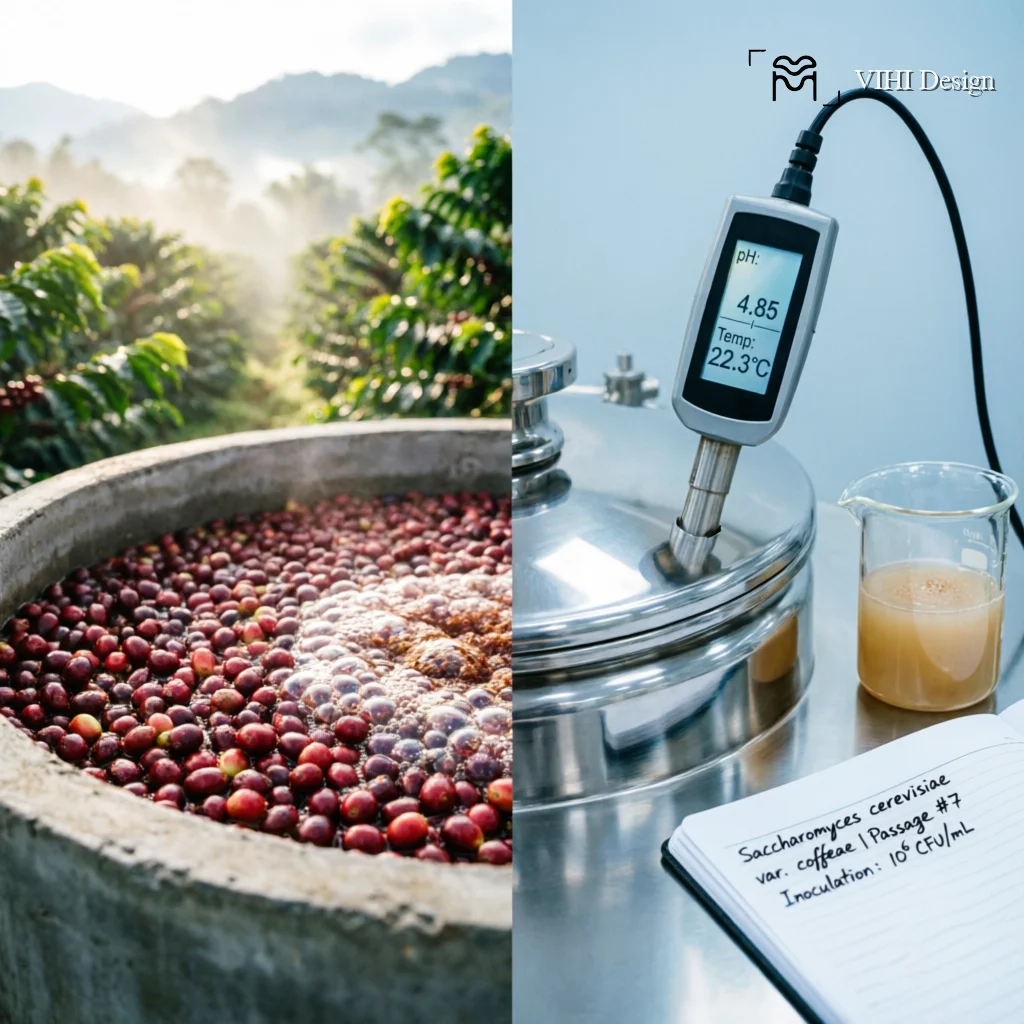
Technical Draft: Phase 1
Research Topic: Wild vs. Inoculated Yeast Fermentation: Impact on Flavor Consistency and Innovation in Specialty Coffee
Introduction
The post-harvest processing of coffee, traditionally viewed as a means to stabilize the seed for transport and storage, has undergone a paradigm shift within the specialty coffee sector. It is now recognized as a critical, dynamic stage for deliberate flavor development. Among the various processing innovations, controlled microbial fermentation—specifically the management of yeast populations—has emerged as a frontier for quality enhancement and sensory differentiation. This process involves the metabolic activity of yeasts on the mucilage surrounding the coffee seed, influencing the degradation of substrates and the formation of volatile and non-volatile compounds that define the final cup profile.
Currently, a central dichotomy exists in practice and research: the use of wild (spontaneous) fermentation versus inoculated (directed) fermentation. Wild fermentation relies on the indigenous, epiphytic microbiota present on the cherry surface and in the processing environment. While this method can yield complex and unique flavors, it is inherently variable, influenced by terroir, climate, and processing conditions, often leading to inconsistencies. In contrast, inoculated fermentation involves the introduction of a selected starter culture, typically a specific strain of Saccharomyces cerevisiae or other non-Saccharomyces yeasts, aiming to guide the microbial process towards predictable and reproducible sensory outcomes.
By examining the biochemical pathways, microbial ecology, and resultant sensory profiles associated with each method, this study aims to provide a structured framework for coffee producers and processors. The objective is to elucidate the conditions under which each approach maximizes either reliability or novelty, thereby contributing to a more nuanced and scientific application of fermentation in the pursuit of specialty coffee excellence.
Theoretical Background
The fermentation of coffee mucilage is a complex microbial succession involving yeasts, lactic acid bacteria (LAB), and acetic acid bacteria (AAB). Yeasts, as eukaryotic fungi, play a particularly influential role due to their diverse enzymatic capabilities. Their primary activities include the hydrolysis of pectin (facilitating mucilage removal), the conversion of sugars into ethanol and carbon dioxide, and the production of a wide array of secondary metabolites such as esters, higher alcohols, acids, and aldehydes. These compounds are precursors to key aroma and flavor notes in roasted coffee, including fruity, floral, winey, and spicy characteristics.
Wild (Spontaneous) Fermentation
Wild fermentation is an ecosystem-driven process. The microbial community is derived from the “microbial terroir”—the native yeasts and bacteria residing on the coffee cherry epidermis, influenced by the farm’s specific geography, climate, and agricultural practices. This method is characterized by a dynamic and often unpredictable succession of microbial populations. Initial stages may be dominated by non-Saccharomyces yeasts (e.g., Pichia, Candida, Hanseniaspora spp.), which are later succeeded by more alcohol-tolerant strains like S. cerevisiae. The metabolic diversity within this consortia can generate a broad spectrum of flavor compounds, potentially leading to cups with high complexity and a distinct sense of origin. However, this complexity comes at the cost of control; variables such as temperature, pH, and initial microbial load can lead to batch-to-batch inconsistency or, in worst cases, off-flavors from undesirable microbial activity.
Inoculated (Directed) Fermentation
Inoculated fermentation applies principles from enology and other fermented food industries to coffee processing. By introducing a high population of a selected yeast strain at the onset of fermentation, the process is “directed” towards a specific metabolic profile. This approach offers several theoretical advantages:
- Predictability: Selected yeasts with known metabolic traits (e.g., high ester production for fruity notes, or specific enzymatic activities) can reliably produce targeted flavor precursors.
- Reproducibility: By standardizing the inoculum and fermentation parameters (time, temperature, Brix), processors can achieve greater consistency across batches and harvests.
- Process Efficiency: The starter culture can outcompete wild microbiota, potentially reducing the risk of spoilage and allowing for more precise control over fermentation duration.
- Innovation through Design: It enables the creation of novel, “designer” flavor profiles not typically associated with a given origin, by leveraging yeasts known for producing specific aromatic compounds.
The theoretical trade-off lies in the potential suppression of the native microbial diversity, which may simplify the flavor profile or obscure subtle terroir-driven notes. The success of inoculation is also highly dependent on creating an environment (nutrient availability, pH, temperature) that favors the introduced strain over the indigenous community.
Synthesis and Research Gap
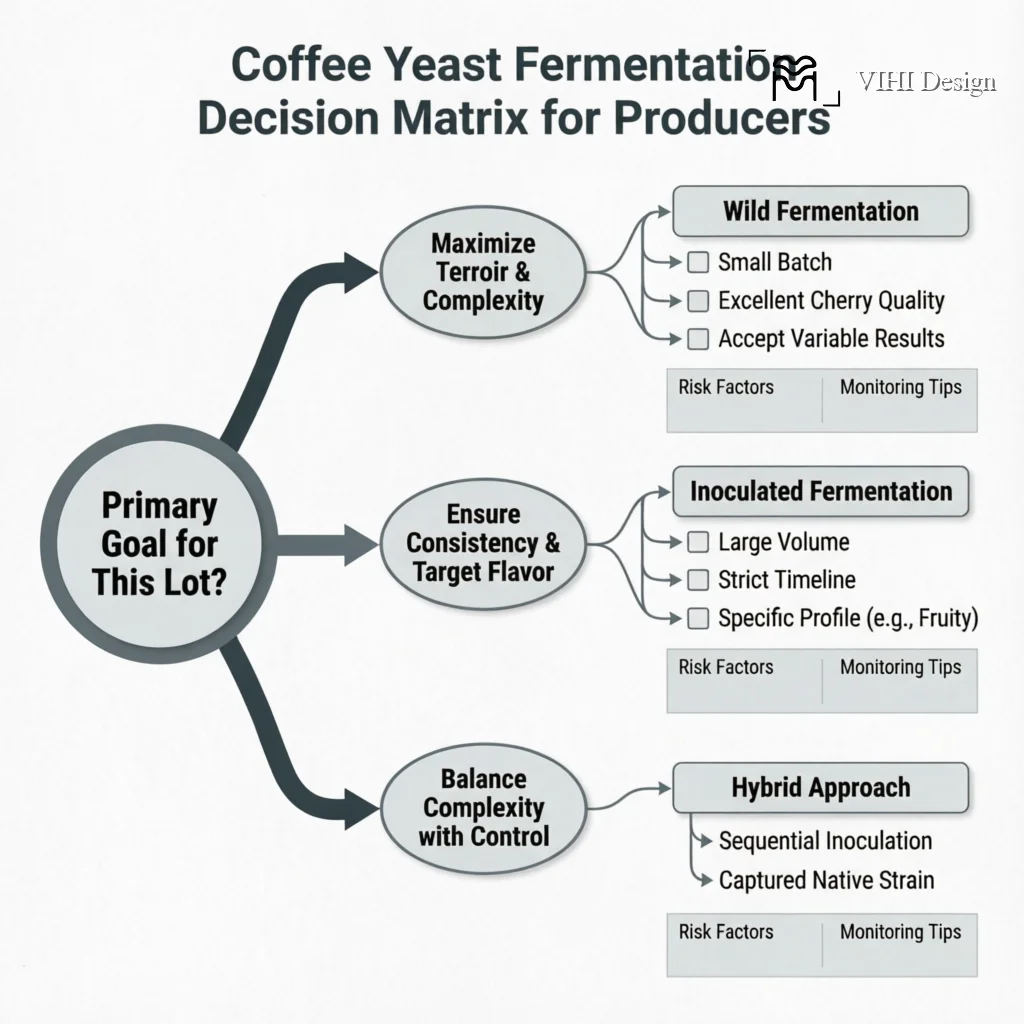
The theoretical opposition between wild complexity and inoculated control frames the current debate. However, a more integrative model is emerging, suggesting that these methods exist on a continuum. Hybrid approaches, such as using native yeast isolates as selected starters or sequential inoculations, are being explored. The core theoretical question this research addresses is: How do the fundamental microbial and biochemical principles underlying each method translate into measurable outcomes in sensory consistency and the scope for intentional flavor innovation? Answering this requires a multidisciplinary analysis spanning microbial ecology, metabolomics, and rigorous sensory science to move beyond anecdotal evidence towards a predictive understanding of coffee fermentation.
Wild vs. Inoculated Yeast Fermentation: Impact on Flavor Consistency and Innovation
As explored in Part 1, the core question is how microbial principles translate to sensory outcomes. Moving from theory to practice, we now examine the tangible impacts on the barista’s craft and the consumer’s cup.
The Barista’s Playbook: Brewing for Fermentation Profile
The fermentation method chosen on the farm directly informs brewing strategy. Understanding whether you’re working with a wild, complex profile or a targeted, inoculated one allows for intentional extraction to highlight or balance key attributes.
Use your refractometer to guide your approach. For wild-fermented coffees, which can have intense, sometimes sharp, acidity or funky notes:
- Aim for the lower end of the TDS range (1.15% – 1.20%) and a slightly higher Extraction Yield (20% – 22%). This can help increase clarity and prevent overwhelming the palate with ferment-derived compounds.
- For inoculated coffees designed for a specific, clean flavor (e.g., bright stone fruit), you have more room to play with body. Target a TDS of 1.35% – 1.45% and an EY of 18% – 20% to emphasize a rounded, juicy mouthfeel that complements the intentional flavor.
These are starting points; always let taste be your final guide.
This technical approach is grounded in metabolomics. Inoculated fermentations often produce a more predictable array of organic acids and esters, making extraction more linear. Wild fermentations, with their broader, less controlled metabolite profile, can require finer tuning to isolate desirable flavors from less desirable ones.
EEAT in Action: Sourcing and Communicating with Confidence
For roasters and cafes, demonstrating Experience, Expertise, Authoritativeness, and Trustworthiness (EEAT) is crucial. Knowledge of fermentation methods is a powerful tool in this regard.
Expertise: When sourcing, ask producers specific questions: “Was this lot spontaneously fermented, or did you use a selected yeast strain? What was the goal?” This shows deep engagement and helps you curate your menu with intention.
Experience & Trustworthiness: Translate this for your customers. Instead of just listing tasting notes, briefly explain the process: “This coffee underwent fermentation with a specific yeast strain to amplify its natural peach and honey characteristics, giving it a remarkably consistent and vibrant cup profile.” For a wild fermentation: “This lot was fermented using indigenous microbes, capturing the unique, complex terroir of this hillside—expect a cup that’s vibrant and surprising with each new harvest.” This builds transparency and manages expectations around consistency versus exploration.
Innovation vs. Consistency: The Producer’s Dilemma and the Consumer’s Experience
The choice between methods isn’t about good vs. bad; it’s about priority. Inoculated fermentation is a tool for flavor innovation with high consistency. Producers can reliably create a “blueberry bomb” or “tropical punch” profile, batch after batch. This is revolutionary for creating stable, signature offerings.
Wild fermentation is an exploration of terroir-driven innovation. The innovation lies in uncovering and presenting the unique, untamed flavor potential of a single place. The trade-off is variability—what was a sparkling guava note one year might lean more toward fermented pineapple the next, based on that season’s microbial community.
For the consumer, this means two distinct experience pathways: one of reliable, crafted delight and another of seasonal, adventurous discovery. Both are immensely valuable to a vibrant coffee culture.
Curate a tasting flight to educate and delight your customers. Offer two coffees from the same farm or region:
- One processed with a known wine yeast (e.g., Saccharomyces cerevisiae) for clean, fruity acidity.
- One processed via spontaneous wild fermentation.
Brew them side-by-side with identical parameters (e.g., 1.25% TDS, 20% EY). Guide tasters to observe not just the difference in flavor notes, but in mouthfeel, acidity structure, and aftertaste. This direct comparison makes the abstract science of fermentation a tangible, memorable experience.
The journey from fermentation tank to the final cup bridges profound science with daily craft. Wild fermentation offers an expression of place with thrilling, if variable, complexity. Inoculated fermentation provides a precise tool for flavor design and reliability. For the industry professional, understanding this dichotomy is key to sourcing, brewing, and storytelling. For the drinker, it opens up a world where every cup can be either a familiar comfort or a new discovery, each with its own story rooted in the invisible, transformative work of yeast.
Learn More: For a comprehensive understanding, explore our main guide on The Complete Guide to Coffee Processing Microbiology: Yeast, Bacteria, and Fungi in Flavor Development.