
Wild vs. Cultured Yeast in Coffee Processing: Terroir Expression vs. Flavor Precision
Introduction
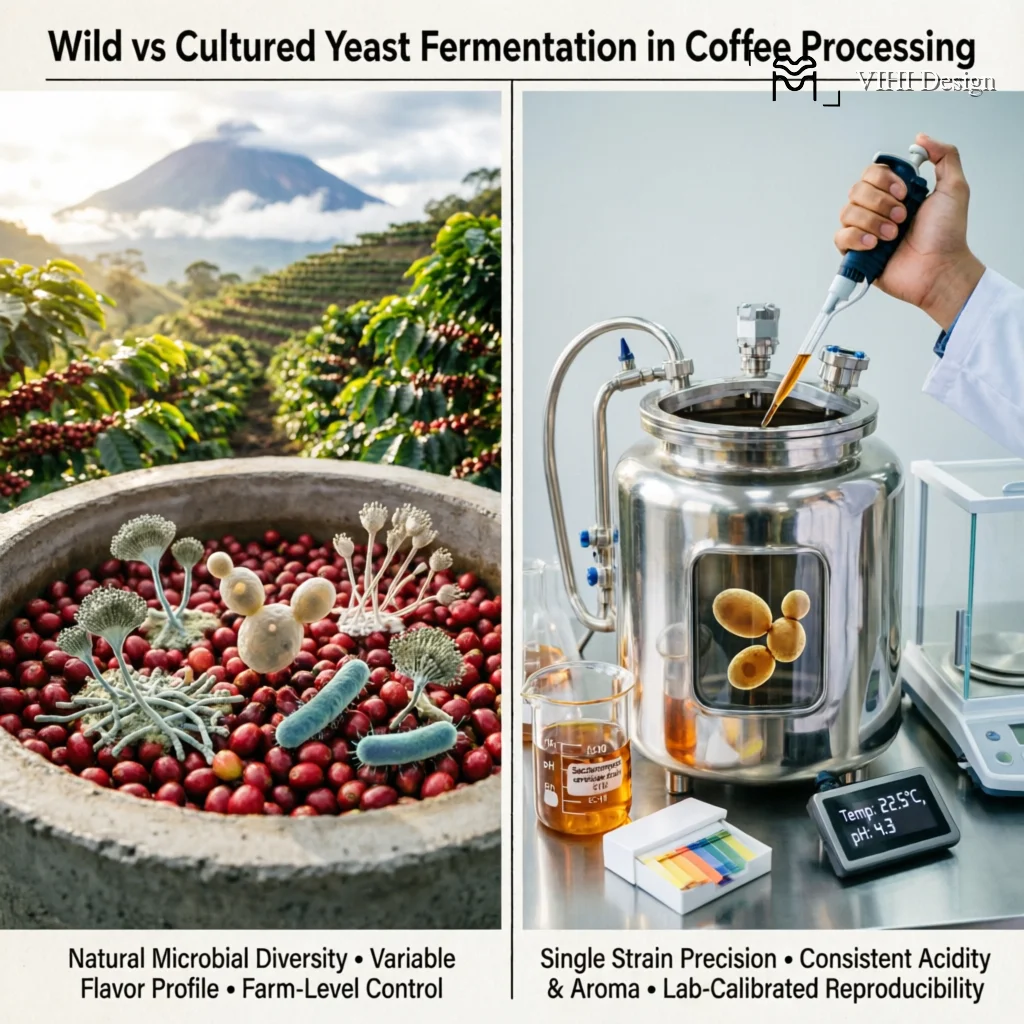
The pursuit of quality and distinctiveness in specialty coffee has driven innovation beyond the farm and roastery, deeply into the microbial ecology of post-harvest processing. Traditionally, coffee fermentation has been viewed as a simple, somewhat uncontrolled step of mucilage removal, reliant on ambient microorganisms. However, a paradigm shift is underway, recognizing fermentation as a critical determinant of final cup profile. At the heart of this shift lies a fundamental choice: to harness the indigenous, complex consortium of wild yeasts and bacteria present on the farm, or to introduce a selected, single-strain or defined blend of cultured yeast (Saccharomyces cerevisiae and non-Saccharomyces species) to guide the process. This choice presents the coffee industry with a compelling dichotomy: the pursuit of terroir expression versus the pursuit of flavor precision.
This research investigates the scientific and sensorial implications of this choice. Wild fermentation represents an expression of place; the unique microbial fingerprint of a specific farm, region, or microclimate is imprinted onto the coffee seed, potentially creating unreplicable, complex, and “authentic” flavors. Conversely, cultured yeast inoculation offers a tool for standardization, predictability, and the targeted enhancement or creation of specific flavor attributes—such as pronounced fruitiness, wine-like acidity, or floral notes—transcending geographical limitations. The central question this work addresses is not which method is superior, but rather how each approach shapes the biochemical pathways during fermentation and, consequently, the volatile and non-volatile compound profile of the roasted coffee, thereby defining its sensory identity and value proposition in the global specialty market.
Theoretical Background
Coffee processing fermentation is primarily a microbial succession of yeasts, lactic acid bacteria (LAB), and acetic acid bacteria (AAB) metabolizing the sugars and acids in the coffee mucilage. This metabolism generates heat, acids, alcohols, and a vast array of volatile aromatic compounds (esters, higher alcohols, aldehydes, ketones) as byproducts. A critical theoretical framework for this study is that these microbial metabolites diffuse into the parchment and seed, where they can interact with the bean’s biochemical constituents, becoming precursors to flavor and aroma compounds developed during roasting (Maillard reaction, Strecker degradation).
Microbial Ecology of Wild Fermentation
Wild, or spontaneous, fermentation is governed by the principle of terroir, extended beyond soil and climate to include the native microbiome. The microbial community structure is influenced by countless variables: coffee variety, fruit maturity, soil health, water source, ambient temperature, humidity, and processing infrastructure hygiene. This results in a dynamic, often unpredictable succession. Early stages are typically dominated by enterobacteria and wild yeasts (e.g., Pichia, Candida, Hanseniaspora spp.), which are later succeeded by LAB and, if oxygen is present, AAB. The metabolic complexity arising from this multi-species interaction is theorized to produce a broader, more nuanced spectrum of flavor precursors, directly linking the cup profile to its specific origin. However, this method carries risks of off-flavors from undesirable microbial activity (e.g., butyric acid production, over-acetic acid) and batch-to-batch inconsistency.
Principles of Cultured Yeast Inoculation
Inoculation with cultured yeast applies principles from oenology and brewing to coffee. By introducing a high population of a specific, known yeast strain at the fermentation’s outset, the goal is to dominate the microbial ecology, outcompeting wild populations and directing metabolism along a predictable pathway. Different yeast strains possess unique enzymatic profiles that influence the production of key sensory molecules. For instance, some strains are selected for high esterase activity, promoting fruity ester formation (ethyl acetate, isoamyl acetate), while others may enhance body or specific acidic profiles. This approach offers a high degree of control, reduces fermentation time, minimizes spoilage risk, and allows for the intentional “flavor design” of coffee, potentially decoupling flavor from a strict geographical identity and creating reproducible, signature profiles.
Terroir Expression vs. Flavor Precision: A Conceptual Framework
The conflict between these two approaches can be framed within broader agricultural and food production debates. Terroir expression aligns with artisanal, traditional food values, where uniqueness and a sense of place are paramount. The coffee bean is seen as a vessel for a specific ecosystem’s story. In contrast, flavor precision aligns with modern, technologically-assisted food science, where consumer-desired traits are identified and reliably produced. This research posits that these are not mutually exclusive but exist on a spectrum. The emerging practice of using “native cultivar” yeasts—strains isolated and purified from a specific farm’s environment—represents a synthesis, attempting to capture a reproducible element of terroir. Understanding the biochemical and sensory outcomes across this spectrum is essential for producers, roasters, and consumers to make informed decisions about value, authenticity, and flavor in specialty coffee.
Wild vs. Cultured Yeast in Coffee Processing: Terroir Expression vs. Flavor Precision (Part 2)
Following our exploration of the microbial spectrum, we now turn to the practical implications for those brewing and enjoying the final cup. The choice of yeast is not just a producer’s decision; it creates a roadmap that guides the barista’s extraction and shapes the consumer’s experience.
From Fermentation Tank to Espresso Cup: A Barista’s Guide
The fermentation process sets a coffee’s potential, but it’s in the brew where that potential is realized. Coffees processed with different yeasts often demand nuanced approaches to extraction to highlight their unique attributes.
- Wild Yeast/Natural Process: These coffees can present intense, complex fruit and funk. To balance this and achieve clarity, aim for the lower end of the standard extraction range. A slightly faster shot or coarser grind can prevent overwhelming fermented notes, allowing the fruit sweetness to shine. Pay close attention to your Total Dissolved Solids (TDS).
- Cultured Yeast/Washed Process: Designed for clarity and specific flavors, these coffees often thrive with higher extractions. A finer grind or longer ratio can help articulate the precise enzymatic notes (like pear, lychee, or specific florals) introduced by the selected yeast strain.
- Native Cultivar Yeast Coffees: Treat these as a unique middle path. Start with a standard recipe, but be prepared to experiment. The goal is to find the sweet spot that showcases the reproducible terroir character—whether it’s a distinct regional fruit or a subtle herbal note.
To objectively compare these coffees, standardize your measurements. For filter coffee, a 1:16 to 1:17 ratio is a good starting point. For espresso, use these key metrics:
- Brew Yield: A 1:2 to 1:2.5 ratio (e.g., 18g in, 36-45g out) is standard.
- Extraction Yield (EY): Target 18% to 22%. Coffees with cultured yeasts often excel at the higher end of this range, while wild ferments may taste best at 18-20%.
- Total Dissolved Solids (TDS): Aim for 1.15% to 1.45%. This measures strength. A wild natural might be pleasing at 1.3% TDS and 19% EY, while a cultured washed might need 1.4% TDS and 21% EY to fully express itself.
Tracking these numbers helps move beyond subjective taste to understand how the coffee’s processing history physically interacts with water.
Evaluating Value & Authenticity: A Consumer’s Perspective
For the discerning coffee drinker, understanding yeast processing demystifies flavor origins and helps assess value. This knowledge is a cornerstone of EEAT (Experience, Expertise, Authoritativeness, Trustworthiness) in specialty coffee, allowing for transparent communication from farm to café.
Experience & Expertise in Communication: A trustworthy café or roaster should be able to explain why a coffee tastes the way it does. When you encounter a coffee labeled with a specific yeast strain (e.g., “Sacchromyces cerevisiae Strain XYZ”) or as “native cultivar yeast,” this represents a significant investment in precision and control by the producer. You’re paying for reproducible flavor science.
Authenticity & Terroir: A wild fermentation coffee speaks to a specific place and time—the authentic, uncontrolled microbiome of that farm during that harvest. Its flavor is a snapshot of terroir. The value lies in its uniqueness and natural expression. There is a “true story” in its variability.
Making an Informed Choice:
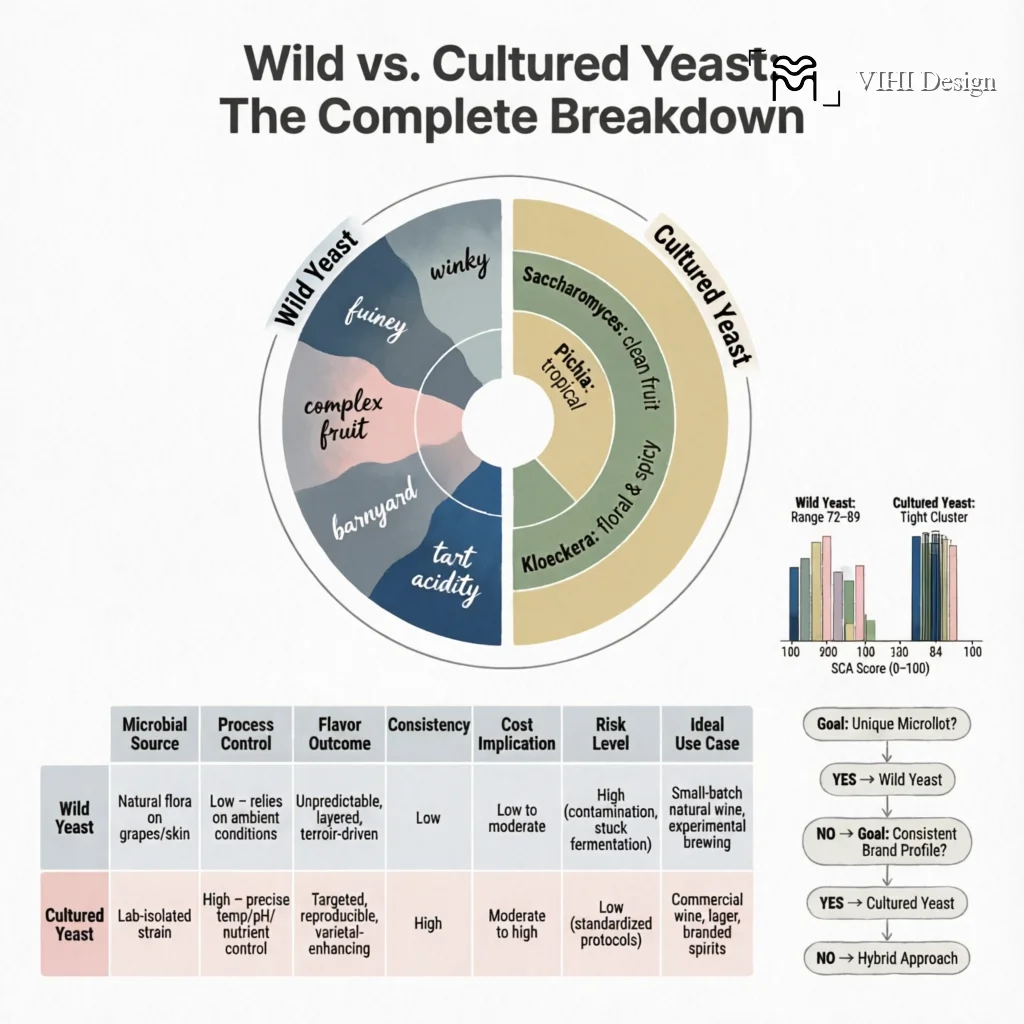
- Seek Flavor Precision & Consistency? Choose a coffee processed with a selected cultured yeast. You are likely to get the specific tasting notes (tropical fruit, red wine, etc.) described, batch after batch.
- Seek Adventure & Sense of Place? Choose a wild fermentation or natural process coffee. Embrace the year-to-year variation as part of the story, celebrating the untamed character of the farm’s environment.
- Intrigued by the Best of Both Worlds? Seek out coffees using native cultivar yeasts. These offer a compelling narrative of place with an added layer of scientific curation for more reliable quality.
Ultimately, the “wild vs. cultured” debate isn’t about right or wrong. It’s about intention. By understanding the science and craft behind yeast selection, everyone in the coffee chain—from producer to barista to enthusiast—can better appreciate the profound impact of these microscopic organisms on the flavor in the cup, and make choices that align with their values for taste, transparency, and terroir.
Learn More: For a comprehensive understanding, explore our main guide on The Complete Guide to Coffee Processing Microbiology: Yeast, Bacteria, and Mold in Flavor Development.