
Introduction
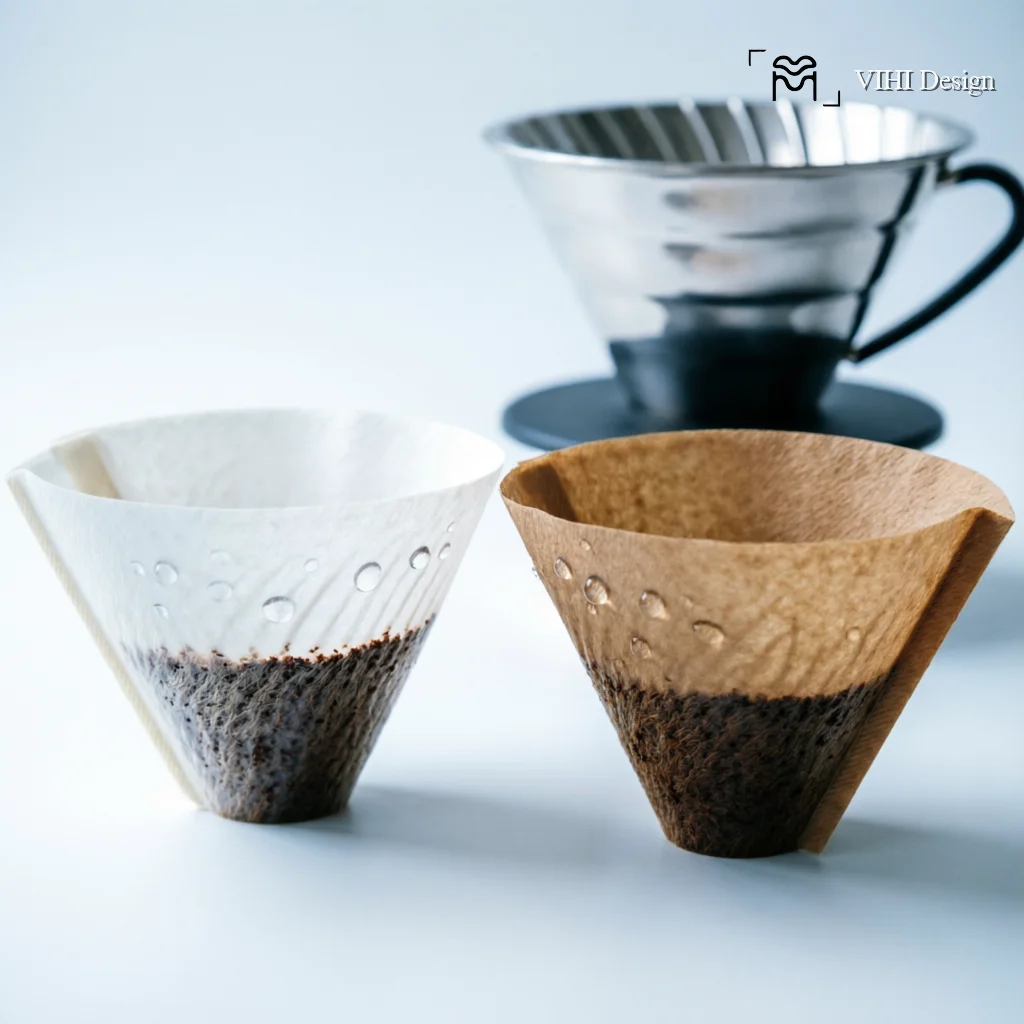
In the pursuit of the perfect pour-over, the coffee community has rightfully dedicated significant attention to variables such as grind size, water temperature, and pouring technique. However, the filter paper itself—the final interface between the coffee slurry and the brewed beverage—remains a critical yet often underexamined component of the extraction system. For users of the Kalita Wave, a brewer celebrated for its flat-bottomed geometry that promotes even extraction and stability, the choice between bleached (white) and unbleached (natural brown) paper filters presents a tangible decision point with purported sensory consequences. Anecdotal reports from baristas and enthusiasts suggest divergent profiles: bleached filters are frequently described as yielding a “cleaner” cup, while unbleached filters are often associated with heightened “body” or a “papery” taste. Despite these claims, a rigorous scientific and practical examination of how these filter types mechanistically influence the brewing process is lacking in accessible literature.
This guide aims to bridge that gap. We posit that the filter is not a neutral medium but an active participant in extraction and filtration. The bleaching process—or lack thereof—fundamentally alters the physical and chemical properties of the filter paper, including its porosity, wettability, and residual compound profile. These alterations, in turn, modulate the flow dynamics, the adsorption of coffee oils and fines, and potentially the transfer of flavors from the paper to the beverage. Consequently, the selection of a bleached versus an unbleached Kalita Wave filter is a deliberate parameter adjustment, not merely an aesthetic or ethical choice. This investigation will delineate the theoretical underpinnings of these differences and provide a structured framework for understanding how they manifest in the cup, empowering the brewer to make an informed selection tailored to their desired sensory outcome.
Theoretical Background
The function of a pour-over filter is tripartite: it acts as a mechanical barrier for solid particles (fines), a semi-permeable membrane regulating the flow of dissolved solutes, and a potential adsorptive surface for specific coffee compounds. The material science of the filter paper is therefore paramount. Kalita Wave filters are typically manufactured from wood pulp, which consists primarily of cellulose, hemicellulose, and lignin.
1. Material Composition and Processing: Unbleached filters retain their natural lignin, a complex polymer that provides rigidity and contributes to the characteristic brown color. The bleaching process, whether using oxygen (elemental chlorine-free, ECF) or hydrogen peroxide (totally chlorine-free, TCF), aims to delignify and brighten the pulp. This process significantly reduces the lignin content and alters the microstructure of the cellulose fibers, often leading to a more refined and less porous sheet. The residual chemical signatures of these processes, though minimal and food-safe in certified products, can differ.
2. Physical Properties Governing Brewing:
Porosity and Flow Rate: The bleaching process can affect the fiber bonding and sheet density. A less porous bleached filter may result in a slightly slower drawdown, increasing total contact time, whereas a more porous unbleached filter could permit faster flow. This directly impacts the extraction time and equilibrium.
Wettability and Channeling: The surface energy of the paper is influenced by residual lignin and processing aids. Bleached papers often exhibit higher, more uniform hydrophilicity, allowing for rapid and even saturation during the pre-wetting (“rinsing”) phase. Poor wettability can lead to uneven extraction and channeling, as water seeks the path of least resistance.
Fines Migration and Clogging: The internal pore structure determines the filtration efficiency. A tighter matrix (common in bleached filters) may trap more fines near the surface, potentially increasing resistance over the brew. A more open structure may allow deeper fines migration, affecting clarity but potentially reducing drastic flow deceleration.
3. Chemical Interactions and Sensory Impact:
Adsorption of Oils and Polyphenols: Cellulose fibers can adsorb hydrophobic compounds like coffee oils (cafestol) and certain bitter-tasting polyphenols. The modified surface chemistry of bleached fibers may alter this adsorption capacity, potentially influencing perceived body and bitterness.
Transfer of Flavor Compounds: Unbleached filters contain lignin and associated wood-sugar compounds. When exposed to hot water, these can solubilize, potentially introducing subtle sweet, woody, or papery notes—a phenomenon often labeled as “paper taste.” A thorough pre-rinse mitigates but may not eliminate this transfer, as it involves diffusion from the bulk of the paper, not just the surface. Bleached filters, with most lignin removed, largely eliminate this source of exogenous flavor.
Thus, the choice between bleached and unbleached transcends a simple binary; it is a selection between two different material systems, each with distinct hydrodynamic and sorptive behaviors. Understanding these foundational principles allows us to hypothesize their sensory outcomes and moves the discussion from subjective preference to objective, adjustable parameter within the pour-over brewing framework.
The Ultimate Guide to Kalita Wave Filters: Bleached vs. Unbleached
Part 2: Practical Brewing & Sensory Outcomes
Armed with the knowledge that bleached and unbleached filters are distinct material systems, we can now translate theory into practice. How do these differences manifest in your cup, and how can you adjust your technique to harness them?
Dialing In Your Recipe: A Barista’s Playbook
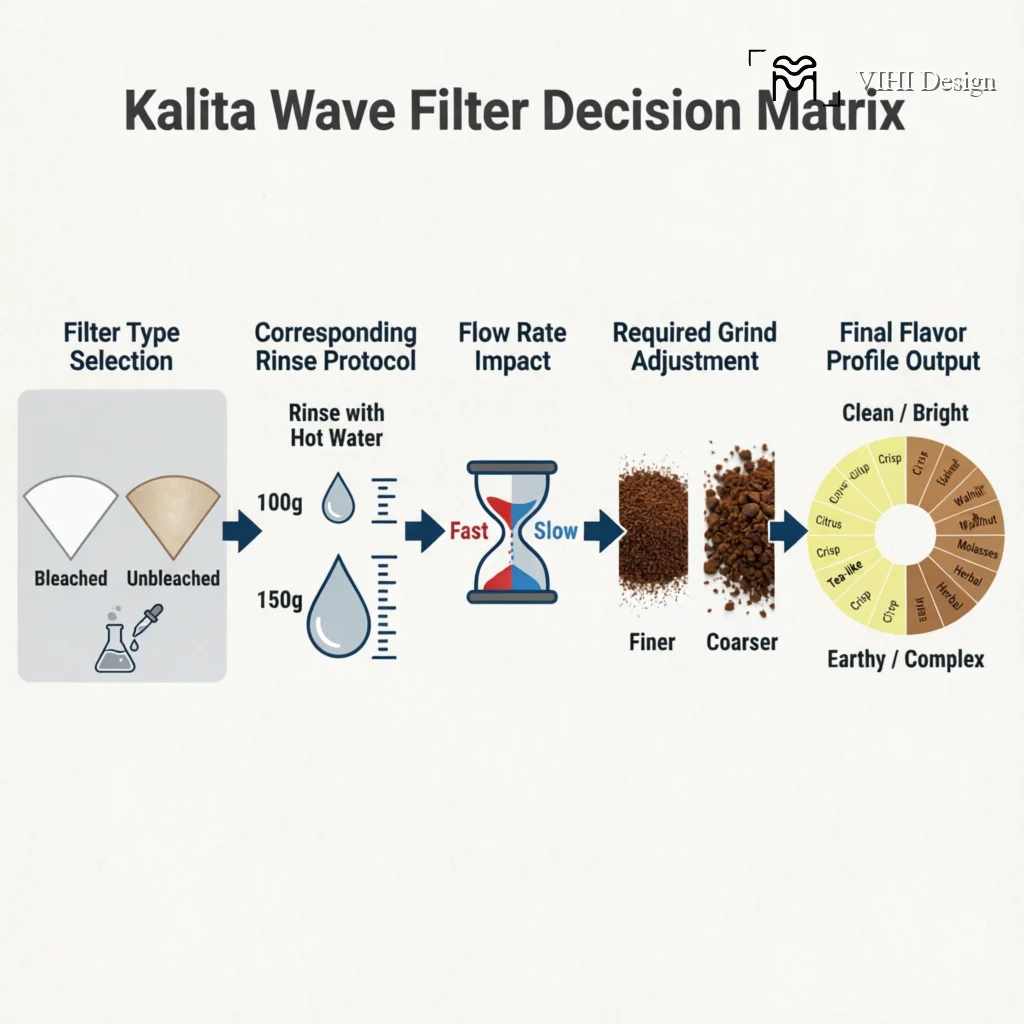
The hydrodynamic variance between filters directly impacts extraction. The faster flow of a bleached filter, all else being equal, can lead to a slightly lower extraction yield (EY). Conversely, the slower, more controlled drawdown of an unbleached filter can promote higher extraction, but risks over-extraction if your grind is too fine.
When switching from bleached to unbleached, consider coarsening your grind by a small increment (e.g., half a notch on your grinder). This compensates for the slower flow rate, helping you hit your target brew time (typically 3:00-3:30 for a 15g:250g brew) and avoid astringency. When switching from unbleached to bleached, you may need a slightly finer grind to prevent underextraction.
Your target metrics remain the industry-standard sweet spot: a Total Dissolved Solids (TDS) of 1.15% – 1.45% and an Extraction Yield (EY) of 18% – 22%. The filter choice is a lever to help you reach this window with different coffees.
- For a Dense, High-Altitude Light Roast: An unbleached filter can be advantageous. Its slower flow and potential for higher extraction can help pull more sweetness and complex sugars from a hard-to-extract bean, pushing you toward that 22% EY goal.
- For a Fragile, Floral Light Roast or a Faster-Roasted Coffee: A bleached filter’s cleaner profile and faster flow can highlight delicate top notes and bright acidity. It helps prevent over-extraction of bitter compounds, keeping the cup vibrant and within the ideal TDS range.
The Taste Test: A Side-by-Side Experience
The most enlightening exercise is a direct comparison. Brew the same coffee, with the same water, at the same temperature, back-to-back, changing only the filter.
Based on extensive professional testing, here’s the typical sensory profile you can expect:
- Bleached Filter Cup: Often perceived as “brighter,” “cleaner,” or “more crisp.” The acidity is more pronounced and delineated. The body tends to be lighter, creating a tea-like clarity that allows nuanced flavors—like jasmine, bergamot, or stone fruit—to shine without interference.
- Unbleached Filter Cup: Typically presents as “sweeter,” “rounder,” or with “deeper” notes. The acidity is often mellower and integrated. The slightly heavier body and inherent woody/papery note (which diminishes with rinsing) can enhance perceptions of chocolate, caramel, and nutty flavors, grounding the cup.
This is not a value judgment, but a map of divergence. A Kenyan coffee might be spectacularly juicy with a bleached filter, while a Brazilian natural might sing with richer chocolate notes in an unbleached one.
Ultimately, the Kalita Wave’s strength is its consistency. By understanding the filter as a key variable—not just a passive tool—you gain mastery over that consistency. Whether you choose the bright clarity of bleached or the rounded sweetness of unbleached, you are making an informed decision to shape the final expression of your coffee. Keep your target TDS and EY in mind, let your palate guide your preference, and remember: the best filter is the one that brews the cup you love most.
Learn More: For a comprehensive understanding, explore our main guide on The Kalita Wave Extraction Mastery Guide: From Balanced Sweetness to Flavor Clarity.