The Risk-Reward of Acetic Acid Bacteria in Coffee Fermentation: Phase 1 – Introduction & Theoretical Background
1. Introduction
The pursuit of quality and distinctiveness in specialty coffee has driven producers and researchers to re-examine every stage of post-harvest processing, with fermentation emerging as a critical, controllable variable. Historically viewed as a simple step of mucilage removal, coffee fermentation is now understood as a complex microbial succession that profoundly shapes the chemical composition—and ultimately the sensory profile—of the final cup. Within this microbial ecosystem, lactic acid bacteria and yeasts have received considerable attention for their beneficial roles. However, another group of microorganisms, Acetic Acid Bacteria (AAB), occupies a more ambiguous and contentious position.
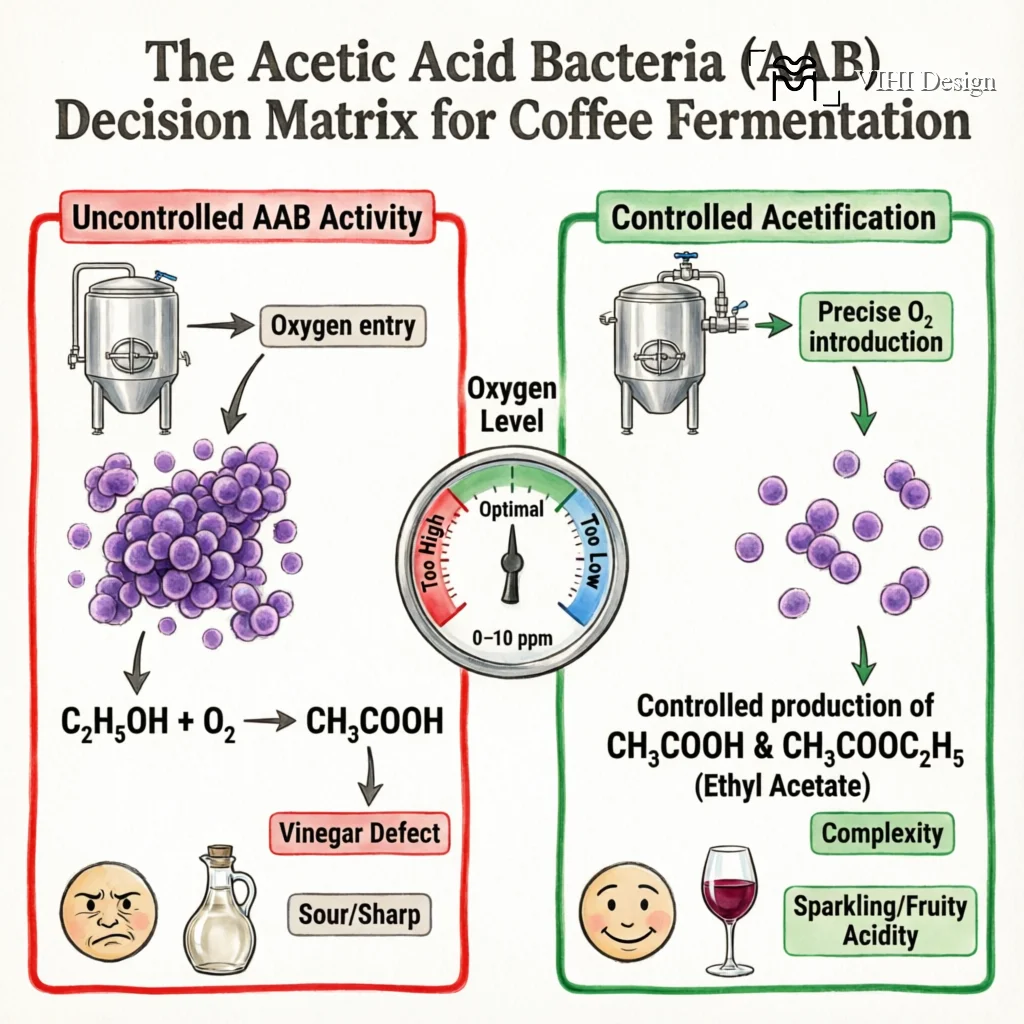
AAB, primarily of the genera Acetobacter, Gluconobacter, and Gluconacetobacter, are aerobic bacteria renowned for their ability to oxidize alcohols and sugars into organic acids, most notably acetic acid. In controlled food fermentations, such as in vinegar and kombucha production, this metabolic activity is desirable. In coffee, the narrative is dichotomous. On one hand, uncontrolled AAB proliferation is traditionally associated with detrimental “over-fermentation,” producing sour, vinegar-like defects that destroy coffee value. On the other hand, emerging experimental processing methods suggest that strategic, managed involvement of AAB can contribute unique and desirable aromatic complexity, introducing fruity, winey, and bright acidic notes prized by certain market segments.
This report, therefore, investigates the fundamental risk-reward paradigm of AAB in coffee fermentation. It aims to dissect the fine line between a processing flaw and an innovative tool, exploring the conditions under which AAB activity transitions from a spoilage risk to a potential reward for cup quality. Understanding this balance is essential for producers seeking to push the boundaries of flavor while safeguarding the consistency and economic value of their crop.
2. Theoretical Background
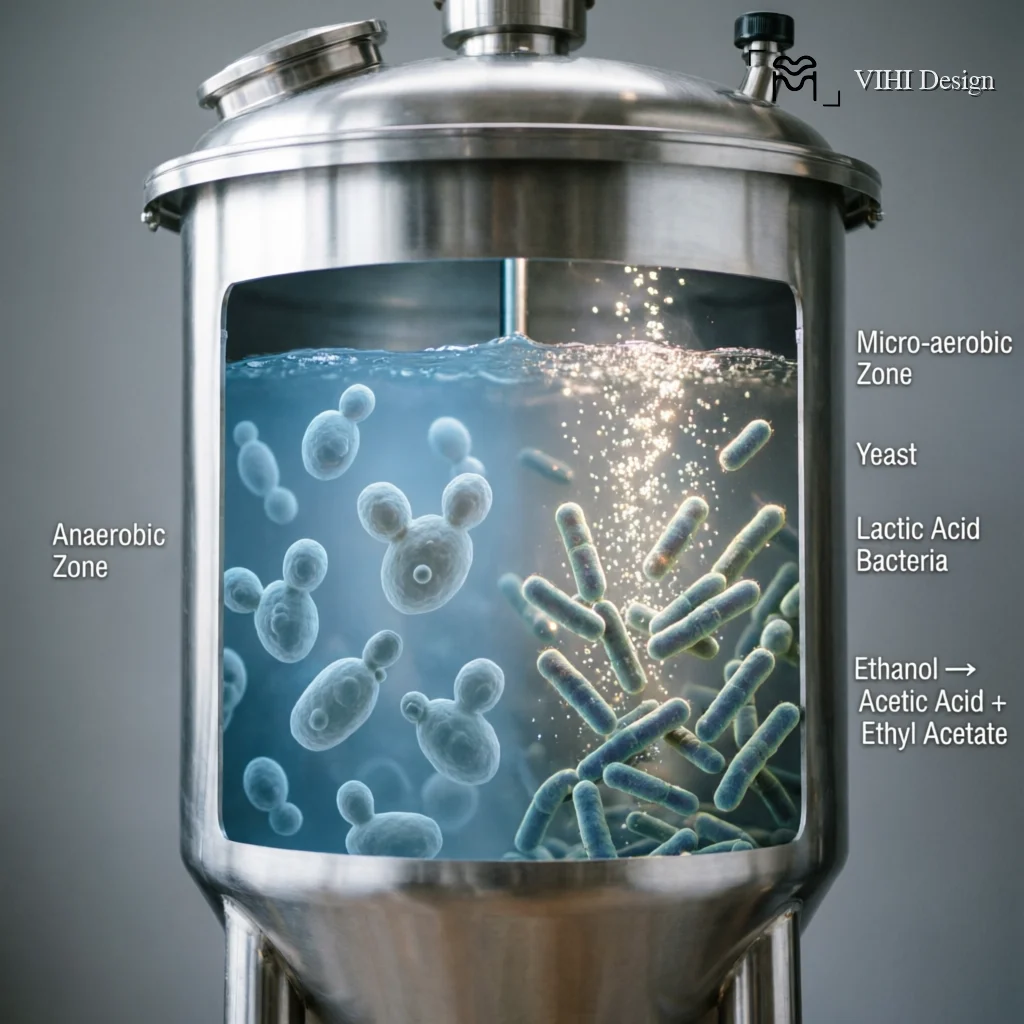
2.1. The Ecological Niche of AAB in Coffee Fermentation. Coffee fermentation is a dynamic, sequential process. Following depulping, the mucilage-coated beans are immersed in a nutrient-rich environment composed mainly of water, sugars (e.g., sucrose, glucose, fructose), pectin, and organic acids. Initial microbial activity is often dominated by yeasts and lactic acid bacteria, which consume sugars and lower the pH. AAB are obligate aerobes with a high tolerance for acidic conditions. Their population typically peaks during the mid to late stages of fermentation, as the environment becomes more acidic and oxygen diffusion becomes a limiting factor in tank or pile depths. They thrive at the air-liquid interface and can rapidly metabolize the ethanol produced by yeasts into acetic acid via the enzyme alcohol dehydrogenase, in a process known as acetification.
2.2. Metabolic Pathways and Chemical Impact. The primary risk associated with AAB lies in their central metabolic output: acetic acid. In high concentrations (> 1-2 g/L in the fermentation mass), acetic acid can diffuse into the coffee bean, leading to a sharp, pungent, and undesirable sourness that is sensorially distinct from the clean, citric or malic acidity associated with high-quality coffees. Furthermore, AAB can produce other short-chain fatty acids and oxidative products that contribute off-flavors described as rancid or nail polish remover-like (ethyl acetate).
Conversely, the potential reward stems from AAB’s broader metabolic versatility. Beyond acetic acid, certain strains can produce gluconic and ketogluconic acids from glucose, which may influence perceived sweetness and body. More significantly, through partial oxidations, AAB are prolific producers of volatile aromatic compounds. Key among these are ethyl acetate (which in trace amounts can contribute fruity notes), acetaldehyde (green apple), and acetoin (buttery). The precise balance and concentration of these volatiles, influenced by bacterial strain, substrate, and environmental control, define the sensory outcome.
2.3. The Determinants of the Risk-Reward Balance. The shift from defect to desirable attribute is not intrinsic to AAB but is mediated by processing parameters:
- Oxygen Availability: As strict aerobes, AAB activity is directly controlled by aeration. Anaerobic or semi-anaerobic conditions suppress them, while excessive agitation and oxygen exposure promote unchecked growth and over-acidification.
- Temperature and Time: Higher fermentation temperatures accelerate all microbial metabolism, including AAB, increasing the risk of rapid acid accumulation. Extended fermentation time allows for greater diffusion of acids into the bean.
- Microbial Community Context: AAB do not act in isolation. A robust, early-stage population of yeasts or lactic acid bacteria can outcompete AAB for substrates and create a metabolic environment that modulates later AAB activity. The concept of a “consortium” approach is key.
- Strain Selection: Not all AAB are equal. Specific strains exhibit different metabolic profiles and acid production rates. The emerging field of starter culture development seeks to identify and utilize strains with favorable aromatic contributions and lower acid yield.
This theoretical framework establishes that AAB are neither universally detrimental nor beneficial. Their role is contingent upon a complex interplay of ecological, biochemical, and procedural factors, setting the stage for a detailed analysis of managing their risk and harnessing their potential reward.
The Risk-Reward of Acetic Acid Bacteria in Coffee Fermentation: Practical Management
Building on the theoretical framework that AAB’s role is context-dependent, the practical question for roasters and baristas becomes: how do we identify and manage these influences in the cup? The transition from fermentation tank to espresso machine is critical.
From Fermentation Tank to Espresso Cup: Sensory Translation
The volatile acids produced by AAB, primarily acetic acid, have a profound but double-edged impact on sensory perception. In controlled amounts, they can elevate a coffee’s complexity, contributing to a vibrant, wine-like acidity and enhancing fruity esters. Unchecked, they lead to dominant, sharp vinegar notes that mask origin character and create a harsh, drying finish.
This sensory impact is directly measurable in extraction. Coffees with pronounced acetic sharpness often require careful brewing adjustments. The acid can accelerate perceived extraction, meaning a brew can taste over-extracted (astringent, dry) even at standard parameters. This is where the barista’s skill in diagnosis and adjustment becomes paramount.
If your espresso tastes harshly sour (like vinegar or nail polish remover) rather than bright and fruity, and the astringency persists even at a lower extraction yield, you may be tasting uncontrolled AAB activity. Before blaming the grind or dose, cup the coffee as a filter brew. If the sharp, volatile note is still dominant, the signature is likely from fermentation.
Optimizing Extraction for AAB-Influenced Coffees
When you have a coffee with a known or suspected pronounced acetic profile, your goal is to tame the sharp edges while preserving positive complexity. This requires a targeted approach to extraction parameters, guided by both Taste in Cup (TIC) and hard data.
Key parameters to manage:
- Extraction Yield (EY): Aim for the lower-mid range of the 18% to 22% spectrum. Over-extracting will pull out more of the sharp acidic compounds and increase astringency. An EY of 18.5%-19.5% can often provide better balance.
- Total Dissolved Solids (TDS): Target a slightly lower strength, within the 1.15% to 1.45% range. A TDS of 1.20%-1.30% can help reduce the perceived intensity of the acetic acid. This often means a slightly longer beverage yield (e.g., a 1:2.5 ratio instead of 1:2) for espresso.
- Temperature: Consider using a slightly lower brew temperature (e.g., 90°C-92°C for filter, 92°C-94°C for espresso) to moderate the extraction of volatile acids.
For a naturally processed coffee with funky, winey notes: Use a dose of 18g, yield 45g (1:2.5 ratio), in 32-35 seconds. This longer ratio at a standard time lowers TDS and EY slightly, rounding out sharp acidity. Expect a TDS near 1.25% and an EY around 19.2%. The result should be a more integrated, juicy cup.
The emerging science of starter cultures promises a future where such fermentation signatures are more predictable and refined. For now, the barista’s role as a sensory interpreter and technical adjuster is key to navigating the exciting, if risky, terrain of AAB-influenced coffees. By understanding the source of these flavors and mastering the tools of extraction, we can consistently transform potential volatility into compelling vibrancy.