The Microbial Terroir of Coffee:
How Native Microbes Shape Processing and Flavor
Introduction
For centuries, the concept of terroir—the unique combination of soil, climate, and topography that imparts distinctive characteristics to agricultural products—has been central to the appreciation of wine, cheese, and other artisanal foods. In the world of specialty coffee, terroir has traditionally been understood through these same abiotic lenses: the altitude of the farm, the mineral composition of the volcanic soil, the pattern of rainfall, and the angle of the sun. These factors undeniably influence the physiology of the Coffea plant and the basic chemical potential of its seeds. However, a paradigm shift is underway, driven by advances in microbial ecology and fermentation science. This research posits that a critical, and largely overlooked, component of coffee terroir is biological: the complex consortium of native yeasts, bacteria, and filamentous fungi that colonize the coffee fruit and seed at the farm and processing station.
The journey from coffee cherry to roasted bean is a story of profound biochemical transformation. Post-harvest processing—whether washed, natural, honey, or anaerobic—is not merely a mechanical step of drying and seed extraction. It is, in essence, a guided microbial fermentation where these indigenous microorganisms metabolize the sugars, acids, and pectins of the coffee mucilage. Their enzymatic activities and metabolic byproducts directly and indirectly shape the precursor compounds for flavor and aroma. This introduces the concept of “microbial terroir”: the hypothesis that the geographically distinct microbial communities present at origin are key drivers of the regional flavor profiles prized by coffee connoisseurs. A coffee from Yirgacheffe, Ethiopia, may taste of bergamot and jasmine not solely because of its genetics and climate, but because of the unique microbial signature of its environment, which orchestrates a specific fermentation narrative.
Theoretical Background
The theoretical foundation for microbial terroir rests upon three interconnected pillars: the ecology of coffee-associated microbiomes, the biochemistry of fermentation, and the concept of terroir as an extended phenotype.
1. The Coffee Microbiome: A Successional Ecosystem
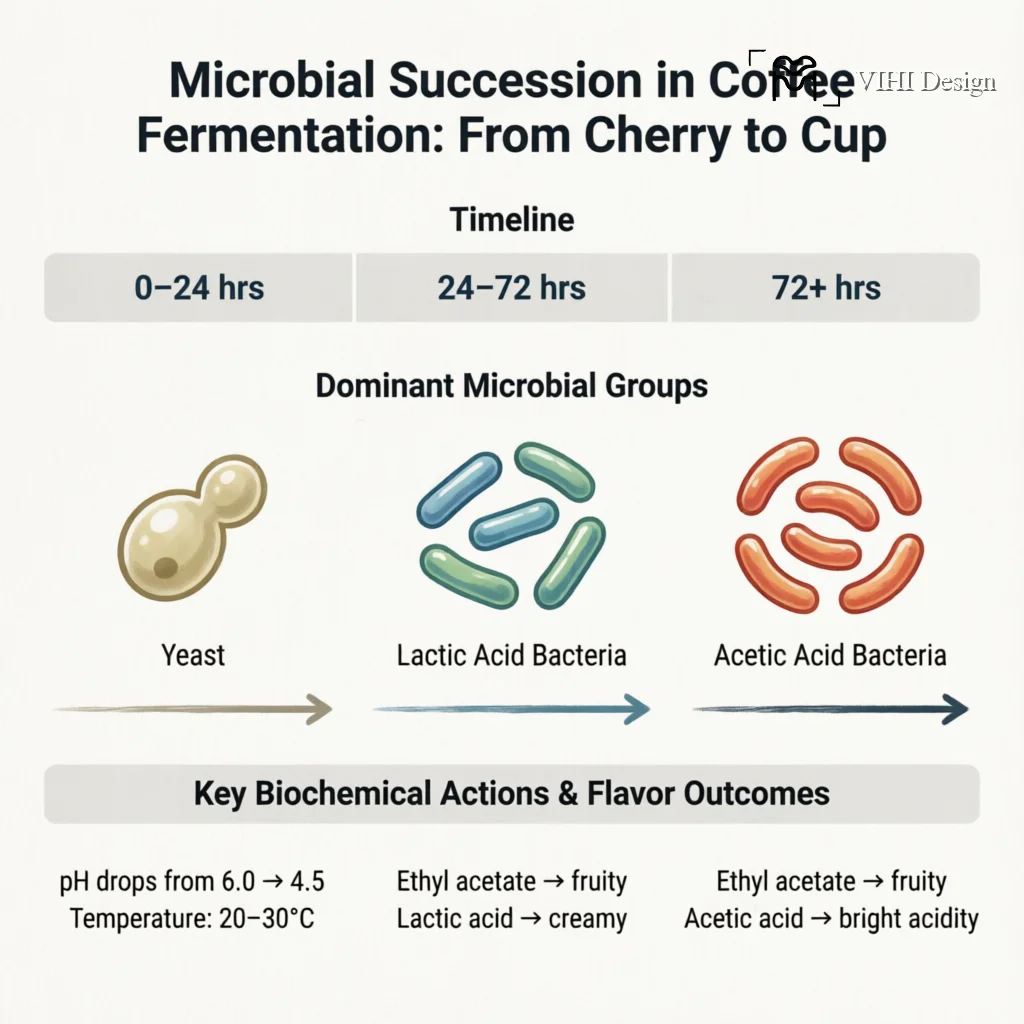
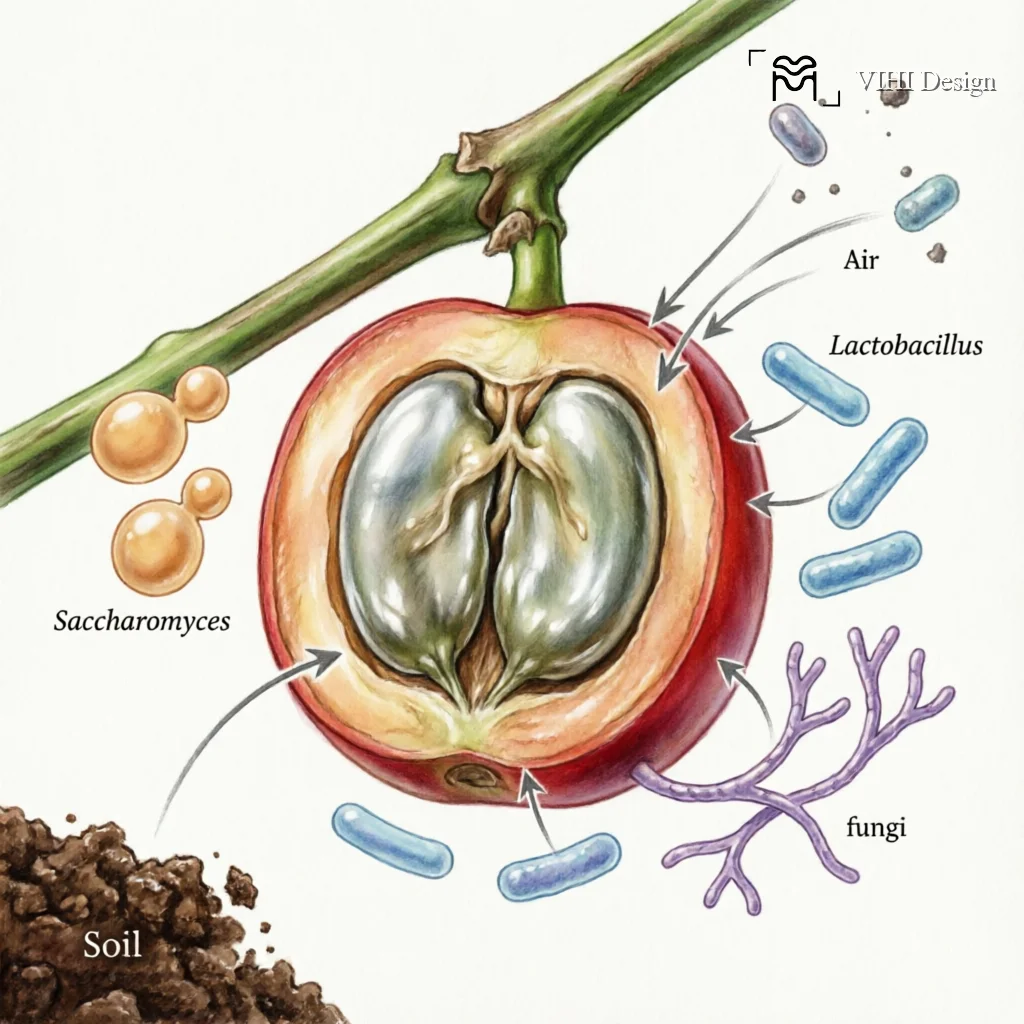
The surface of the coffee cherry (the exocarp and mucilage) is a rich ecological niche. Studies utilizing high-throughput sequencing have revealed a diverse starting community of epiphytic microbes derived from the farm environment—soil, air, water, and insects. This community is dynamic and successional. During processing, environmental conditions (oxygen availability, pH, temperature, water content, and duration) exert selective pressure, creating a “process-specific” ecological succession. For instance, aerobic phases often favor oxidative yeasts and acetic acid bacteria, while submerged or anaerobic conditions can select for lactic acid bacteria and fermentative yeasts like Saccharomyces and non-Saccharomyces species (e.g., Pichia, Hanseniaspora). The theoretical implication is that each processing method (natural, washed, etc.) cultivates a distinct microbial profile from the same initial terroir-derived inoculum.
2. Metabolic Pathways from Microbe to Flavor
The microbial metabolism during fermentation is the engine of flavor precursor formation. Key pathways include:
- Pectinolysis: Microbial pectinases break down the mucilage’s pectin layer, facilitating drying and releasing substrates for further fermentation.
- Sugar Metabolism: Yeasts and bacteria convert sucrose, glucose, and fructose into a range of metabolites including ethanol, lactic acid, acetic acid, and glycerol. These acids directly influence perceived acidity and mouthfeel, while ethanol is a precursor for esters during later roasting.
- Volatile Compound Production: Many microbes produce volatile organic compounds (VOCs) as secondary metabolites. Certain yeasts are known to produce fruity esters (isoamyl acetate – banana, ethyl acetate – pineapple), phenolics, and higher alcohols that may survive processing and roasting or influence Maillard reaction pathways.
- Proteolysis and Lipolysis: Microbial activity can influence the breakdown of proteins and lipids, affecting the pool of amino acids and fatty acids available for the crucial Maillard and Strecker degradation reactions during roasting, which generate key aroma compounds.
The theoretical model suggests that a region’s unique microbial consortium will catalyze a characteristic pattern of these metabolic activities, imprinting a chemical signature onto the green bean.
3. Terroir as an Extended Phenotype
This research expands the classical definition of terroir by integrating the hologenome concept. The coffee plant’s phenotype (and the flavor of its final product) is not expressed by the plant’s genome alone but is an extended phenotype shaped in partnership with its associated microbiome. The abiotic factors of terroir (climate, soil) first select for a specific plant genotype and physiology, which in turn influences the phyllosphere (leaf surface) and carposphere (fruit surface) conditions. These conditions then select for a specific microbial community from the regional species pool. This community then acts upon the crop during processing. Therefore, microbial terroir is the final, crucial biological filter through which the potential of the physical terroir is expressed, creating a closed loop of environmental influence that is captured in the chemistry of the seed.
In conclusion, the theoretical background positions coffee fermentation not as a mere step in production, but as a terroir-expression event, mediated by a geographically unique microbial ecosystem. Understanding this microbial terroir provides a scientific framework for explaining the irreproducibility of certain regional flavors and opens new avenues for quality control, process innovation, and the preservation of biodiversity in specialty coffee.
The Microbial Terroir of Coffee: How Native Microbes Shape Processing and Flavor
In conclusion, the theoretical background positions coffee fermentation not as a mere step in production, but as a terroir-expression event, mediated by a geographically unique microbial ecosystem. Understanding this microbial terroir provides a scientific framework for explaining the irreproducibility of certain regional flavors and opens new avenues for quality control, process innovation, and the preservation of biodiversity in specialty coffee.
From Farm to Cup: Translating Microbial Action into Flavor
The complex symphony of microbes during processing—yeasts, bacteria, and fungi—doesn’t just break down mucilage. It creates a precursor palette of acids, esters, alcohols, and other compounds. These precursors are “locked in” during drying and roasting, only to be released as specific flavor notes when we brew. A robust lactic acid fermentation might lay the groundwork for a creamy, yogurty acidity, while certain yeast strains are known to produce ester compounds that express as jasmine, peach, or bergamot in the cup.
This is where the barista’s skill becomes paramount. The brewer’s job is to efficiently and deliciously extract this microbial fingerprint. A coffee with a delicate, complex acidity derived from careful fermentation can be muted or turned sour with poor brewing, completely obscuring the producer’s artistry.
Coffees known for vibrant, fermented-influenced acidity (like many anaerobic naturals or certain Kenyan washes) often shine with slightly lower brew temperatures. Try 92-94°C (198-201°F) instead of a rolling boil. This can help articulate the fruity, wine-like notes without emphasizing harsh or sour tones. Always adjust based on your specific roast profile.
The Brewer’s Control: Dialing in Microbial Coffees
Understanding that you are brewing a product of microbial activity changes your approach to dialing in. Your goal is to achieve a balanced extraction that honors the unique flavor structure created on the farm.
• TDS (Total Dissolved Solids): 1.15% – 1.45% (Measured with a refractometer). This range typically balances clarity and body for these coffees.
• EY (Extraction Yield): 18% – 22%. Staying within this window helps ensure you’re pulling out the desirable sugars and acids without over-extracting bitter compounds that can mask delicate microbial flavors.
Practical Dial-In Strategy:
- Start with a Standard Recipe: For a 15g dose, aim for 250g output (1:16.7 ratio) in about 3:00-3:30. Use your standard grind setting.
- Taste & Diagnose: Is the coffee flat, overly funky, or sour? This could be under-extraction, leaving those beautiful acids unbalanced. Is it bitter, astringent, or muddled? This is likely over-extraction, pulling out too many bitter compounds.
- Adjust for Balance:
- For under-extraction (sour, sharp): Grind finer to increase extraction. Alternatively, increase water temperature slightly or extend brew time with a slower pour.
- For over-extraction (bitter, dry): Grind coarser to decrease extraction. You can also try a slightly lower temperature or a shorter overall brew time.
- Validate with Tools: If available, use a refractometer to check your TDS and EY. This objective data, combined with your sensory evaluation, is the ultimate feedback loop for mastering these coffees.
Your credibility as a barista or café is bolstered by understanding and communicating the story behind the coffee. Seek out roasters and importers who provide detailed processing information. When a bag mentions “spontaneous fermentation,” “carbonic maceration,” or specific yeast strains, it’s a sign of producer and roaster investment in microbial terroir. Sharing this knowledge with customers elevates their experience and connects them to the origin’s unique ecosystem.
Embracing the Living Coffee
The concept of microbial terroir invites us to see coffee not as a static commodity, but as a dynamic, living agricultural product. Each batch carries the signature of a specific place and time—a snapshot of that farm’s microbiome. This understanding fosters a deeper respect for the entire supply chain, from the farmer managing fermentation tanks to the barista at the espresso machine.
By honing our brewing techniques to highlight these nuances, we become active participants in telling the coffee’s full story. We move beyond simply serving a “light roast” or a “funky process” to presenting a tangible expression of origin, crafted by nature’s smallest inhabitants.