The Impact of Post-Harvest Processing on Organic Acid Profiles in Coffea arabica: Citric, Malic, and Acetic Acid Dynamics
Introduction
The sensory profile of specialty coffee is a complex symphony of volatile and non-volatile compounds, where acidity plays a defining role in perceived quality, complexity, and balance. Among the non-volatile constituents, organic acids are critical determinants of this acidity, directly influencing the beverage’s brightness, fruitiness, and overall flavor structure. While genetic origin (variety) and agro-climatic conditions (terroir) establish the foundational chemical potential of the coffee cherry, post-harvest processing represents the most significant and manipulable intervention point for modulating the final chemical composition of the green bean. This stage initiates profound biochemical transformations, where microbial and endogenous enzymatic activities dramatically alter the substrate, leading to the formation, degradation, or conversion of key organic acids.
Citric, malic, and acetic acids are of particular interest to coffee researchers and practitioners. Citric and malic acids, primary metabolites of the coffee fruit’s metabolism, are associated with desirable, wine-like fruity and apple-like notes. Their concentration and ratio are key indicators of metabolic activity during processing. Acetic acid, often a product of microbial fermentation, occupies a more nuanced sensory space; at low concentrations, it can contribute to a pleasant, vinous complexity, while at elevated levels, it is perceived as a sharp, vinegar-like defect. The trajectory of these acids from cherry to dried bean is not linear but is dictated by the specific processing methodology employed—whether it be the controlled fermentation of washed (wet) processing, the extended mucilage contact of honey (pulped natural) processing, or the slower, whole-fruit drying of natural (dry) processing.
Despite their acknowledged importance, a systematic and comparative analysis of how dominant processing protocols specifically shape the profiles of these three pivotal organic acids remains an area requiring further elucidation. Much of the existing literature focuses on broad sensory outcomes or general acidity metrics, lacking the granular, acid-specific chemical tracking across different processes. This study, therefore, aims to quantitatively investigate the impact of three core post-harvest processing methods—washed, honey, and natural—on the evolution and final concentration of citric, malic, and acetic acids in Coffea arabica. By mapping these chemical pathways, we seek to provide a scientific foundation for processing decisions, enabling producers to more precisely target desired sensory profiles and enhance quality consistency through biochemical understanding.
Theoretical Background
Organic acids in green coffee beans are primarily inherited from the metabolic processes occurring in the cherry and are subsequently modified during post-harvest stages. They function as key intermediates in biochemical pathways, such as the tricarboxylic acid (TCA) cycle and glyoxylate cycle, and as substrates for various fermentation reactions. Their final concentration is a net result of synthesis, degradation, and conversion processes mediated by plant enzymes and microbial activity.
Biochemical Origins and Sensory Roles
Citric Acid is a central component of the TCA cycle within the coffee bean’s endosperm and the cherry’s pulp. It is associated with bright, citrusy, and vibrant fruity notes. Its concentration tends to be higher in high-altitude coffees and is susceptible to degradation via aconitate hydratase or through microbial activity during fermentation.
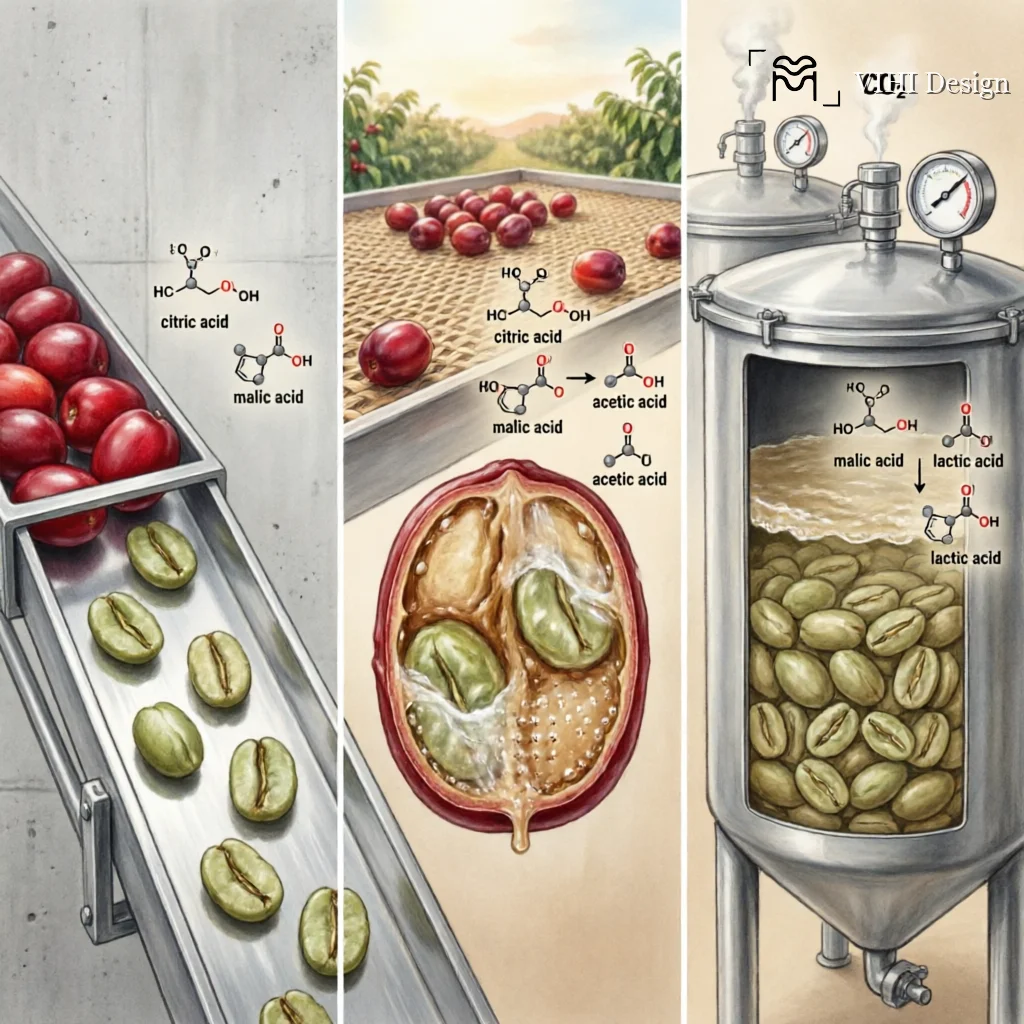
Malic Acid, also a TCA cycle intermediate, contributes to apple-like, pear, or stone fruit sensations. It is known for its sharp, tangy quality. Malic acid can be enzymatically decarboxylated to pyruvate or serve as a substrate for malolactic fermentation, where it is converted to the softer-tasting lactic acid by lactic acid bacteria (LAB).
Acetic Acid is rarely present in significant quantities in the intact cherry. It is primarily a microbial metabolite, produced via heterofermentative pathways of yeasts and bacteria (especially acetic acid bacteria, AAB) during fermentation. It is a volatile short-chain fatty acid (SCFA) and its sensory impact is highly concentration-dependent, acting as a positive flavor enhancer at low levels (<600 ppm in brew) but becoming overwhelmingly sour and pungent at higher concentrations.
Processing as a Biochemical Modulator
Each processing method creates a unique physicochemical environment that steers biochemical transformations:
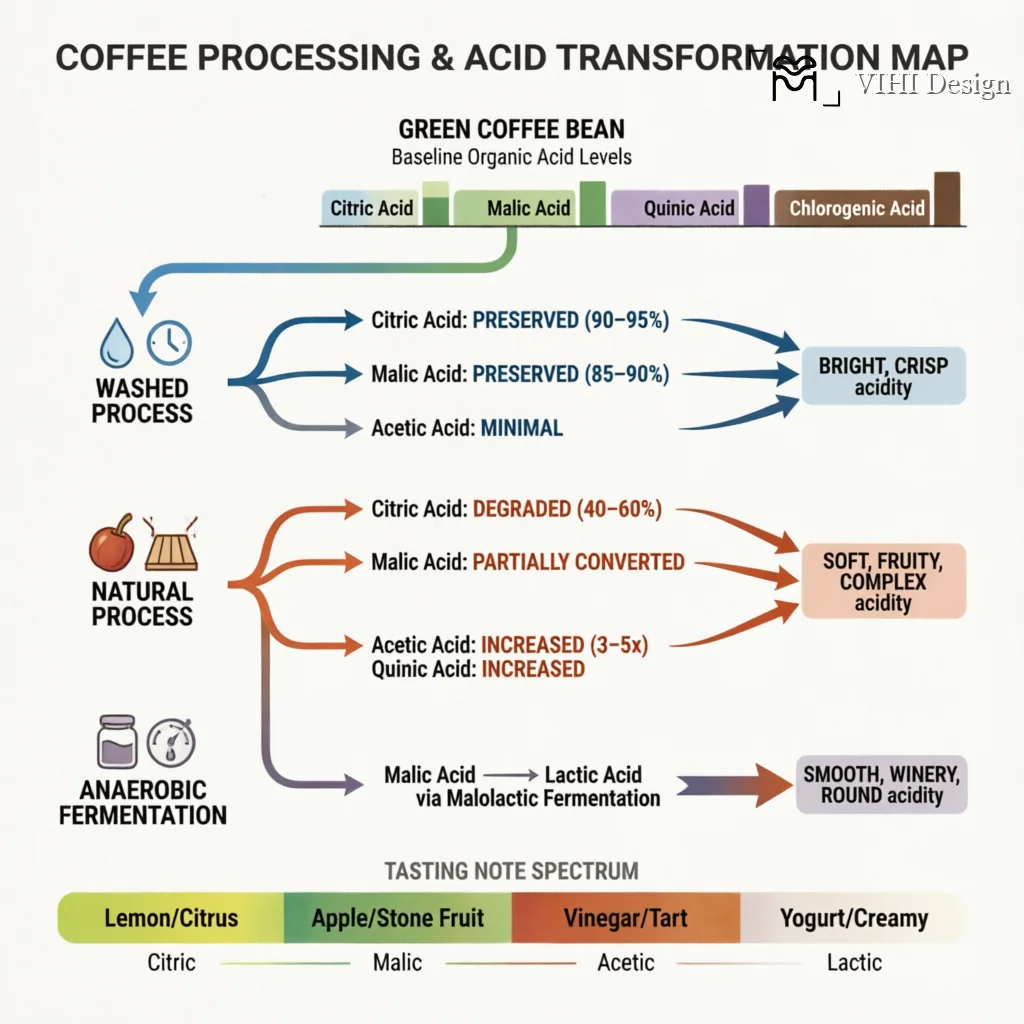
Washed (Wet) Processing: This method involves depulping followed by fermentation in water tanks to remove mucilage, before washing and drying. The aqueous, anaerobic-to-facultative anaerobic environment promotes intense microbial fermentation. LAB and yeast activity can consume sugars and organic acids, potentially reducing citric and malic acid levels while generating acetic and lactic acids. The subsequent washing step may leach water-soluble acids, leading to a potentially different final profile compared to other methods.
Natural (Dry) Processing: Whole cherries are dried intact. The process is slower, with fermentation occurring inside the cherry in a semi-anaerobic, high-sugar environment. This often leads to pronounced alcoholic and acetic fermentation. While citric and malic acids may be partially preserved due to limited water movement, they can also serve as substrates for microbial growth over the extended drying period. Elevated acetic acid levels are a common risk if drying is not meticulously managed.
Honey (Pulped Natural) Processing: The cherry is depulped but dried with a portion of the mucilage remaining. This creates a middle-ground environment: a sugar-rich substrate exposed to oxygen, encouraging vigorous microbial activity, particularly by AAB, which can rapidly oxidize ethanol to acetic acid. The retention of mucilage may also protect some organic acids from degradation or leaching, potentially resulting in a profile with higher retained fruit-acid complexity (citric, malic) than washed, but with a greater risk of acetic acid formation than in perfectly executed naturals.
Theoretical Synthesis: The dynamic interplay between substrate availability (sugars, pectins), microbial ecology (yeast, LAB, AAB succession), and process parameters (time, temperature, water activity, oxygen) dictates the final organic acid signature. A hypothesis central to this study is that the ratio of citric and malic acids to acetic acid, rather than their absolute concentrations alone, may serve as a robust chemical indicator of processing method efficacy and sensory quality. Understanding these pathways allows for the refinement of processing from an artisanal practice into a controlled biochemical protocol.
The Impact of Processing on Organic Acids: Citric, Malic, and Acetic Acid Profiles (Part 2)
Building on the foundational role of environmental factors—time, temperature, water activity, and oxygen—this second part explores the practical implications for sensory experience and brewing. The central hypothesis, that the ratio of citric and malic acids to acetic acid is a key quality indicator, moves from theory to tangible taste.
From Chemical Ratio to Sensory Experience
A high citric/malic-to-acetic acid ratio typically signifies a clean, vibrant, and fruit-forward cup. This is the hallmark of well-executed washed or carefully controlled honey processes, where microbial activity (and thus acetic acid production) is minimized. Conversely, a lower ratio, with elevated acetic acid, can indicate extended fermentation. In small amounts, this can add winey complexity; in excess, it leads to overt vinegar, sourness, or cheesy off-flavors.
For the practicing barista or roaster, this ratio is a bridge between lab data and palate:
- High Ratio (e.g., 10:1): Expect bright, clear acidity—think red apple (malic) or lemon/citrus (citric). These coffees often have a “juicy” mouthfeel and are excellent for highlighting terroir.
- Moderate Ratio (e.g., 5:1): Indicates a balanced, possibly more complex cup. Acetic acid may present as a pleasant fermented fruit note (like raspberry or pineapple), complementing the brighter acids.
- Low Ratio (e.g., 2:1 or lower): Signals dominant ferment. This can be intentional and delicious in some natural processed coffees, but risks imbalance, leading to a sour or overly funky profile that may mask origin character.
When you know a coffee is a washed process (likely high citric/malic acid), lean into recipes that enhance clarity and acidity. Try a slightly lower extraction temperature (92-93°C) to avoid muting those bright notes. For a natural process (potentially higher acetic), a slightly higher temperature (94-95°C) can help integrate the bolder, fermented flavors and add sweetness to balance.
Optimizing Brew for Acid Profile and Extraction
The organic acid profile directly influences your extraction strategy. Acids extract early and easily. A coffee with a high potential for bright acids requires a controlled, even extraction to present those acids pleasantly without accompanying harshness.
Key brewing parameters must align with our Target Dose (TDS: 1.15% – 1.45%, Extraction Yield: 18% – 22%) to best express these profiles:
- Grind Size & Contact Time: For high-acidity coffees, a slightly coarser grind can prevent over-extraction of acidic compounds early in the brew, which can lead to sharp, sour notes (not to be confused with desirable brightness). Aim for a total contact time in the 2:30-3:00 minute range for pour-over.
- Agitation: Gentle, controlled pours. Excessive stirring can lead to rapid, uneven acid extraction and channeling, distorting the delicate acid ratio you want to showcase.
- Water Composition: Using water with a moderate bicarbonate buffer (around 40-80 ppm) is crucial. It gently neutralizes extreme sourness, allowing the nuanced citric and malic acids to shine without being abrasive, helping you hit that target TDS window with a balanced flavor.
If your brew tastes overwhelmingly sour or vinegary (especially with a dry finish), you might be tasting excessive acetic acid. Before blaming the coffee, check your extraction. A low EY (<18%) often under-extracts sweetness, leaving acidic notes unbalanced. First, try a finer grind or higher temperature to increase extraction and see if the cup becomes more integrated.
Understanding organic acid pathways transforms coffee preparation from guesswork into informed practice. By considering how processing dictates the citric, malic, and acetic acid balance, roasters can select lots more precisely, and baristas can tailor their brewing to highlight a coffee’s inherent strengths. The goal is no longer just “extraction,” but the orchestrated expression of a specific biochemical signature—moving us closer to a true craft grounded in the science of flavor.