The Complete Guide to Coffee Processing Microbiology: From Farm to Fermentation
1. Introduction: The Invisible World in Your Coffee Cup – Why Microbiology is the New Frontier of Flavor
The organoleptic profile of a roasted coffee beverage is a complex product of its genotype, agricultural environment, post-harvest processing, and roasting parameters. Historically, research and quality paradigms have focused predominantly on plant genetics, agronomy, and roast development. However, the critical post-harvest phase, where the coffee seed (bean) is separated from its fruit, is now recognized as a determinant of final cup quality. This separation is not a purely mechanical or chemical extraction; it is a biotechnological process mediated by a consortium of microorganisms. The field of coffee processing microbiology investigates the structure, function, and metabolic output of these microbial communities, establishing them as the new frontier for understanding and engineering flavor.
The seed itself is metabolically quiescent at harvest. The flavor precursors present in the final green bean are generated during processing through the activity of endogenous seed enzymes and, more significantly, exogenous enzymes produced by microorganisms. These microbes—including yeasts, filamentous fungi, and bacteria—colonize the fruit mucilage and, under controlled conditions, catalyze the degradation of pectin, sugars, proteins, and organic acids. The products of this microbial metabolism diffuse into the seed, where they undergo Maillard reactions and other transformations during roasting to yield the volatile and non-volatile compounds responsible for aroma, acidity, body, and flavor notes. Therefore, the microbial succession and metabolic activity during processing directly inoculate the chemical substrate for roasting.
2. Chapter 1: The Microbial Terroir – How Farm Ecosystems Shape the Starting Culture
The initial microbial inoculum for coffee processing is not introduced artificially but is derived from the epiphytic and endophytic communities associated with the coffee plant and its immediate environment. This starting culture, termed the “microbial terroir,” is a function of localized agroecological conditions. The composition and abundance of this community are non-stochastic and are influenced by several deterministic factors.
2.1. Determinants of Epiphytic Community Structure
The microbial load on coffee cherry surfaces at harvest is a product of the following variables:
- Geographic and Macroclimatic Factors: Altitude, temperature, and precipitation patterns influence microbial biodiversity. Higher altitudes with lower average temperatures often correlate with slower cherry maturation and distinct microbial profiles compared to warmer, lower elevations.
- Agricultural Management: The use of synthetic fungicides and pesticides can significantly reduce microbial diversity and select for resistant species. Organic or agroforestry systems typically support a more complex and abundant epiphytic microbiome, including potential biocontrol agents.
- Plant Physiology and Phenology: The chemical composition of the cherry exocarp and mucilage (pH, sugar content, antimicrobial compounds) changes during ripening, sequentially selecting for different microbial groups. Overripe or damaged fruit presents a different nutritional substrate and entry points for colonization.
- Local Biodiversity and Vectors: Insects, particularly the coffee berry borer (Hypothenemus hampei), and airborne particulates from soil and other plants serve as vectors for microbial transmission, linking the cherry microbiome to the broader farm ecosystem.
2.2. Core Microbial Taxa of the Pre-Process Microbiome
Metagenomic studies consistently identify key microbial groups on healthy coffee cherries, which form the foundational community for subsequent fermentation.
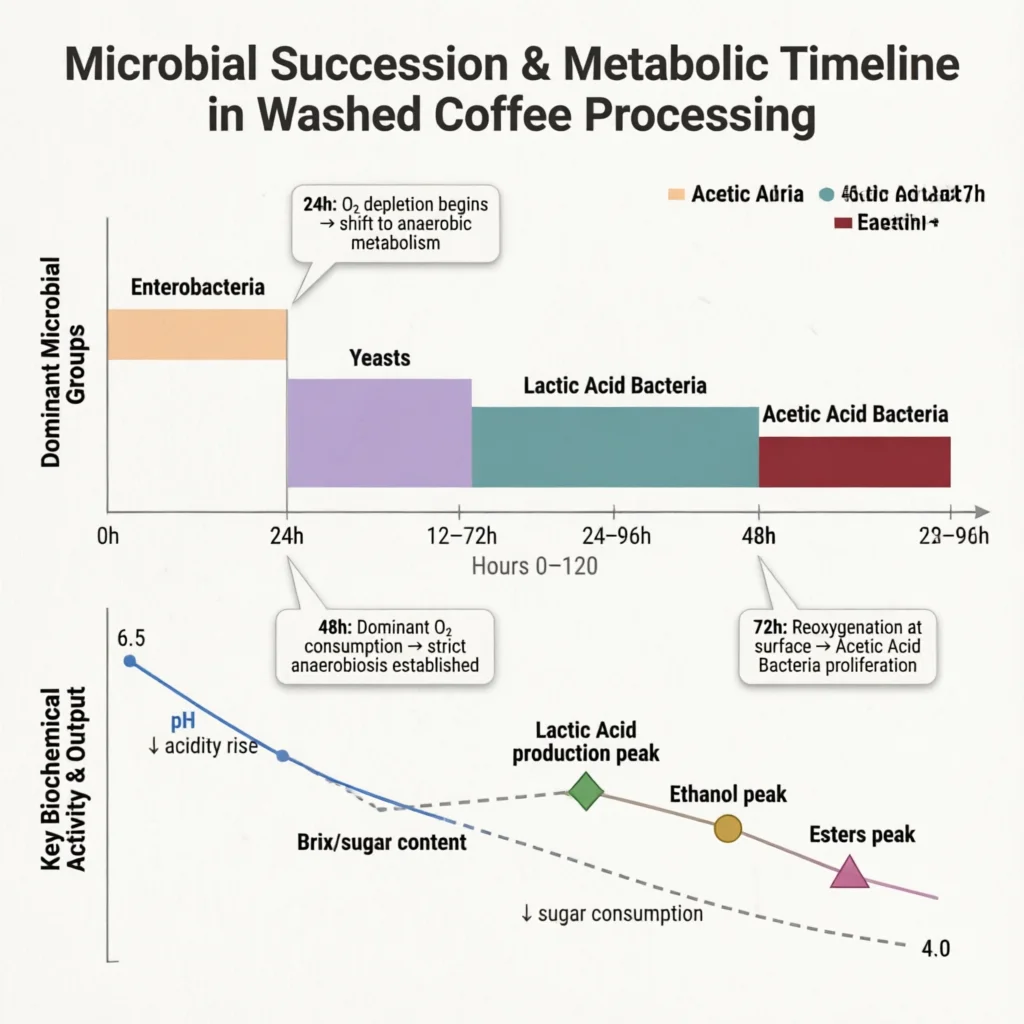
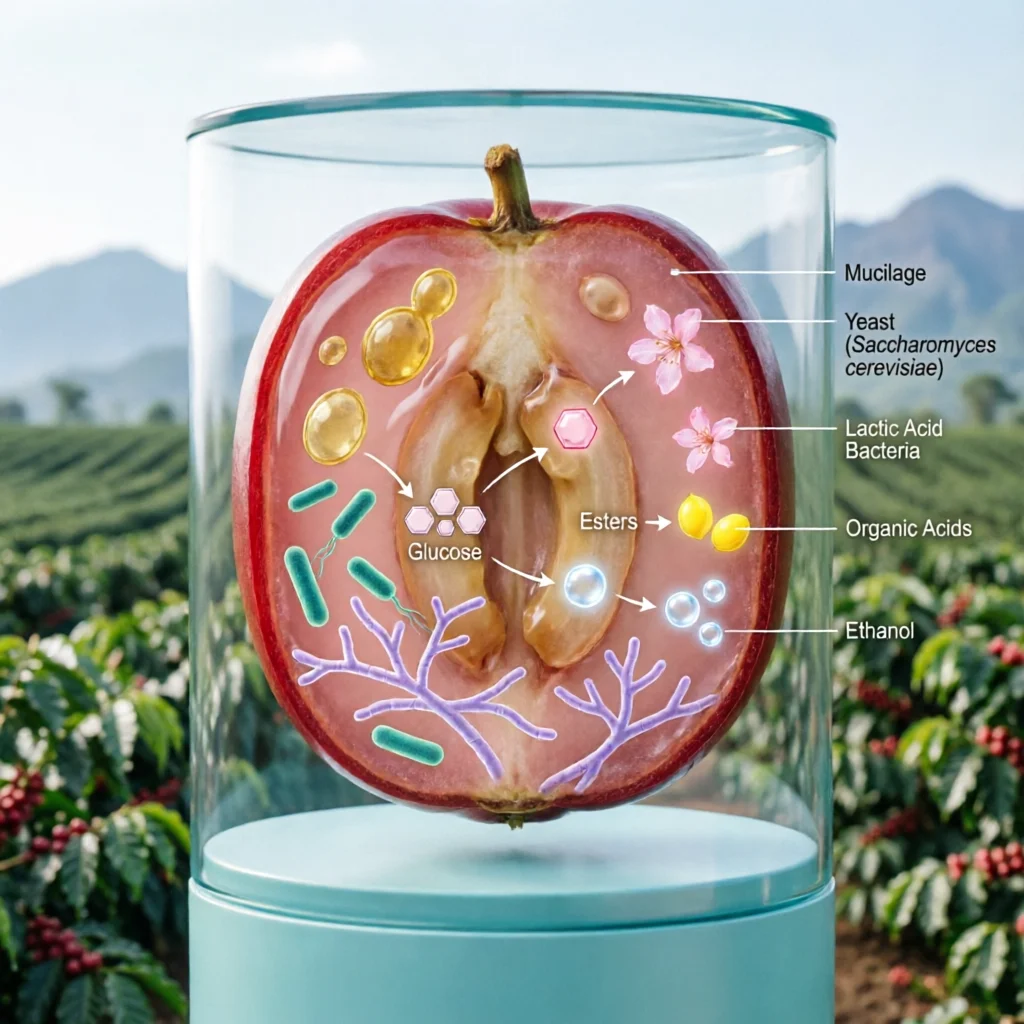
- Yeasts: Genera such as Pichia, Hanseniaspora, Saccharomyces, and Candida are ubiquitous. They are primary consumers of simple sugars and produce a range of enzymes (pectinases, proteases) and metabolic byproducts (esters, higher alcohols, organic acids).
- Lactic Acid Bacteria (LAB): Lactobacillus and Leuconostoc species are common. They metabolize sugars to produce lactic acid, acetic acid, and other compounds, lowering substrate pH and influencing the microbial succession.
- Acetic Acid Bacteria (AAB): Gluconobacter and Acetobacter species oxidize ethanol and organic acids produced by yeasts and LAB into acetic acid, a process that must be managed to avoid excessive sourness.
- Filamentous Fungi: While often associated with spoilage, certain fungi like some Aspergillus and Fusarium species can be present. Their role is complex, as some strains are beneficial enzyme producers while others are mycotoxigenic.
This endemic community is the raw material for processing. The method employed—whether washed, natural, honey, or anaerobic fermentation—applies selective pressures (water availability, oxygen permeability, pH, temperature) that dictate which members of this initial consortium will dominate and what metabolic pathways will be expressed, thereby steering flavor development.
The Fermentation Matrix: Mapping Microbial Activity to Flavor Outcomes
Processing methods function as a control panel for microbial activity. Each technique manipulates key environmental variables, selecting for specific microbial consortia and their metabolic outputs. Understanding this matrix is essential for predicting and diagnosing flavor.
- Washed Process: Creates a high-acidity, aerobic environment. Dominated by water-soluble microbial activity and enzymatic breakdown of mucilage, favoring clean, citric/malic acid profiles and highlighting varietal character.
- Natural Process: A slow, semi-anaerobic fermentation inside the cherry fruit. High sugar content selects for robust yeast (e.g., Pichia, Hanseniaspora) and lactic acid bacteria (LAB) activity, producing intense fruitiness, body, and often winey or fermented notes.
- Anaerobic Fermentation: A sealed, oxygen-free environment that forces anaerobic metabolism. Dominated by LAB and yeasts performing alcoholic fermentation, generating intense, often funky flavors (ethyl acetate, isoamyl acetate) and creamy mouthfeel.
- Carbonic Maceration: A subset of anaerobic where whole cherries ferment in a CO₂-rich atmosphere, drastically slowing microbial activity and emphasizing intra-cherry enzymatic processes, yielding distinctive juiciness and soft, complex acidity.
Quantifying the Impact: From Microbes to Brew Metrics
The biochemical transformations initiated during fermentation alter the bean’s fundamental structure and solubility. These changes manifest in measurable brew parameters, demanding adjustments in both roasting and extraction.
- Bean Density & Roast Dynamics: Extensive pectin breakdown in heavily fermented coffees (e.g., long anaerobic) reduces bean density. Roasters must account for this “softer” bean, which conducts heat faster and can exhibit a rapid, exothermic “crash” during Maillard if not managed.
- Solubility & Extraction Yield (EY): Fermentation pre-digests cell wall structures, increasing overall solubility. Target EY (18% – 22%) is often reached faster. Over-fermented beans can become excessively soluble, leading to astringency even at standard EY.
- Grind & Total Dissolved Solids (TDS): The altered bean structure requires grind calibration. Softer beans may produce more fines. Aim for a TDS range of 1.15% – 1.45%, but understand that processed coffees often present optimal flavor at the higher end of this range due to their complex, concentrated solute profile.
Barista’s Field Notes: Addressing Common Struggles
Theoretical knowledge meets practical chaos behind the bar and in the roastery. Here is a direct analysis of prevalent industry pain points.
- For Roasters: Inconsistent roast development often stems from unmeasured bean density variation caused by fermentation. A washed Gesha and an anaerobic Caturra from the same farm are fundamentally different raw materials. Implement pre-roast density checks and modify charge temperature and heat application accordingly. Softer, processed beans need less aggressive initial heat.
- For Baristas: Wild extraction time variation is a direct signal of differential solubility. Do not force a 30-second shot on all coffees. If a natural process coffee runs 10 seconds fast at your standard grind, it is communicating its higher solubility. Adjust the recipe: either grind significantly finer, lower water temperature slightly (1-2°C), or adopt a faster ratio (e.g., 1:1.8 for espresso). Taste, then adjust.
- For Buyers: “Microbial terroir” is not marketing. It is the fingerprint of a farm’s endemic microflora and the processor’s skill. Evaluate it by assessing fermentation clarity and cleanliness. Look for specific, refined flavors versus generic, muddy fermentation notes. A skilled processor guides nature; an unskilled one lets it run wild.
Pro-Tip: When cupping a natural or anaerobic process coffee, pay close attention to the *acidity profile*. A sharp, acetic (vinegar) note suggests dominant Acetobacter activity, often from poor oxygen control. A creamy, yogurt-like acidity indicates successful Lactobacillus dominance. This tells you more about processing skill than any flavor descriptor.
Future Frontiers: Precision Fermentation and Sensory Design
The frontier of coffee processing moves towards targeted inoculation and bioprocessing. Producers now experiment with specific yeast and bacteria strains, akin to winemaking, to reliably produce desired flavor molecules like specific esters or lactones. This shift transforms fermentation from an artisanal practice into a precise bioculinary science, enabling the design of sensory profiles with unprecedented consistency and intention.
Technical Summary
- Post-harvest coffee fermentation is a directed microbial ecology process where method (washed, natural, anaerobic) applies selective pressures on the cherry’s endemic microflora.
- These microbial activities (yeast, LAB, Acetobacter) directly produce flavor precursors and metabolites that define the final cup profile, from fruity esters to creamy lactic acid.
- Fermentation alters bean density and cellular solubility, requiring calibrated adjustments in roasting (heat application) and brewing (grind size, time, temperature).
- Key brew metrics for processed coffees remain within standard ranges (EY 18%-22%, TDS 1.15%-1.45%), but optimal flavor often occurs at the higher TDS end due to concentrated solute profiles.
- Sensory evaluation must distinguish between skilled, clean fermentation and flawed microbial activity, with acidity profile being a primary diagnostic tool.