Post-Harvest Processing for Low-Acidity Coffee: Methods for a Smoother Cup
Introduction
The pursuit of the perfect cup of specialty coffee is a journey defined by the intricate balance of flavor compounds, where acidity plays a pivotal and often polarizing role. Perceived as a bright, vibrant, and sometimes sharp sensation, acidity is a hallmark of high-quality Arabica coffees, contributing complexity and liveliness. However, a significant segment of the consumer market, along with many roasters and baristas, seeks a smoother, more approachable cup profile—one where pronounced acidity is subdued in favor of enhanced sweetness, body, and rounded flavor notes. This preference has driven both commercial and artisanal interest in the production of low-acidity coffee.
While roast level is commonly manipulated to reduce perceived acidity, this approach often comes at the cost of diminishing origin character and introducing bitterness. Consequently, the specialty coffee industry has increasingly turned its focus upstream to the post-harvest processing stage as a more fundamental and nuanced lever for modulating coffee’s chemical composition and sensory outcome. Post-harvest processing—the series of methods used to remove the coffee seed (bean) from its fruit and prepare it for drying—is not merely a step in preservation. It is a critical biochemical transformation period where microbial activity, fermentation kinetics, and enzymatic processes directly shape the organic acid profile, sugar concentration, and precursor compounds that define the final brew.
This paper investigates the scientific principles and practical methodologies of post-harvest processing specifically aimed at producing coffee with lower perceived acidity. We will explore how traditional and innovative techniques, from controlled anaerobic fermentation to extended mucilage contact and hybrid processes, can be strategically employed to metabolize acids, alter pH, and develop a smoother, more balanced sensory profile without compromising the intrinsic quality and uniqueness of the coffee.
Theoretical Background
The acidity in coffee is a complex sensory perception derived from a suite of organic acids present in the green bean, which are then modified during roasting and extraction. Key acids include citric, malic, quinic, acetic, and chlorogenic acids (and their derivatives). Chlorogenic acids (CGAs) are particularly abundant in green coffee but break down during roasting into quinic and caffeic acids, the former contributing to perceived astringency and bitterness. The overall perception of “brightness” or “sharpness” is influenced not only by the concentration and type of these acids but also by their interaction with sugars, salts, and other soluble solids.
Biochemical Foundations of Acidity Development
In the coffee fruit (cherry), acids are concentrated in the pulp and mucilage (mesocarp). During processing, the manner in which the seed interacts with these fruity layers determines acid migration and transformation. In the washed (or wet) process, the mucilage is removed through fermentation and washing shortly after depulping, typically resulting in a cleaner, brighter cup with higher perceived acidity, as the bean retains much of its inherent organic acids without significant microbial modification.
Conversely, methods that prolong seed-fruit contact, such as the natural (dry) process and honey/pulped natural processes, create an environment for biochemical exchange. Sugars from the mucilage migrate into the seed, potentially increasing perceived sweetness, which can balance acidity. Simultaneously, microbial fermentation (yeasts, bacteria, fungi) metabolizes sugars and acids, producing metabolites like alcohols and esters while reducing overall acid concentration.
The Role of Fermentation in Acid Modulation
Fermentation is the cornerstone of acid reduction strategies. Controlled, often anaerobic (oxygen-limited), fermentation allows for specific microbial consortia to thrive. Lactic acid bacteria (LAB), for instance, can convert sugars and other acids into milder lactic acid, effectively lowering the titratable acidity and raising the pH of the system. Extended fermentation times, whether in sealed tanks (anaerobic) or under water (carbonic maceration), can drive this process further, leading to significant degradation of citric and malic acids and the production of complex, often fruity or wine-like, aromatic compounds.
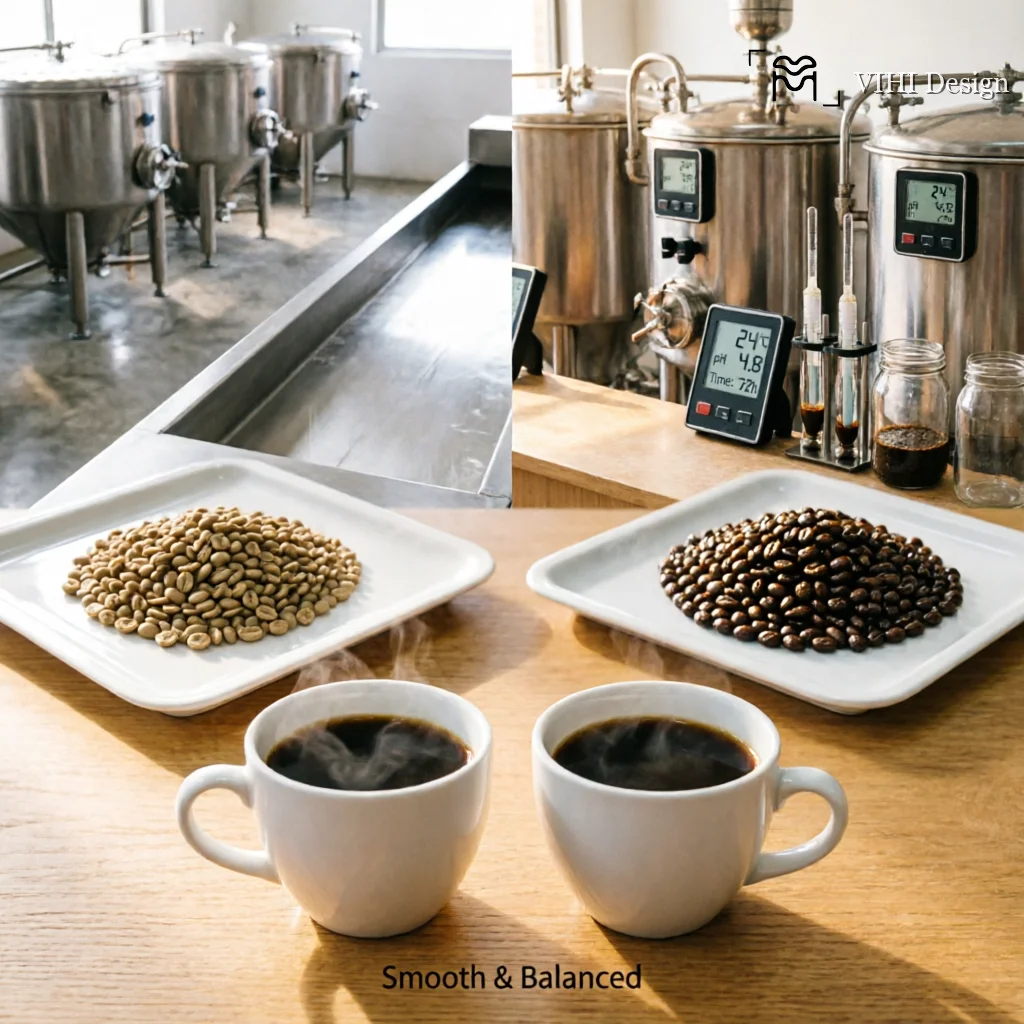
The critical control parameters include duration, temperature, pH, oxygen availability, and microbial inoculum. Each parameter influences the metabolic pathways active during fermentation, thereby dictating the final acid profile. For example, cooler, longer fermentations tend to favor slower, more controlled acid metabolism, while warmer temperatures accelerate activity, risking over-fermentation and the production of undesirable acetic acid (vinegar) or butyric acid (rancid) notes.
Physical and Environmental Factors
Beyond microbial action, physical processing methods impact acidity. The mechanical demucilaging of coffee, which removes the mucilage without fermentation, typically results in a profile similar to washed coffee. The drying phase is equally critical; slow, shaded drying can prolong residual enzymatic activity within the bean, potentially allowing for further acid conversion, while faster drying locks in the chemical state achieved at the end of fermentation. Altitude and ambient temperature during processing also play indirect roles by modulating the rate of all these biochemical reactions.
In summary, the theoretical framework for producing low-acidity coffee through post-harvest processing rests on the deliberate management of biochemical pathways to reduce specific organic acid concentrations and balance the remaining acid profile with increased sweetness and body. This involves a sophisticated understanding of fermentation science, enzyme kinetics, and the interplay between processing variables and the coffee seed’s intrinsic properties.
Post-Harvest Processing for Low-Acidity Coffee: Methods for a Smoother Cup
Practical Processing Methods for Roasters & Producers
Translating theory into practice requires a hands-on approach. Here are two primary processing methods proven to reduce perceived acidity, grounded in both tradition and modern fermentation science.
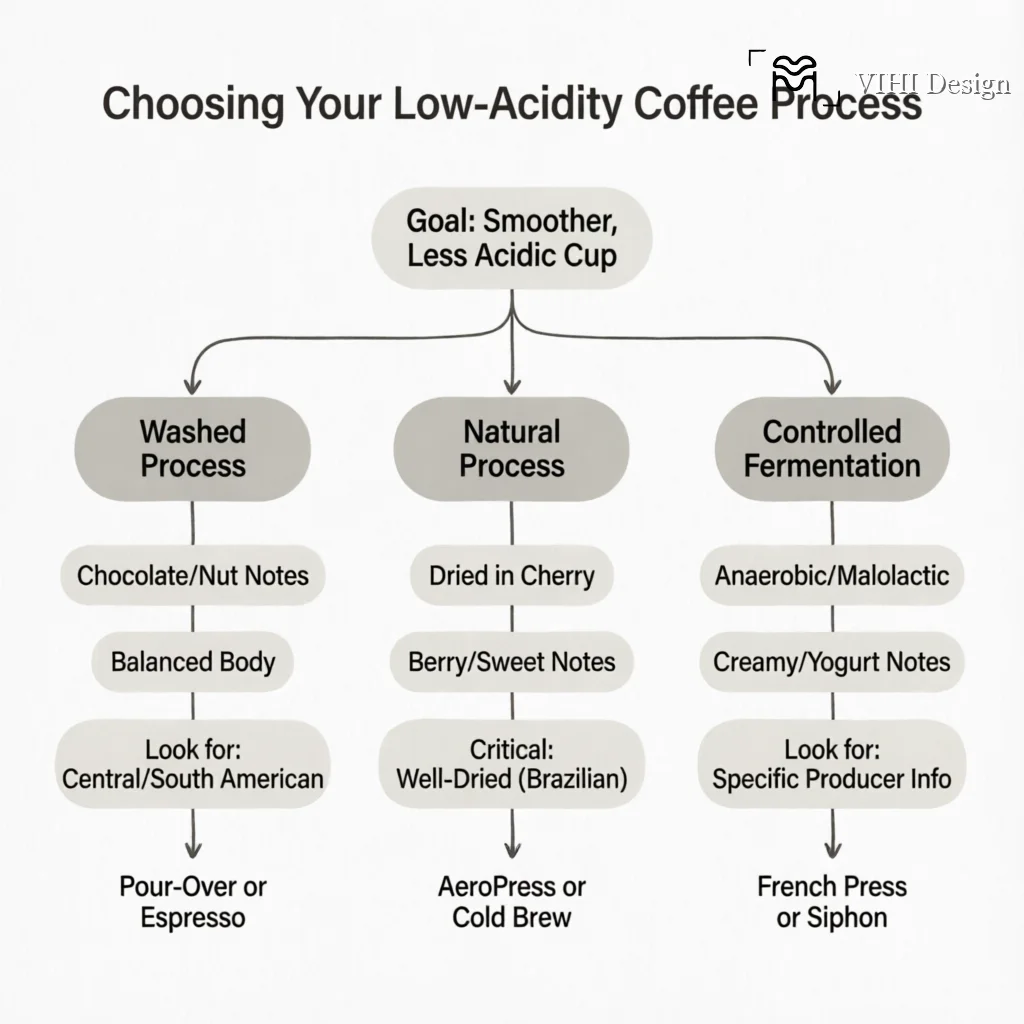
Controlled Anaerobic Fermentation: By placing depulped coffee in sealed, oxygen-free tanks, producers can steer microbial activity towards malic acid degradation and the production of heavier, buttery-tasting compounds like diacetyl. The key variables are time (often 72-96 hours) and temperature control (keeping it cool, around 18-22°C/64-72°F, slows the process for more control). This method directly targets the sharp apple-like notes of malic acid, resulting in a cup with profound sweetness and a creamy, rounded mouthfeel.
Extended Mucilage Fermentation (Washed Process): A more traditional, yet carefully managed approach. After depulping, the coffee—still coated in sugary mucilage—is soaked in water for an extended period (40-70 hours). This prolonged, aerobic fermentation allows microbes to thoroughly metabolize the sugars and acids. The result is a clean, articulate coffee where bright citric acidity is subdued, allowing inherent sweetness and subtle flavor notes to shine without sharp edges.
Brewing for Maximum Smoothness: A Barista’s Guide
Even the most carefully processed low-acidity coffee can taste sharp if improperly brewed. Your goal as a barista is to optimize extraction for body and sweetness while avoiding the high-end extraction that pulls out harsh compounds.
- Grind & Recipe: Use a slightly coarser grind than you might for a bright African coffee. Aim for a Total Dissolved Solids (TDS) of 1.15% – 1.45% and an Extraction Yield (EY) of 18% – 22%. This range prioritizes sweetness and body over maximum clarity. A good starting recipe is a 1:16.5 coffee-to-water ratio.
- Water Temperature: Slightly lower brew water (90°C – 92°C / 194°F – 198°F) helps suppress the extraction of acidic compounds. Avoid boiling water.
- Brew Method Emphasis: Immersion methods (French Press, AeroPress) are inherently great for these coffees, as they produce a full, consistent extraction. For pour-over, use a hybrid method (like a single-pour or 2-pour technique) to minimize agitation and channeling, which can lead to uneven, potentially astringent extraction.
Expert Insights: Sourcing and Quality Control
From the perspective of a seasoned coffee buyer, identifying well-executed low-acidity processed coffees requires a critical eye and palate.
Sourcing with Intent: Build relationships with producers who are transparent about their fermentation protocols. Ask about fermentation times, tank types (sealed vs. open), water quality, and how they monitor the process (pH meters, Brix readings, sensory checks). A producer who can articulate their method is more likely to have consistent, intentional results.
Cupping for Success: When cupping, pay less attention to high-end “sparkle” and more to the mid-palate and finish. Look for:
- Absence of Sharpness: No piercing citric or malic acid punch.
- Developed Sweetness: A pronounced, foundational sweetness (caramel, molasses, honey).
- Clean Fermentation Profile: The process should enhance, not mask. Avoid funky, overly winey, or acetic (vinegar) notes, which indicate poor fermentation control.
- Persistent Aftertaste: A smooth, pleasant, and sweet aftertaste is a hallmark of successful acid management.
Mastering low-acidity coffee is a journey from farm to cup, demanding collaboration between producer, roaster, and barista. By understanding the biochemical principles, applying precise processing and brewing techniques, and focusing on sensory outcomes, we can consistently deliver the profoundly smooth, sweet, and comforting cup that so many coffee lovers seek.