Introduction
The pursuit of the optimal cup of filter coffee is a multifaceted endeavor, governed by a complex interplay of variables including grind size, water chemistry, pouring technique, and thermal management. Within this framework, the filter paper—often regarded as a simple, disposable component—emerges as a critical and under-examined variable. Its material composition, texture, thickness, and structural design directly influence extraction dynamics by modulating flow rate, interacting with coffee oils, and introducing subtle particulate filtration. The choice of filter paper is not merely a practical consideration but a deliberate intervention in the extraction process, capable of accentuating or attenuating specific sensory attributes in the final brew.
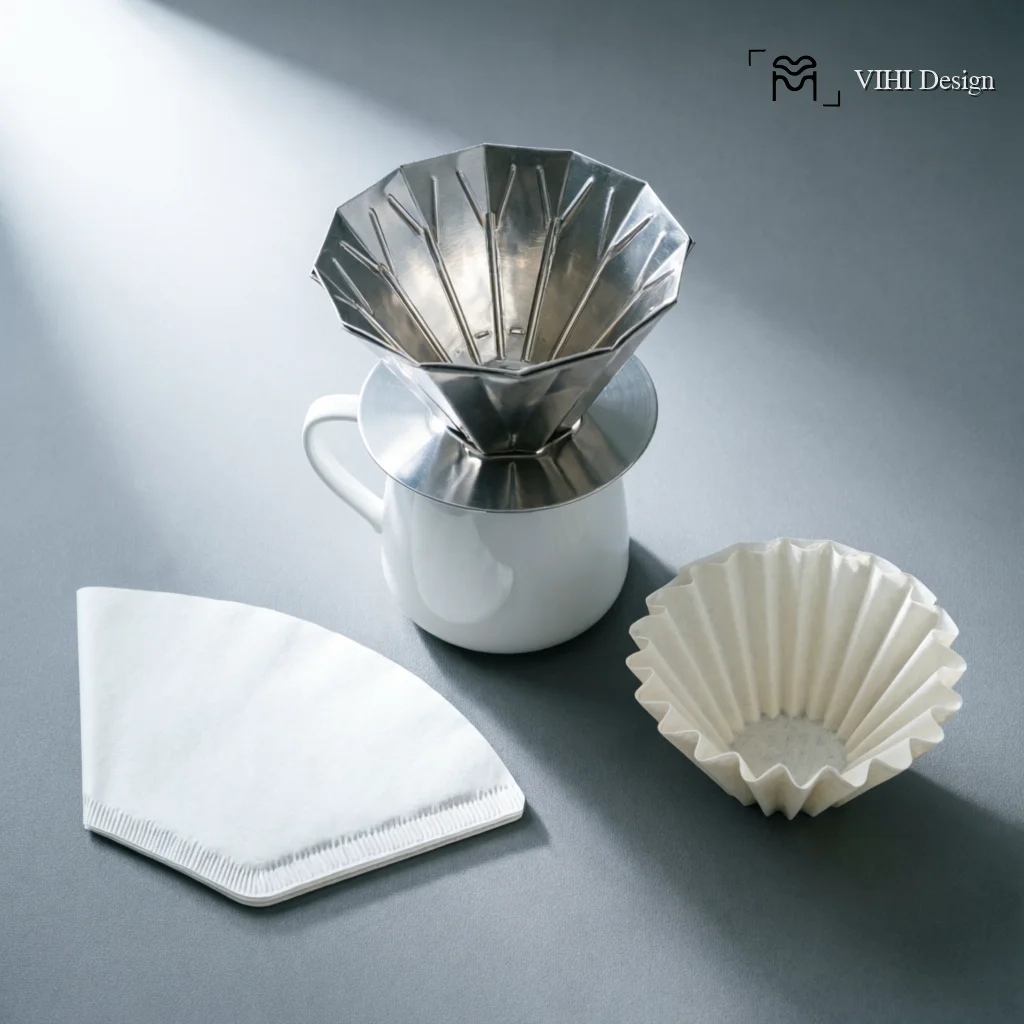
This investigation focuses on a comparative analysis of two preeminent and structurally distinct filter paper types: the flat-bottomed, pleated Kalita Wave filter and the conical, ribbed Hario V60 filter. While both are designed for manual pour-over brewing, their geometric and material differences propose fundamentally divergent extraction pathways. The central inquiry of this research is to determine which filter design, under controlled conditions, produces a cup profile that aligns with defined quality parameters for a given coffee origin and roast level. The hypothesis posits that the Kalita Wave filter, due to its flat bed geometry and slower, more consistent flow, will promote greater extraction uniformity and yield a cup with heightened body and balanced sweetness. In contrast, the V60 filter, with its steeper cone and faster flow potential, is anticipated to produce a cup with greater clarity, accentuated acidity, and more pronounced aromatic complexity, albeit with a higher risk of channeling and uneven extraction.
Theoretical Background
The extraction of coffee is a process of mass transfer, where soluble compounds (approximately 30% of the coffee bean’s mass) are dissolved into water. The goal of optimal brewing is to extract a balanced proportion (typically 18-22%) of these solubles, avoiding both under-extraction (sour, sharp) and over-extraction (bitter, astringent). The filter paper acts as a key boundary condition in this system, influencing the hydrodynamics of the slurry—the mixture of water and coffee grounds.
1. Hydrodynamics and Bed Geometry
The geometry of the filter paper dictates the shape of the coffee bed. A conical bed (V60) creates a deeper, narrower column of grounds. Water, following the path of least resistance, tends to flow faster through the center, a phenomenon that can lead to channeling if not meticulously managed by pour technique. This design, however, allows for a continuous draw-down, potentially increasing the interaction time between water and coffee in the lower sections of the cone, which can emphasize certain high-solubility compounds.
The flat-bottomed bed (Kalita Wave), supported by its pleated walls, creates a shallower, wider puck. This geometry promotes a more uniform horizontal saturation and reduces the hydraulic gradient that drives channeling. The result is a more predictable and consistent flow rate, theoretically leading to a more even extraction across the entire particle size distribution.
2. Flow Rate and Contact Time
Flow rate is a primary determinant of contact time, a core extraction variable. Filter paper influences flow through two main mechanisms: permeability and bypass. The inherent thickness and porosity of the paper material (often untabbed vs. tabbed, oxygen-bleached vs. natural) set a base permeability. Structurally, the V60’s pronounced ribs create air channels between the filter and the brewer wall, allowing for a significant amount of bypass—water that flows around the coffee bed entirely. This can reduce effective extraction but may also contribute to perceived clarity. The Kalita Wave’s design, with its closer contact to the brewer wall and small bottom holes, minimizes bypass, forcing a greater proportion of water through the coffee bed itself, which can increase extraction efficiency and body.
3. Filtration and Oil Retention
Beyond flow dynamics, the filter paper acts as a final sieve. The density of its cellulose matrix determines the size of particulates and the amount of coffee oils (lipids) that pass into the cup. Thicker papers (often associated with Kalita Wave) typically retain more oils and very fine sediment, resulting in a cup that is often described as “cleaner” with a lighter mouthfeel. Thinner papers (common in some V60 filters) may allow more oils and micro-fines through, contributing to a heavier body, more texture, and potentially more complex aromatics, but at the risk of slight siltiness. The interaction between these retained compounds and taste perception is non-trivial, as oils carry flavor precursors but can also mask clarity and introduce bitter notes.
Therefore, the selection between a Kalita Wave and a V60 filter is not a matter of simple preference, but a strategic choice within the brew recipe. It represents a selection of a specific extraction profile—prioritizing either uniformity and balance (Wave) or dynamic range and clarity (V60)—which must then be harmonized with grind size, water temperature, and pouring protocol to achieve the desired sensory outcome for a particular coffee.
The Science of the Filter: How Paper Design Dictates Your Cup
To understand why these filters produce such different results, we must look at their physical architecture. The Kalita Wave’s flat-bottom, wavy-sided design creates a stable, consistent bed depth. This geometry, combined with its three small drip holes, restricts flow and encourages a more immersive, steeping-like extraction. The result is a uniform extraction across the entire coffee bed, minimizing channeling and the risk of over-extracting fines, which is why it’s often more forgiving and associated with balanced, sweet cups.
Conversely, the V60’s iconic cone shape and single, large exit point create a deep, pointed bed. This design, aided by its pronounced spiral ribs that allow air and coffee to escape up the sides, promotes a faster, more directional flow. Water is pulled downward through the center, creating a dynamic and efficient percolation. This can highlight a coffee’s vibrant acidity and complex notes but demands more precision from the barista to avoid uneven extraction and the accompanying astringency or bitterness.
Practical Barista Tips: Optimizing Your Recipe for Each Filter
Your goal as a home barista should be to manipulate variables to land within the ideal Total Dissolved Solids (TDS) range of 1.15% to 1.45% and an Extraction Yield (EY) of 18% to 22%. Here’s how to approach each filter to hit that sweet spot.
For the Kalita Wave (The Balancer)
- Grind & Pour: Start with a medium grind (similar to table salt). The Wave’s restricted flow handles a slightly finer grind well. Use a steady, slow pour, often in 2-3 pulses, to maintain water level and ensure full saturation. Its design naturally promotes even extraction, so aggressive pouring techniques are less necessary.
- Pro Tip: Because of its flat bed, ensure your grounds are leveled before brewing. Avoid digging a “well” in the center during pouring. A flat bed equals uniform extraction.
- Target Profile: This method excels at achieving a balanced, full-bodied EY in the 19-21% range, often with a slightly higher TDS, leading to a more present mouthfeel.
For the V60 (The Highlighter)
- Grind & Pour: Begin with a medium-coarse grind. The fast flow requires it. Master a controlled pour, typically using the popular “single pour” or “pulse pour” methods, spiraling from the center outwards to aggressively agitate the slurry and wash the grounds from the filter walls. This agitation is key to preventing stalling and ensuring even extraction.
- Pro Tip: Pay close attention to your draw-down time. A V60 brew for 15g of coffee should typically finish between 2:00 and 2:45. A draw-down that’s too fast can mean under-extraction (sour, thin); too slow can lead to over-extraction (bitter, dry). Adjust grind size accordingly.
- Target Profile: The V60 is brilliant at producing cups with exceptional clarity and vibrant acidity, often landing in the 18-20% EY range with a slightly lower TDS, making flavors distinct and separated.
The Verdict: Which Wins for Your Coffee?
There is no universal winner, only the right tool for the job.
Reach for the Kalita Wave filters when: You have a coffee that is inherently complex or challenging—perhaps a very dense, high-altitude bean or a natural process with intense fruit notes. The Wave’s uniform extraction will tame sharp edges, round out the body, and present the coffee in a cohesive, sweet, and balanced manner. It’s also the superior choice for consistency, especially for beginners or when brewing back-to-back cups.
Reach for the V60 filters when: You have a high-quality, nuanced coffee you want to “deconstruct.” Washed Ethiopians, delicate Geshas, or any coffee celebrated for its sparkling acidity and floral/tea-like notes will sing in a V60. It gives you the barista-level control to highlight specific aromatic compounds and achieve breathtaking clarity, provided you are willing to dial in your technique.
Ultimately, the most enriching approach is to own both. Try the same coffee through each filter. Taste the profound difference paper geometry makes. This direct comparison is the fastest path to deepening your understanding of extraction and refining your palate, transforming you from a brewer into a true coffee craftsman.