Monitoring Microbial Health: pH, Brix, and Temperature Logs for Consistent Fermentation in Specialty Coffee Processing
Introduction
The pursuit of quality in specialty coffee has evolved from a focus solely on origin and roast profile to a profound appreciation for the intricacies of post-harvest processing. Among these methods, controlled fermentation has emerged as a pivotal tool for producers seeking to enhance cup profile complexity, develop unique sensory attributes, and add significant value to their crop. Unlike traditional, often spontaneous fermentation, modern specialty coffee processing treats fermentation as a directed microbial metabolism, where the activity of yeasts, bacteria, and other microorganisms is carefully managed to influence the biochemical composition of the coffee seed (i.e., the bean).
However, this shift from art to controlled science presents a fundamental challenge: microbial ecosystems are dynamic and sensitive to their environment. Inconsistencies in substrate, temperature, time, and hygiene can lead to divergent microbial successions, resulting in unpredictable and often defective cup qualities, such as excessive acidity, off-flavors (e.g., vinegar, rotten fruit), or a lack of the desired aromatic complexity. The core problem, therefore, is the “black box” nature of fermentation, where producers have historically relied on elapsed time or subjective cues (smell, visual appearance) as endpoints, with little objective insight into the metabolic processes occurring within the tank or pile.
This paper posits that the key to unlocking consistent, high-quality fermented coffees lies in the implementation of a simple, accessible, yet scientifically grounded monitoring protocol. By routinely tracking three key parameters—pH, Brix (soluble solids, primarily sugars), and temperature—producers can move from guesswork to informed management. This triad of data serves as a proxy for microbial health and activity, allowing for real-time adjustments and creating a reproducible log for process refinement. The objective of this research is to establish the theoretical foundation and practical significance of this monitoring framework, demonstrating how it transforms fermentation from an opaque step into a transparent, controllable, and repeatable stage of quality creation in the specialty coffee value chain.
Theoretical Background
The fermentation of coffee mucilage is primarily a microbial-driven degradation of pectinaceous and sugary substrates. The mucilage, a sticky layer rich in pectin, sugars (sucrose, glucose, fructose), and acids, provides an ideal growth medium for a diverse consortium of microorganisms present on the cherry surface and in the processing environment. The succession and metabolic output of this consortium—shifting from enterobacteria and yeasts to lactic acid bacteria (LAB) and acetic acid bacteria (AAB)—directly determine the chemical environment that influences bean composition.
The Role of Key Parameters
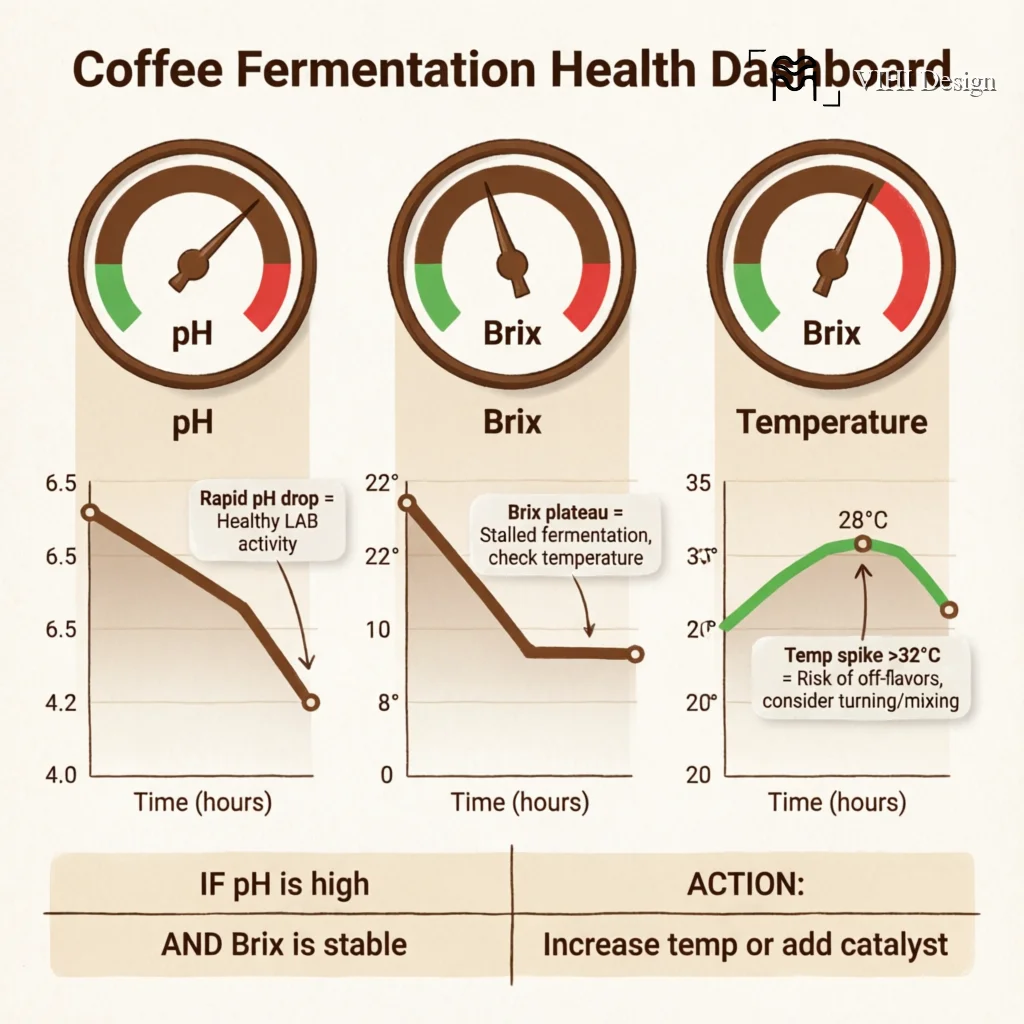
pH (Potential of Hydrogen): pH is the most critical indicator of fermentation progression. It measures the acidity or alkalinity of the fermenting mass, directly reflecting the production of organic acids (e.g., lactic, acetic, citric) as metabolic byproducts. A rapid initial drop in pH (e.g., from ~6.0 to below 4.5) is typically driven by LAB and yeasts, creating a selective environment that inhibits spoilage organisms and pathogens. Monitoring pH trends allows a producer to identify the rate of acidification, pinpoint the stabilization phase where microbial activity slows, and prevent over-fermentation, which can lead to excessive sourness or “fermented” defects. It serves as a primary safeguard against uncontrolled microbial growth.
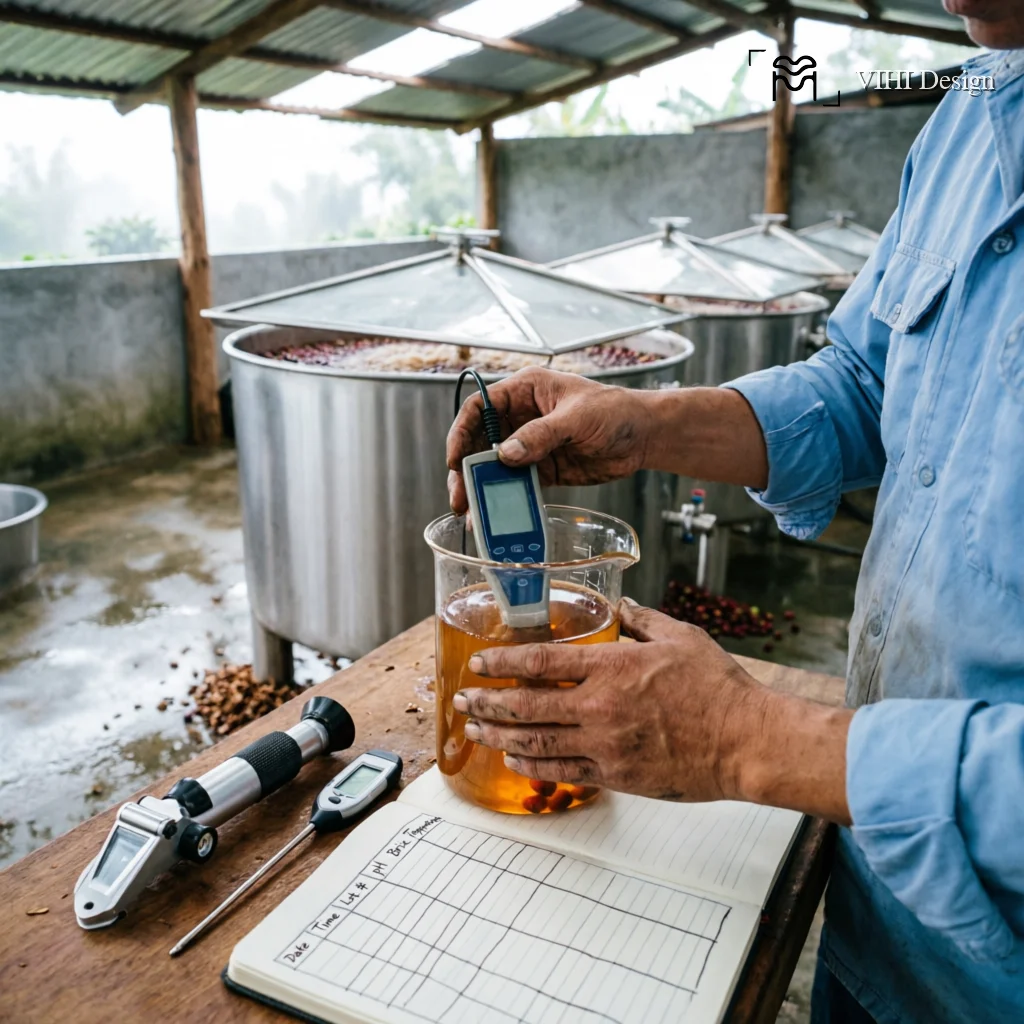
Brix (% Soluble Solids): Measured with a refractometer, Brix in a fermentation context approximates the concentration of soluble sugars in the mucilage juice. As microbes metabolize sugars for energy, the Brix value will decline. Tracking this depletion rate provides a direct proxy for microbial metabolic activity and sugar availability. A stalled Brix decline may indicate a microbial stall due to unfavorable temperature or pH, while an extremely rapid drop might suggest a highly aggressive, potentially undesirable, microbial bloom. The starting Brix level also informs the potential intensity and duration of fermentation, as it defines the initial fuel available for microbes.
Temperature: Temperature is the master variable controlling microbial metabolism rates. Within the fermenting mass, exothermic microbial activity can raise the temperature significantly above ambient—a phenomenon known as a “heat spike.” Monitoring this core temperature is essential. Optimal ranges (typically 20-30°C) promote desirable microbial groups; temperatures too low (<18°C) slow activity risk stalling, while temperatures too high (>35°C) can promote the growth of thermophilic or undesirable bacteria, lead to overly rapid fermentation, and potentially cause “stinker” defects. Temperature logs help identify the onset of active fermentation and can signal when to turn or aerate the mass to prevent overheating and anaerobic hotspots.
Synthesis: Parameters as an Integrated System
Individually, each parameter offers a snapshot; together, they form a dynamic narrative of the fermentation. For instance, a simultaneous, rapid drop in pH and Brix coupled with a rising temperature indicates vigorous, healthy microbial activity. A falling temperature with a stable, low pH and Brix suggests fermentation completion. A rising or stable pH alongside a falling temperature may indicate a stalled fermentation requiring intervention. By logging these three parameters at regular intervals (e.g., every 3-6 hours), a producer creates a fermentation profile. This profile becomes an empirical record that can be correlated with final cup quality, enabling the refinement of process variables (duration, aeration, inoculation) to consistently target a specific sensory outcome. This approach aligns with the fundamental principles of food microbiology and bioprocess engineering, applying them to the artisanal context of coffee processing to reduce variability and mitigate risk while empowering producers with data-driven decision-making.
Theoretical References & Further Reading: The principles outlined are grounded in food microbiology (e.g., the role of LAB/AAB in acidification), enology (Brix monitoring for fermentation kinetics), and biocontrol science. Key foundational concepts draw from work on microbial succession in coffee fermentation (Silva et al., 2013; Evangelista et al., 2014), the impact of environmental factors on fermentation quality (Bressani et al., 2021), and the application of simple metrics for process control in small-scale food production (LeBlanc & Todorov, 2011).
Monitoring Microbial Health: pH, Brix, and Temperature Logs for Consistent Fermentation
Translating Farm Data into Roastery Decisions
The meticulous logs kept during fermentation—tracking the drop in pH, the decline in Brix, and the stable temperature—are not just farm records; they are a quality blueprint for the roaster. A fermentation that proceeded with a steady, predictable microbial succession (as indicated by consistent pH drop) suggests a stable substrate. As a roaster with over a decade of experience, I’ve learned that such batches often possess a more developed, cleaner sugar matrix. This allows me to approach the roast profile with greater confidence, often opting for a slightly more aggressive development phase to highlight the inherent sweetness and complex acidity created on the farm, knowing the foundation is solid.
Conversely, erratic fermentation logs—a pH that stalled or a temperature that spiked—signal potential stress or microbial imbalance. These beans require a more cautious roasting approach. I might extend the drying phase to ensure even heat penetration or lower the charge temperature to avoid baking, focusing on achieving a balanced, clean cup rather than pushing for extreme flavor development. The farm’s data directly informs the roaster’s strategy, closing the loop on quality control.
The Barista’s Final Check: Brewing the Fermented Coffee
For the barista, the work of the farmer and roaster culminates at the brew bar. Your role is to extract and present the flavors that the fermentation process helped create. The target extraction metrics—18-22% Extraction Yield (EY) at a 1.15-1.45% Total Dissolved Solids (TDS)—are your final quality checkpoints. They tell you if you’ve successfully translated the bean’s potential into the cup.
A coffee with a vibrant, fruity acidity developed through lactic fermentation might shine at the higher end of that EY range (21-22%), pulling out more of the complex sugars. A coffee with a heavier, winey body from a longer fermentation might taste best at a slightly lower EY (18-19.5%) to maintain balance and avoid astringency. Use your refractometer not as a judge, but as a guide.
Building a Culture of Consistent Quality
Ultimately, monitoring pH, Brix, and temperature is not about imposing industrial rigidity on an agricultural product. It’s about building a shared language of quality from farm to cafe. It empowers farmers with actionable feedback, provides roasters with predictive insights, and equips baristas with the understanding to brew with intention. When each stakeholder in the chain understands how a stable fermentation at origin leads to a more predictable and delicious extraction in the cup, the entire industry moves toward greater consistency, transparency, and excellence. Start simple: track one metric, taste the difference, and build your process from there. The pursuit of the perfect cup is a journey of continuous learning, grounded in data and refined through experience.