Introduction: Why Timeline is the Master Control Variable in Anaerobic Fermentation
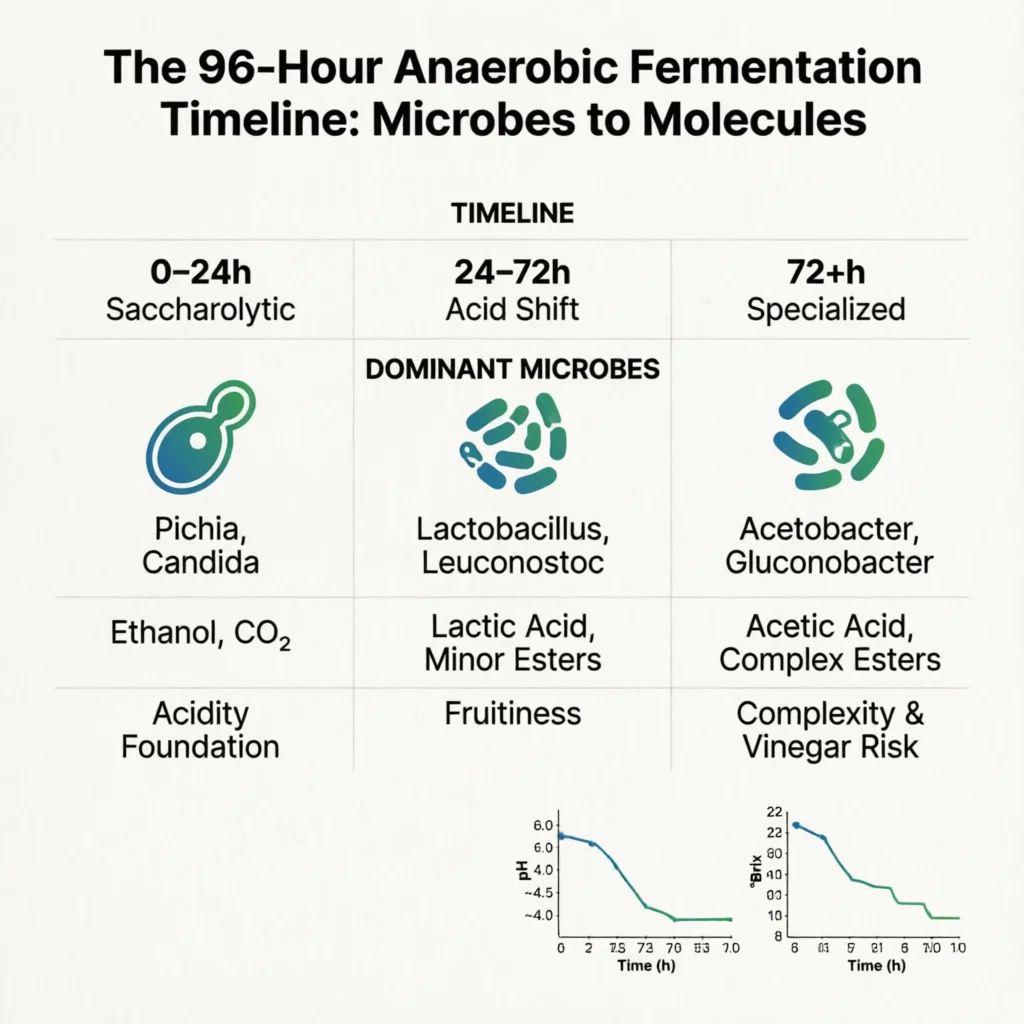
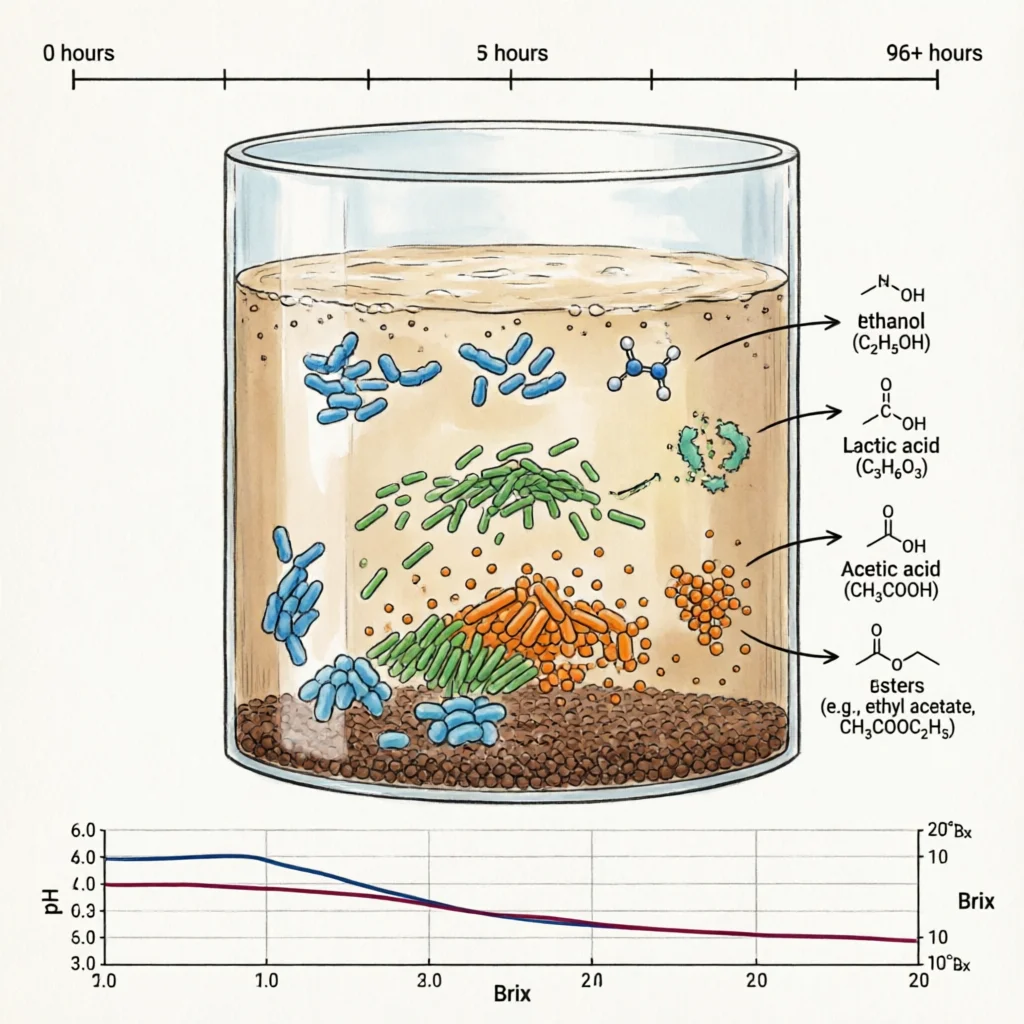
Anaerobic fermentation, a controlled processing method in specialty coffee, is defined by the microbial metabolism of coffee fruit mucilage in an oxygen-depleted environment. While parameters such as pH, temperature, and Brix are critical, the fermentation timeline is the master control variable. It dictates the sequence of biochemical transformations, the succession of microbial populations, and ultimately, the sensory profile of the resulting coffee. Unlike aerobic processes where oxygen availability drives rapid, oxidative metabolism, the absence of oxygen creates a selective pressure that structures microbial activity in a time-dependent cascade. The timeline is not merely a duration but a framework for predictable succession. Each phase of the timeline is characterized by distinct dominant microbial guilds, their metabolic outputs, and the consequent shifts in the substrate’s chemical composition. Therefore, mapping microbial succession against a precise timeline is essential for moving from artisanal practice to a reproducible, scientifically-grounded protocol for flavor development.
The Microbial Players: A Cast of Thousands (Fungi, Yeast, LAB, AAB)
The fermentation ecosystem is a complex consortium of microorganisms originating from the farm environment. Their growth and interactions are governed by the changing physicochemical conditions within the fermentation tank over time.
Fungi and Yeasts (Kingdom Fungi)
Fungi, including filamentous fungi and unicellular yeasts, are often early colonizers. They possess robust enzymatic arsenals, including pectinases, which break down the pectin-rich mucilage, initiating pulp degradation and altering substrate viscosity. Yeasts, particularly non-Saccharomyces species such as Pichia, Hanseniaspora, and Candida, are highly active in the initial and middle phases. Their primary metabolic contributions under anaerobic conditions include:
- Ethanol production via glycolysis.
- Generation of volatile esters, higher alcohols, and organic acids that form aroma precursors.
- Modulation of pH through acid production.
Some yeast species can engage in rudimentary respiratory metabolism if trace oxygen is present, but are primarily fermentative under strict anaerobiosis.
Lactic Acid Bacteria (LAB)
Lactic Acid Bacteria are Gram-positive, facultative anaerobes that become dominant as simple sugars are released and pH drops. They are classified by their metabolic pathways:
- Homofermentative LAB (e.g., Lactobacillus spp., Pediococcus spp.): Convert hexoses almost exclusively to lactic acid via the Embden-Meyerhof-Parnas pathway, causing a rapid, sharp decrease in pH.
- Heterofermentative LAB (e.g., Leuconostoc spp., some Lactobacillus): Utilize the phosphoketolase pathway to produce lactic acid, ethanol/acetic acid, and CO₂ from hexoses, and produce acetic acid from pentoses.
LAB activity is crucial for producing lactic acid, which contributes to a perceived creamy body and mild acidity, and for producing antimicrobial compounds that shape the microbial community.
Acetic Acid Bacteria (AAB)
Acetic Acid Bacteria are Gram-negative, obligate aerobes. Their role in strictly anaerobic fermentation is typically limited due to their requirement for molecular oxygen as a terminal electron acceptor. However, they can become relevant in two scenarios:
- During the initial phase if oxygen is not fully purged from the system.
- If the fermentation vessel is not hermetically sealed, allowing micro-aerobic conditions at the substrate surface.
When active, AAB (e.g., Acetobacter, Gluconobacter) oxidize ethanol produced by yeasts into acetic acid. Uncontrolled AAB activity can lead to excessive vinegar-like notes, underscoring the importance of maintaining anaerobic conditions to suppress their metabolic function.
The succession of these groups—from pectinolytic fungi and sugar-consuming yeasts to acid-tolerant LAB—is a deterministic process driven by substrate depletion and waste product accumulation. The precise timeline determines which group dominates at each stage, thereby controlling the final balance of organic acids, alcohols, and esters in the fermented coffee seed.
Microbial Succession: The Deterministic Clock of Fermentation
The microbial progression is not random but a predictable cascade dictated by resource competition. Initial pectinolytic fungi and yeasts consume readily available sugars and pectin, lowering pH and creating an environment hostile to their own survival. This paves the way for acid-tolerant lactic acid bacteria (LAB), which further acidify the environment. The precise timing of each group’s dominance, governed by substrate depletion and metabolic waste, directly engineers the seed’s final chemical architecture. Missing a stage truncates this biochemical narrative, leading to incomplete or unbalanced flavor development.
Quantifying Fermentation Impact: From Tank to Cup Metrics
Successful anaerobic processing must translate to measurable improvements in extraction. The fermentation profile directly influences the bean’s soluble material, demanding specific adjustments at the brew bar.
- Total Dissolved Solids (TDS): Target 1.15% – 1.45%. Anaerobic coffees often exhibit higher solubility; a TDS below 1.15% may indicate under-extraction of developed sugars, while a reading above 1.45% risks extracting excessive ferment-derived compounds, leading to a muddy or overly funky cup.
- Extraction Yield (EY): Target 18% – 22%. The complex sugar matrix created by fermentation can extract efficiently. An EY below 18% often yields sour, underdeveloped acidity; above 22%, the cup can become harshly bitter, amplifying any residual acetic acid.
- Grind Particle Size: Typically requires a slightly coarser setting than a washed coffee of the same origin. The altered cellular structure from fermentation increases brittleness; a standard wash grind can lead to rapid channeling and over-extraction of the most soluble compounds.
Barista’s Field Notes: Addressing Common Struggles
Theoretical knowledge fails without sensory translation. These are the critical pivot points where process dictates quality.
- “My anaerobic ferments sometimes taste great, sometimes like vinegar.” Inconsistency stems from missing the terminal sensory cue. Vinegar (acetic acid) marks the endpoint of LAB dominance and the rise of acetic acid bacteria (AAB). This shift is not time-based but condition-based, triggered by oxygen ingress or excessive ethanol. A perfect ferment is halted 6-12 hours before this point.
- “I’m told to ferment for ’96 hours’ but see no visible change after day 2.” Stopping is the most common error. The crucial LAB activity is largely subsurface and non-effervescent. Visible changes (bubbling, cap formation) belong to the early yeast phase. The silent second phase (48-96 hours) is where LAB builds lactic acid complexity and mouthfeel. Relying on visuals guarantees under-fermentation.
- “All the advice is generic (‘watch pH’), but I need to know which microbe is doing what.” True control requires microbial-stage thinking.
- 0-48 hrs: Yeasts (e.g., Saccharomyces) dominate. They produce ethanol, CO2, and fruity esters. pH drops rapidly from ~6.0 to 4.0. Action: Ensure full anaerobiosis.
- 48-84 hrs: LAB (e.g., Lactobacillus) take command. They convert remaining sugars and some yeast ethanol into lactic acid, increasing perceived sweetness and body. pH stabilizes or drops slowly to ~3.8. Action: Monitor for the sensory shift.
- 84+ hrs: AAB (e.g., Acetobacter) threaten. They convert ethanol to acetic acid (vinegar) if oxygen is present. pH may rise slightly as acids volatilize. Action: Terminate fermentation immediately upon detection.
Pro-Tip: The most critical sensory window is between 60-80 hours. At around the 72-hour mark, gently agitate the top layer of the tank and smell immediately. You’re not looking for fruitiness anymore—you’re hunting for the first hint of ‘nail polish remover’ (ethyl acetate) or sharp vinegar. If you get the former, you have 6-12 hours before it tips into the latter. This is your signal to either wash immediately to preserve vibrant acidity or push for 12 more hours for a wilder, winey profile, accepting a higher risk. Most processors miss this narrow decision point.
Post-Fermentation Protocol: Stabilizing the Microbial Legacy
Washing and drying are not merely mechanical steps but the final act of flavor curation. Inadequate washing leaves a microbial inoculum and metabolic byproducts on the parchment, which continue to react during drying, often degrading the carefully crafted profile. Use copious, clean water to drop the seed temperature rapidly and dilute residual acids. Drying must commence immediately and uniformly; stalling at high moisture levels invites uncontrolled aerobic fermentation, which can introduce off-flavors that obliterate the precision of the anaerobic process.
Technical Summary
- Anaerobic fermentation is a deterministic microbial succession: yeasts (0-48h) to lactic acid bacteria (48-84h), with acetic acid bacteria as a spoilage endpoint.
- Process control requires stage-specific monitoring, not just time or pH. The 60-80 hour window is critical for sensory evaluation to preempt vinegar development.
- Optimal brew metrics for anaerobic coffees target a TDS of 1.15-1.45% and an EY of 18-22%, often requiring a coarser grind setting than washed counterparts.
- Termination and post-fermentation handling are as crucial as the tank phase. Immediate, thorough washing and rapid, even drying stabilize the flavor profile.
- Consistency demands understanding that visible activity ceases while critical microbial metabolism continues subsurface; time-based recipes fail without stage-awareness.