Mapping Microbial Metabolites to Flavor Notes: A Guide to Fermentation Flavors in Specialty Coffee
Introduction
The pursuit of flavor in specialty coffee has evolved from a focus on terroir and cultivar to a sophisticated understanding of post-harvest processing as a deliberate biochemical intervention. Central to this paradigm shift is the recognition of fermentation not merely as a method for mucilage removal, but as a critical, controlled phase where microbial metabolism directly architects the sensory profile of the final cup. Historically, fermentation was often an uncontrolled, variable step, sometimes leading to defects. Today, it is increasingly harnessed as a tool for flavor creation, yielding coffees with pronounced notes of tropical fruit, complex acidity, wineyness, and profound sweetness that were once rare or accidental.
However, the transition from empirical practice to predictive science remains a challenge. Producers and roasters often operate with a sensory lexicon—describing flavors as “juicy,” “funky,” or “fermented”—without a clear, mechanistic map to the underlying microbial and chemical processes. This gap between descriptive flavor notes and generative metabolic pathways limits the precision, consistency, and intentionality of fermentation-based processing. This guide, therefore, aims to construct a foundational framework for mapping specific microbial metabolites to the flavor notes they produce. By elucidating the theoretical connections between microbial activity, its chemical products, and ultimate sensory perception, we seek to empower coffee professionals to move from observation to design in the realm of fermentation flavors.
Theoretical Background
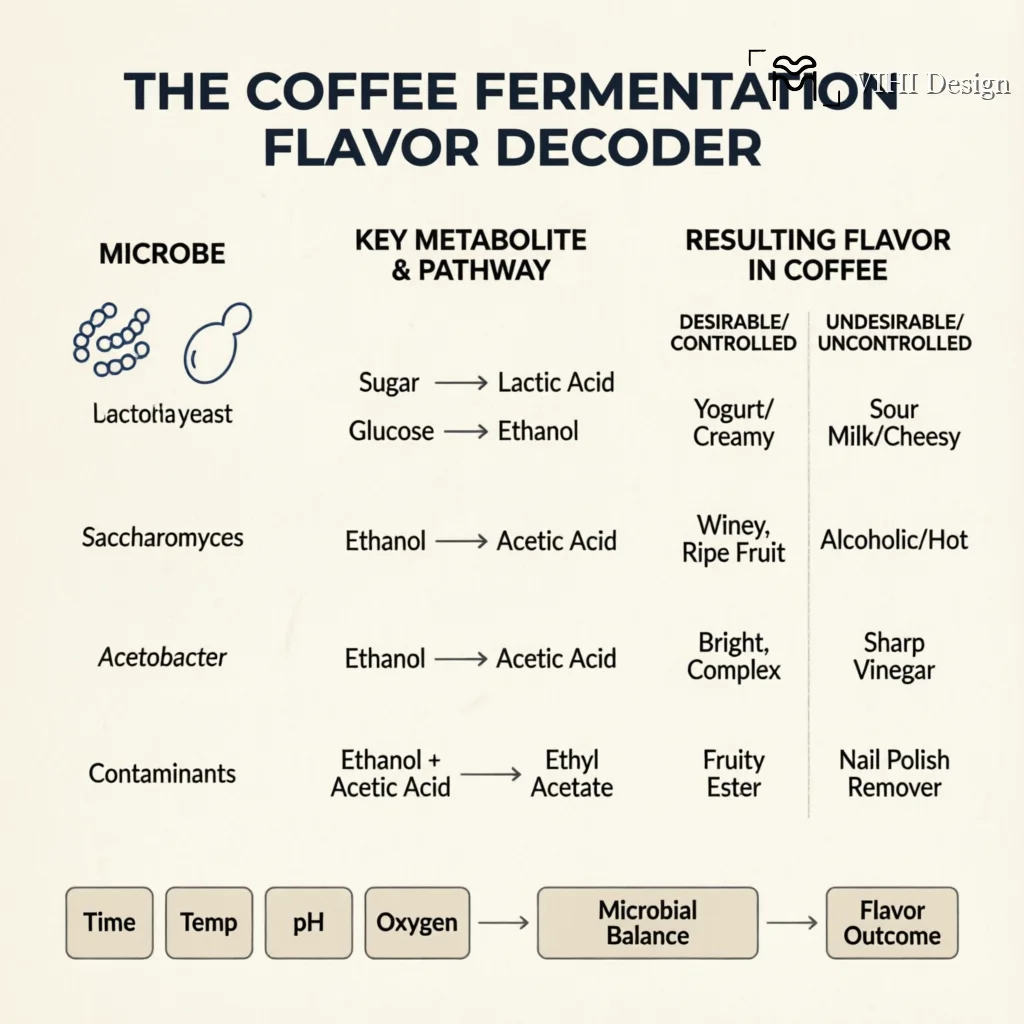
The fermentation of coffee is an ecological succession primarily driven by microorganisms—yeasts, lactic acid bacteria (LAB), acetic acid bacteria (AAB), and other fungi—present on the cherry surface, in the environment, or introduced via starter cultures. These microbes metabolize the sugars, acids, and other compounds within the coffee mucilage and parchment in an anaerobic or aerobic environment. Their metabolic pathways produce a diverse array of primary and secondary metabolites, including organic acids, alcohols, esters, aldehydes, ketones, and volatile aromatic compounds. It is this chemical milieu, shaped by microbial succession and processing parameters (time, temperature, pH, oxygen), that infiltrates the bean, modifying its biochemical composition during drying and setting the stage for flavor development during roasting.
Key Microbial Groups and Their Metabolic Signatures
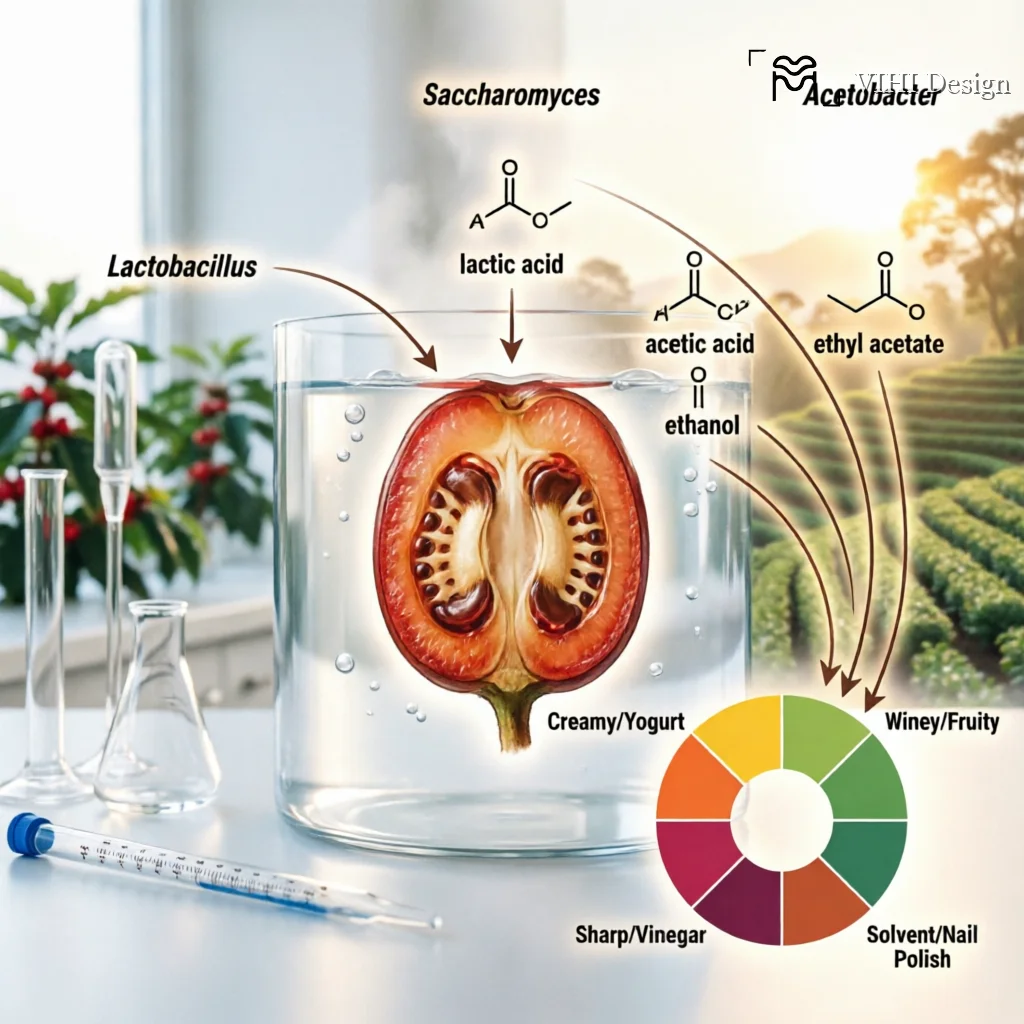
The sensory outcome of fermentation is largely dictated by which microbial groups dominate and under what conditions. Saccharomyces and non-Saccharomyces yeasts are prolific producers of ethanol, carbon dioxide, and a suite of ester compounds through alcoholic fermentation. Esters like ethyl acetate (pineapple, solvent) and isoamyl acetate (banana, pear) are direct contributors to fruity top notes. Lactic Acid Bacteria (LAB), thriving in more anaerobic conditions, conduct homolactic or heterolactic fermentation, producing primarily lactic acid—which contributes a clean, sharp, or creamy acidity—as well as acetic acid, ethanol, and carbon dioxide. Acetic Acid Bacteria (AAB), requiring oxygen, oxidize ethanol into acetic acid (vinegar), which at controlled levels can enhance perceived brightness and complexity, but in excess leads to sourness and defect.
From Metabolite to Flavor Perception
The link between a specific metabolite and a perceived flavor note is mediated by several factors. First, the concentration of the compound is critical; for instance, low levels of butyric acid may impart a pleasant dairy or cheesecake note, while high levels are perceived as rancid butter. Second, synergy and masking between compounds play a major role; the perception of fruity esters can be enhanced by the presence of certain acids and muted by dominant phenolic compounds. Third, the roasting process thermally degrades, transforms, and creates new compounds from these fermentation-derived precursors through Maillard reactions, Strecker degradation, and caramelization. Thus, a metabolite like citric acid (from microbial action on sugars) can influence the formation of key aroma compounds during roasting, indirectly shaping the final flavor profile beyond its direct sour taste.
A Framework for Flavor Mapping
This guide proposes a mapping framework based on a cause-and-effect chain: Microbial Species/Consortium → Dominant Metabolic Pathway → Key Metabolites Produced → Potential Flavor Notes (Pre- and Post-Roast). For example, the dominance of Pichia kluyveri (a yeast) may lead to enhanced production of ethyl esters from fatty acids, resulting in a metabolite profile high in ethyl hexanoate and ethyl butyrate, which are associated with strong fruity (pineapple, strawberry) and wine-like flavor notes in the roasted coffee. By understanding these pathways, processors can manipulate variables such as oxygen exposure, temperature, and microbial inoculation to steer the fermentation towards a desired metabolic—and thus sensory—outcome.
From Fermentation to Cup: Translating Microbial Science into Barista Practice
In Part 1, we explored how microbial pathways create the flavor precursors we love. But a fascinating fermentation profile means nothing if it’s lost in roasting or brewing. This section bridges the gap between processor intention and barista execution, focusing on how to honor and highlight these complex flavors in the final cup.
Brewing as Flavor Extraction: Targeting Specific Metabolites
The compounds created during fermentation—esters, aldehydes, acids—have different solubilities and volatility. Your brewing parameters act as a filter, determining which metabolites make it to the cup and in what balance. A heavy, over-extracted brew can mask delicate fruity esters with harsh bitterness, while an under-extracted one might present only the brightest, sharpest acids.
For coffees with pronounced fruity/winey esters (like ethyl hexanoate from controlled yeast fermentations):
- Grind & Flow: Aim for a slightly coarser grind to promote a faster flow rate (e.g., 3:00 total brew time for a V60). This can help preserve volatile top notes and prevent extracting too many masking bitters.
- Temperature: Use water off the boil (e.g., 96-98°C / 205-209°F). Many desirable esters are highly volatile and extract well at higher temperatures.
For coffees with pronounced complex acids (like malic or citric from lactic acid bacteria):
- Temperature: A slightly lower temperature (92-94°C / 198-201°F) can help balance perceived acidity, making it juicier and less sharp.
- Agitation: Use controlled, gentle agitation. Excessive stirring can lead to uneven channels and localized over-extraction of harsh compounds.
The Non-Negotiables: TDS & EY for Fermented Coffees
With experimentally processed coffees, measuring your extraction is not pedantic—it’s essential. It provides the objective framework within which you can subjectively evaluate flavor. Relying solely on taste can be misleading due to the unusual and intense sensory profiles.
Practical Extraction Zone for Fermented Coffees
For most naturally or intentionally fermented coffees, we recommend a slightly tighter target window than generic guidelines:
- Total Dissolved Solids (TDS): Aim for 1.15% – 1.35%. A TDS above 1.4% often pushes these coffees into a muddy, overly fermented, or boozy territory. Below 1.15%, the cup can taste hollow and sour, lacking the sweetness to balance the intense flavors.
- Extraction Yield (EY): Target 18.5% – 20.5%. The complex sugar structures and organic acids in these coffees can extract quickly. Pushing extraction much beyond 21% frequently pulls out astringent and bitter compounds that clash with the fermentation-derived flavors.
Why this matters: A coffee with a TDS of 1.25% and an EY of 19.5% will likely present a clean, vibrant, and balanced expression of its fermentation notes. The same coffee at 1.45% TDS and 22% EY may taste overwhelmingly funky, boozy, or harsh.
Curating the Experience: Serving and Pairing
Your role extends beyond brewing. You are the guide for the customer’s experience. Frame the coffee to enhance their perception.
- Serve in a Wide Bowl Cup: This allows the full aromatic profile—where many fermentation notes live—to reach the nose. Contrast a funky natural processed coffee served in a narrow mug vs. a wine glass; the difference in aromatic intensity is staggering.
- Temperature Guidance: Advise customers to taste as it cools. The character will evolve significantly. What starts as bright pineapple may mellow into strawberry jam, and finally into a deep red wine note.
- Simple Pairings: For intensely fruity coffees, try a small piece of dark chocolate (70%+) to amplify fruitiness through contrast. For winey/boozy coffees, a plain, cool glass of water as a palate cleanser between sips is the best “pairing” to reset the senses.
By understanding the origin of these flavors and applying precise, measured brewing techniques, you move from simply serving coffee to showcasing a tangible result of microbial artistry. You become the essential final link in the chain from farm to flavor.