Lactic Acid Bacteria (LAB) in Coffee: Beyond Yogurt, Building Creamy Body and Malic Acid Conversion
Introduction
The pursuit of quality and distinctiveness in specialty coffee has driven innovation beyond traditional cultivation and roasting practices, venturing into the precise microbial management of post-harvest processing. While the role of yeasts and acetic acid bacteria in fermentation has been explored, the potential of Lactic Acid Bacteria (LAB) remains a nascent yet profoundly promising frontier. Known predominantly for their indispensable role in dairy fermentations (e.g., yogurt, cheese) and vegetable fermentations (e.g., sauerkraut, kimchi), LAB are gram-positive, anaerobic to facultative anaerobic bacteria that metabolize sugars primarily into lactic acid. This introduction posits that the deliberate inoculation and control of LAB in coffee processing can transcend their conventional associations, offering a powerful biotechnological tool to intentionally modulate two critical sensory attributes: mouthfeel (body) and acidity profile.
Current spontaneous fermentation processes in coffee are microbiologically complex and often unpredictable, leading to inconsistent cup profiles. The targeted application of specific LAB strains presents an opportunity to move from chance to design. This research investigates the hypothesis that selected LAB consortia can enhance the perceived creamy body of coffee through the production of exopolysaccharides (EPS) and concurrently modify the acid structure by converting sharp malic acid into softer lactic acid. By doing so, this study aims to bridge the gap between food microbiology and coffee science, proposing a framework for using LAB not as contaminants, but as intentional agents for crafting superior and reproducible sensory experiences in the cup.
Theoretical Background
The fermentation phase of coffee processing, whether wet, honey, or anaerobic, is a dynamic ecosystem where microbial succession dictates the final chemical composition of the bean. Lactic Acid Bacteria typically emerge as dominant players in the mid to late stages of these fermentations, especially under reduced oxygen conditions. Their metabolic activities are central to the transformation of the coffee mucilage and the diffusion of metabolites into the bean.
Metabolic Pathways and Sensory Impact
LAB influence coffee quality through two primary, interconnected metabolic pathways: homofermentative or heterofermentative lactic acid production and malolactic fermentation (MLF). In homofermentation, hexose sugars (e.g., glucose, fructose from mucilage) are converted almost exclusively to lactic acid, contributing to a clean, sharp acidity and a rapid pH drop which stabilizes the ecosystem against spoilage organisms. Heterofermentative strains produce lactic acid, carbon dioxide, and acetic acid or ethanol, potentially adding complexity.
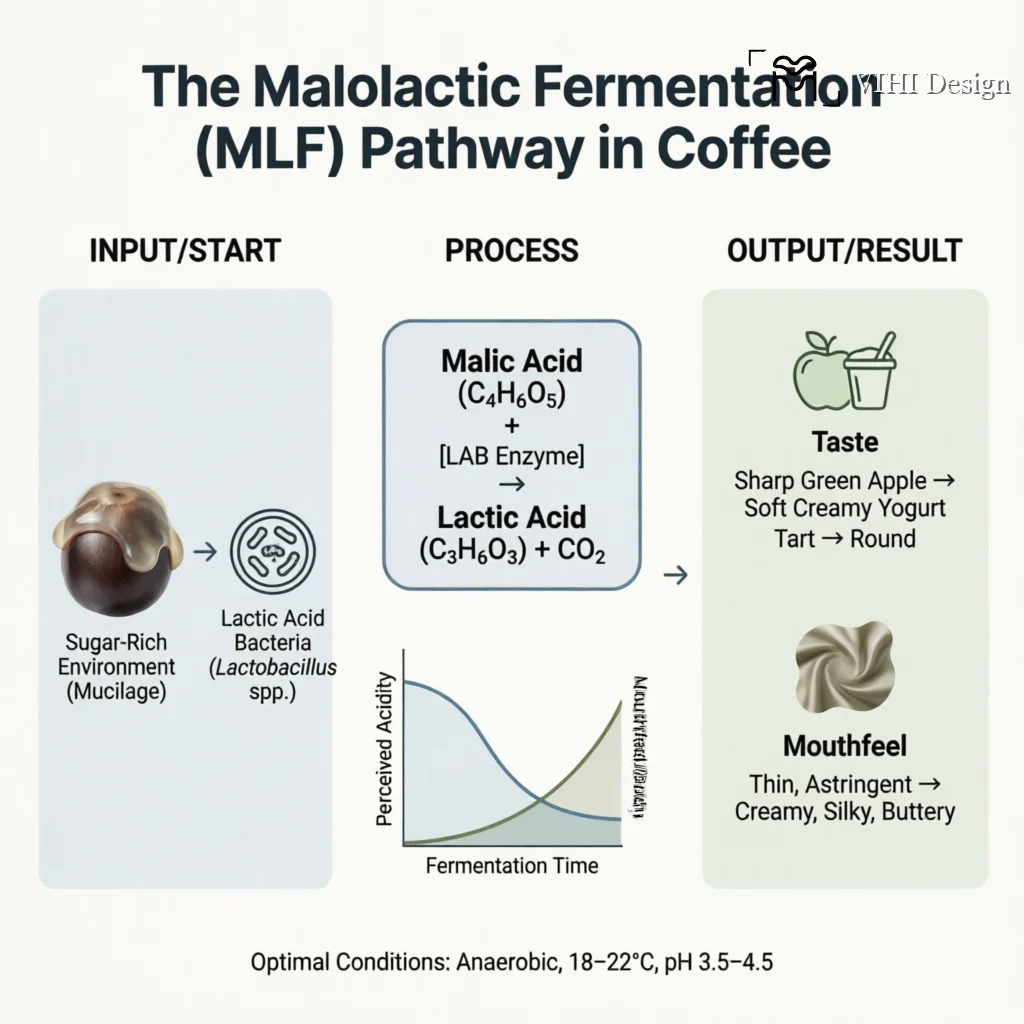
Of particular interest is Malolactic Fermentation (MLF), a secondary fermentation where LAB enzymatically decarboxylate L-malic acid (a dicarboxylic acid) to L-lactic acid (a monocarboxylic acid) and CO2. Malic acid is naturally present in coffee and is associated with crisp, apple-like, and sometimes sharp, aggressive acidity. Its conversion to the milder, yogurt-like lactic acid can significantly round out and soften the perceived acidity, enhancing the coffee’s balance and drinkability. This process is well-characterized in winemaking, where MLF is meticulously managed to reduce tartness and buttery notes; its application in coffee follows a similar biochemical principle but within a distinct matrix.
Exopolysaccharides (EPS) and Mouthfeel Enhancement
Beyond acid modification, certain LAB strains are prolific producers of Exopolysaccharides (EPS)—long-chain, high-molecular-weight sugars secreted into their environment. In fermented dairy products, these EPS are directly responsible for creating a viscous, creamy, and smooth texture (e.g., in yogurt and kefir). The theoretical transfer of this phenomenon to coffee processing suggests that EPS produced during fermentation could coat the coffee bean or become integrated into its microstructure. During roasting and subsequent extraction, these compounds may contribute to an enhanced, silkier mouthfeel and a perceived increase in body, without adding sweetness or distorting flavor clarity. The exploration of EPS-producing LAB strains represents a novel approach to textural engineering in coffee.
Microbial Ecology and Process Control
The successful application of LAB requires an understanding of coffee’s native microbial ecology. Spontaneous fermentations are influenced by farm location, climate, and processing infrastructure, leading to variable LAB populations. Targeted inoculation with selected, characterized strains (such as Lactobacillus plantarum, L. casei, or Leuconostoc mesenteroides) aims to overcome this variability. Key control parameters include Brix/pH of the mucilage, fermentation temperature (optimally 20-30°C), anaerobic conditions to favor LAB over acetic acid bacteria, and fermentation duration. This controlled environment allows the inoculated LAB to outcompete wild microbes and direct metabolic output towards the desired sensory outcomes.
In summary, the theoretical foundation for using LAB in coffee rests on two pillars: 1) the biochemical modification of organic acids to refine acidity, and 2) the biosynthesis of texture-modifying polymers to enhance body. This represents a paradigm shift from viewing fermentation merely as a mucilage removal step to recognizing it as a crucial stage for directed biochemical flavor and texture development.
Lactic Acid Bacteria in Coffee: From Theory to Practice
Understanding the theory of LAB fermentation is one thing, but harnessing it on the bar is where the magic truly happens. For the working barista, this knowledge translates into a powerful toolkit for diagnosing, selecting, and extracting coffees with unique, creamy-sweet profiles.
Translating LAB Processing to the Cup: A Tasting Guide
Coffees that have undergone successful lactic fermentation often present a distinct sensory signature. When evaluating such a coffee, either as a green buyer or at the cupping table, look for these key indicators:
- Acidity Profile: Expect a pronounced, crisp malic acid character (think green apple, pear) that is integrated and rounded, rather than sharp or searing. The harsher tartaric notes are often subdued.
- Mouthfeel & Body: This is the hallmark. Seek an unusually creamy, silky, or yogurt-like body, even in light-roast coffees. The mouthfeel often feels thicker and more coating than the brew’s visual density suggests.
- Flavor Bridges: LAB processing excels at creating cohesive, “creamy-sour” flavor notes. Common descriptors include: Greek yogurt, cream cheese, cultured butter, buttermilk, ripe stone fruit (peach, nectarine), and milk chocolate.
It’s crucial to note that poorly controlled LAB fermentation can lead to off-flavors like excessive sourness, cheesiness, or a dull, flat profile. Mastery in processing is key, which is why sourcing from producers with explicit expertise in this method is essential.
Barista Tip: The “Yogurt Test”
When dialing in a new coffee suspected of LAB processing, intentionally grind slightly finer and aim for a slightly higher extraction. If the coffee responds with increased sweetness and body without becoming harshly astringent, it’s a strong confirmation of the polymer-building and acid-modifying work done during fermentation. This coffee can likely handle a more aggressive extraction strategy to maximize texture.
Optimizing Extraction for LAB-Processed Coffees
The unique biochemistry of these coffees demands a tailored approach on the espresso machine or brewer. The goal is to efficiently extract the synthesized polysaccharides for body while gracefully managing the acid profile.
Espresso Focus:
LAB coffees often shine brightest as espresso, where their textural qualities are most amplified.
- Grind & Dose: Start with a slightly finer grind than usual for the same roast level. The enhanced solubility from acid conversion can allow for this without over-extracting bitterness. Maintain a standard dose.
- Yield & Time: Aim for a standard to slightly longer ratio (e.g., 1:2 to 1:2.5). The sweet spot for Extraction Yield (EY) often lies in the 19-21% range. This higher range helps pull out the textural compounds. A 25-32 second shot time is typical.
- Strength & Texture: Your Total Dissolved Solids (TDS) target of 1.25-1.40% will produce a shot with pronounced, creamy body. The texture should be palpable—syrupy and coating.
Filter Coffee Considerations:
For pour-over or batch brew, the aim is to highlight clarity and acidity alongside the body.
- Recipe: Use a medium grind and a controlled, steady pour to ensure even extraction. A slightly higher water temperature (e.g., 96-97°C / 205-207°F) can help extract the beneficial polysaccharides.
- Expected Outcome: Even as filter coffee, you’ll notice a rounder, heavier mouthfeel than typical for the origin. The acidity will be bright but soft, and the finish clean and sweet.
Barista Tip: Managing Perceived Acidity
If a customer finds the malic acidity of a LAB coffee too pronounced (especially in filter), do not under-extract. This will sacrifice sweetness and body. Instead, try a slight increase in brew temperature or a more aggressive agitation during the bloom. This can promote the extraction of more balancing sugars, taming the perception of sourness without losing the coffee’s unique structure.
In practice, lactic acid bacteria fermentation offers baristas a new category of coffee to master—one defined by built-in texture and refined acidity. By recognizing its sensory markers and adapting your extraction parameters to highlight its strengths, you can consistently showcase these innovative coffees at their creamy, complex best. This isn’t just a processing trend; it’s a new dimension of flavor and texture engineering, ready to be unlocked on the bar.