
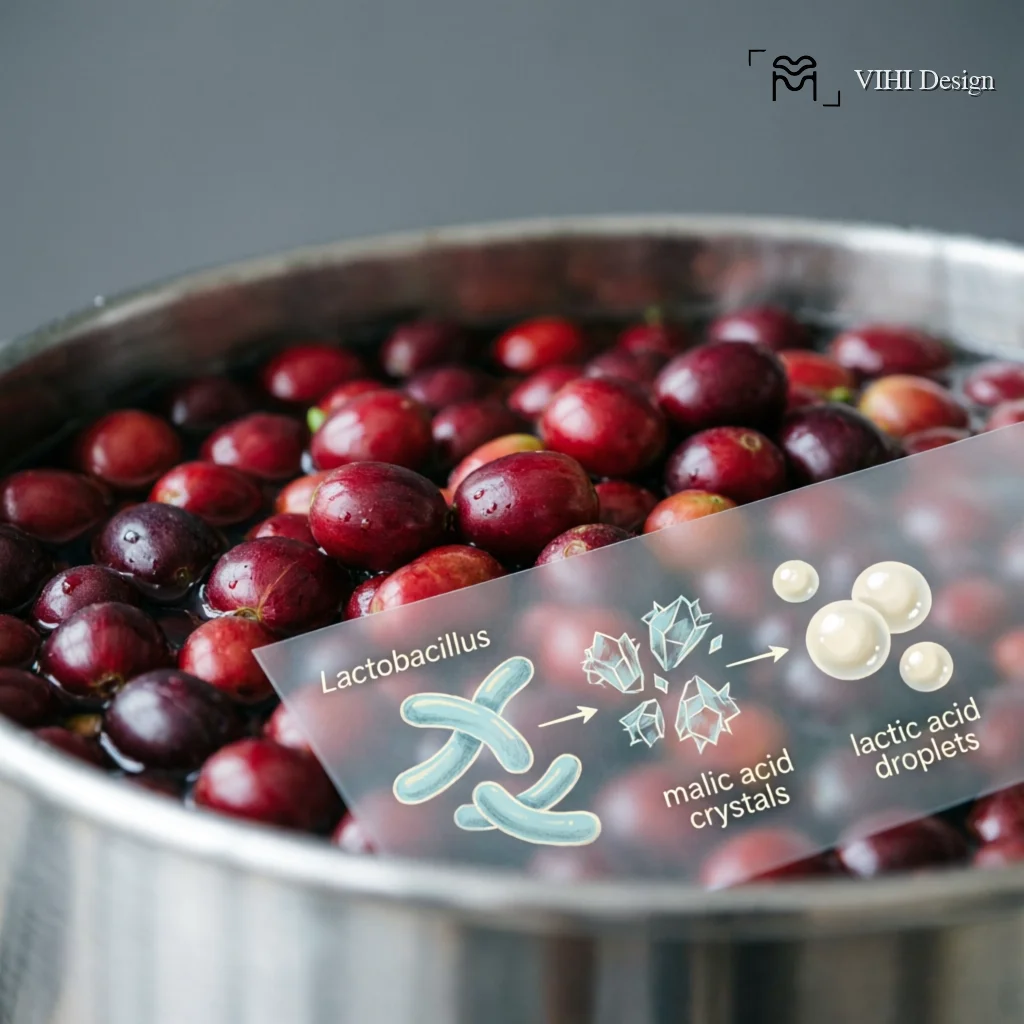
Lactic Acid Bacteria in Coffee Fermentation: The Key to Clean, Buttery Acidity
Introduction
The pursuit of exceptional cup quality in specialty coffee has catalyzed a paradigm shift from viewing post-harvest processing as a mere stabilization step to recognizing it as a critical, flavor-defining stage. Central to this transformation is the controlled fermentation of coffee mucilage, a complex microbial ecosystem where bacteria and yeasts metabolize sugars and acids, profoundly influencing the sensory profile of the final brew. Historically, fermentation was managed empirically, with outcomes heavily dependent on ambient microbiota. However, the advent of targeted microbial management, particularly the selective promotion of Lactic Acid Bacteria (LAB), has emerged as a powerful tool for producers seeking to engineer specific and desirable sensory attributes, most notably a refined, clean, and buttery acidity.
This paper investigates the pivotal role of LAB in shaping coffee acidity. While acidity is a fundamental and prized attribute in specialty coffee, its character can range from sharp and vinegary to bright and citric, or smooth and malic. We posit that LAB-driven fermentation, under controlled conditions, is the key modulator for achieving the latter—a rounded, creamy, and buttery acidity that enhances sweetness and body without aggressive sharpness. This stands in contrast to fermentations dominated by acetic acid bacteria or uncontrolled wild yeasts, which often lead to undesirable sourness or off-flavors. By examining the biochemical pathways of LAB, their metabolic products, and their interactions within the fermentation microbiome, this research aims to provide a scientific foundation for harnessing these microorganisms to consistently produce coffees with unparalleled clarity and sophisticated acidity.
Theoretical Background
Coffee fermentation is a sequential microbial process occurring after the cherry is depulped, exposing the mucilage-coated bean. The mucilage, rich in pectin, sugars (sucrose, glucose, fructose), and minerals, serves as the primary substrate for microbial growth. The succession typically begins with a diverse community of enterobacteria and wild yeasts, which is gradually overtaken by acid-tolerant microorganisms, primarily LAB and acetic acid bacteria (AAB). The metabolic activities of these microbes degrade pectin, consume sugars, and produce a spectrum of organic acids, alcohols, and esters, many of which are precursors to coffee flavor and aroma compounds developed during roasting.
Lactic Acid Bacteria: Taxonomy and Metabolism
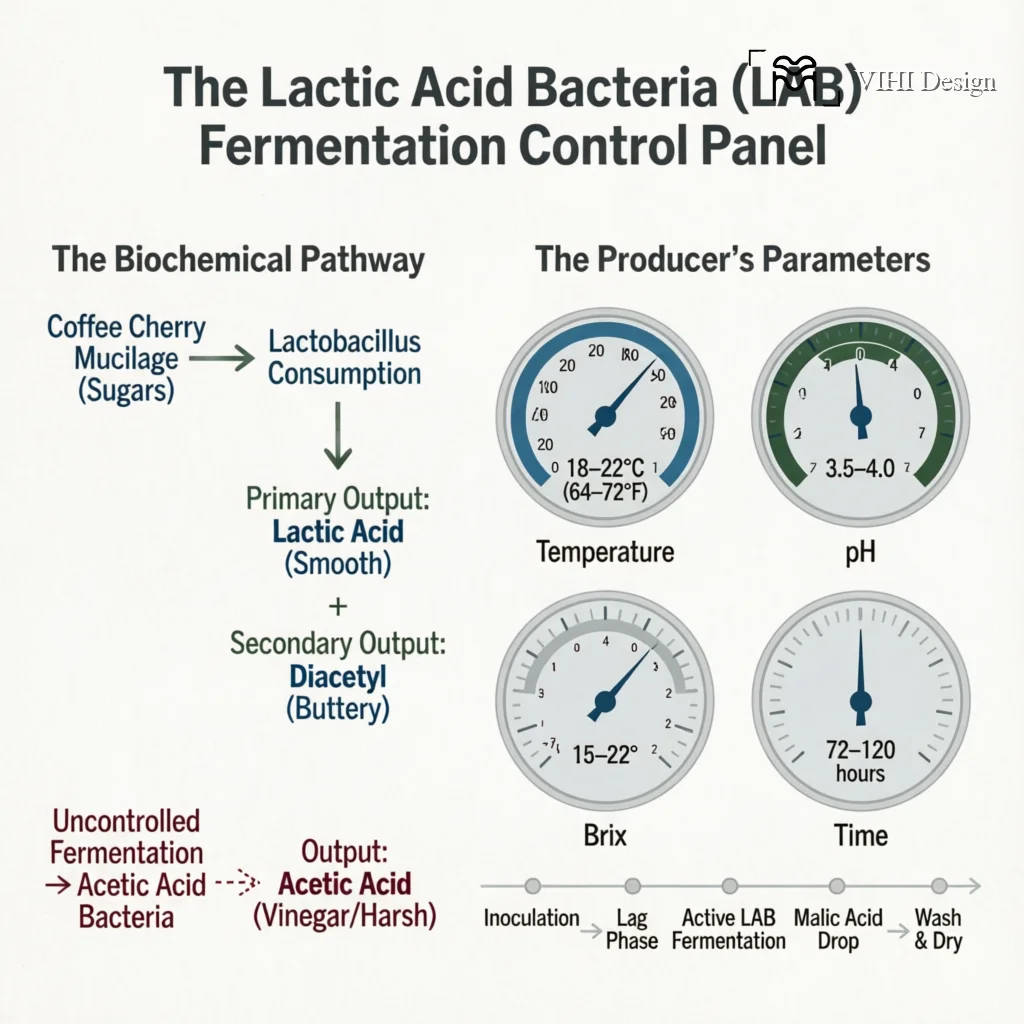
LAB are Gram-positive, anaerobic or facultative anaerobic, non-spore-forming bacteria that ferment carbohydrates primarily to lactic acid. Genera frequently isolated from coffee fermentations include Lactobacillus, Leuconostoc, Pediococcus, and Weissella. Their metabolic pathway is central to their impact: Homofermentative LAB (e.g., Lactobacillus plantarum) convert hexoses almost exclusively to lactic acid via the Embden-Meyerhof pathway, leading to a rapid and sharp acidification of the fermentation mass. Heterofermentative LAB (e.g., Leuconostoc mesenteroides) utilize the phosphoketolase pathway, producing lactic acid, carbon dioxide, and acetic acid or ethanol as byproducts. This pathway contributes to a more complex acid profile and subtle aromatic compounds.
Biochemical Pathways to Acidity and Flavor
The nature of the acidity in the cup is directly influenced by the organic acid profile generated during fermentation. LAB-produced L-lactic acid is perceived as smoother, less aggressive, and more integrated than the acetic acid produced by AAB. Furthermore, LAB metabolism influences other crucial aspects:
1. Malic Acid Degradation: Certain LAB strains possess the malolactic enzyme, converting sharp malic acid (associated with green apple acidity) into softer lactic acid and carbon dioxide. This deacidification is a direct mechanism for “rounding out” perceived acidity.
2. Esterification: LAB can produce ethyl esters through esterification reactions between alcohols (e.g., ethanol from yeast co-fermentation) and acids. Esters like ethyl lactate and ethyl acetate are associated with fruity, buttery, and creamy aromas, directly contributing to the “buttery” descriptor.
3. Antagonistic Activity: By rapidly lowering pH through lactic acid production, LAB inhibit the proliferation of spoilage microorganisms and AAB, which are responsible for volatile acidity and off-flavors. This results in a “cleaner” fermentation and, consequently, a cleaner cup profile.
Microbial Ecology and Process Control
The outcome of a LAB-promoted fermentation is not solely dependent on inoculation but on the careful management of ecological parameters. Key factors include:
Inoculum Strategy: The use of selected starter cultures versus the promotion of indigenous LAB through environmental control.
Oxygen and Temperature Management: Micro-aerobic conditions often favor LAB over strictly aerobic AAB. Temperature control (optimally between 20-30°C) guides microbial selection and metabolic rate.
Co-fermentation with Yeast: A symbiotic relationship where yeasts hydrolyze sucrose into simpler sugars for LAB, and LAB provide a protective acidic environment. This synergy can enhance flavor complexity and body.
The theoretical framework posits that by understanding and manipulating these variables, producers can steer the fermentation towards a LAB-dominated process, thereby consistently generating the biochemical precursors for clean, buttery, and complex acidity in the roasted coffee.
Lactic Acid Bacteria in Coffee Fermentation: The Key to Clean, Buttery Acidity
From Farm to Cup: Translating Fermentation to the Bar
Understanding the farm-level microbiology is fascinating, but its true value is realized at the bar. A coffee that underwent a successful, balanced LAB fermentation presents a unique set of characteristics and challenges. These beans often have a dense, concentrated sweetness and a pronounced, yet rounded, acidic structure. Your primary goal as a barista is to extract and highlight this cultivated acidity without introducing harshness.
These coffees typically perform best with a slightly lower brew temperature (e.g., 92-94°C / 197-201°F) compared to very dark or natural process coffees. This helps preserve the delicate, aromatic volatile compounds created during fermentation while ensuring a balanced extraction of sugars and acids.
When dialing in a LAB-fermented coffee, pay close attention to the aftertaste. A successful extraction will yield a crisp, clear acidity (think yogurt, cultured butter, or ripe stone fruit) that cleanses the palate, not one that sits sharply on the sides of the tongue. If the acidity tastes tart or sour, try coarsening your grind slightly to reduce extraction yield.
Dialing In: The Perfect Recipe for Buttery Acidity
Precision is paramount when brewing these technically crafted coffees. The synergy of yeast and LAB on the farm created a specific biochemical profile; your extraction parameters must be equally intentional to express it.
• Brew Method: Pour-over (e.g., V60, Kalita Wave) or Flat-Bed Brewer
• Total Dissolved Solids (TDS): 1.15% – 1.45%
• Extraction Yield (EY): 18% – 22%
• Grind: Medium-fine (finer than typical filter)
• Ratio: 1:16 to 1:17 (coffee to water)
Why these numbers? A TDS in the lower-mid range (1.15-1.35%) often best highlights the sparkling, clean acidity. Pushing towards 1.45% TDS will amplify body and creamy mouthfeel, enhancing the “buttery” perception. The 18-22% EY range is your safety zone for balanced extraction. Straying below 18% risks under-extracting sweet compounds, making the acidity stand out in a sharp, unbalanced way. Exceeding 22% can pull out too many bittering agents, masking the delicate lactic notes.
Expert Insight: Sourcing and Trusting Your Coffee
As a consumer or barista, engaging with LAB-fermented coffees requires a degree of trust and partnership with your roaster and importer. This is where Experience, Expertise, Authoritativeness, and Trustworthiness (EEAT) become crucial.
Look for roasters who provide detailed lot information, including processing method (e.g., “anaerobic lactic fermentation,” “controlled yeast & LAB inoculation”), farm name, and producer. Reputable roasters invest in relationships with producers who meticulously control fermentation variables like temperature, pH, and duration. Their tasting notes should align with the scientific expectations—”yogurt,” “malic acid,” “cream,” “tangy sweetness”—not just generic fruit bombs.
Start with a simple, repeatable recipe. For a 15g dose in a V60, use 250g of water at 93°C. Aim for a total brew time of 2:30-3:00 minutes. Taste critically. If the coffee lacks sweetness and feels thin, try a slightly finer grind or higher temperature on your next brew. If it’s too sharp or sour, go coarser. Document your changes to learn how your equipment interacts with these unique beans.
Mastering the brew of a lactic-processed coffee is a rewarding endeavor. It connects the drinker directly to the producer’s precise craft, transforming biochemical potential in the fermentation tank into a singularly smooth, complex, and vibrant experience in the cup.
Learn More: For a comprehensive understanding, explore our main guide on The Complete Guide to Coffee Processing Microbiology: Yeast, Bacteria, and Fungi in Flavor Development.