

Lactic Acid Bacteria in Coffee Fermentation: Creating Creamy Body and Clean Acidity
Introduction
Coffee fermentation, once a poorly understood step relegated to mere mucilage removal, has emerged as a critical determinant of final cup quality and sensory complexity. The shift from viewing post-harvest processing as a utilitarian necessity to recognizing it as a pivotal, controllable stage for flavor development represents a paradigm shift in specialty coffee. Within this microbial ecosystem, a diverse consortium of yeasts, bacteria, and fungi interact with the coffee seed, metabolizing substrates and producing a vast array of metabolites that directly and indirectly influence the green bean’s composition. While the role of yeasts, particularly Saccharomyces and non-Saccharomyces species, has received considerable attention, the functional contribution of bacteria—specifically Lactic Acid Bacteria (LAB)—remains underexplored yet profoundly significant.
This research focuses on the deliberate application and management of LAB consortia during coffee fermentation. We posit that LAB are not mere incidental contaminants but key architects of specific, desirable sensory attributes, namely a creamy, silky body and a bright, clean acidity. These two qualities are among the most sought-after and challenging to consistently achieve in high-end specialty coffee. The central hypothesis guiding this work is that selected LAB strains, through their metabolic activities (primarily the production of lactic acid, exopolysaccharides, and other volatile and non-volatile compounds), can modulate the biochemical profile of the coffee seed in a way that directly translates to these targeted mouthfeel and taste experiences in the roasted beverage.
Theoretical Background
The fermentation of coffee is a complex, dynamic process typically classified as either aerobic (as in washed processes) or anaerobic (as in many natural or controlled tank fermentations). The substrate—the sugary mucilage surrounding the parchment—is rich in pectin, sucrose, fructose, and glucose, providing an ideal medium for microbial growth. Traditional fermentation relies on indigenous, environmental microbiota, leading to high variability. Controlled fermentation, in contrast, involves the inoculation of selected starter cultures to guide the process predictably.
1. The Ecology and Metabolism of Lactic Acid Bacteria
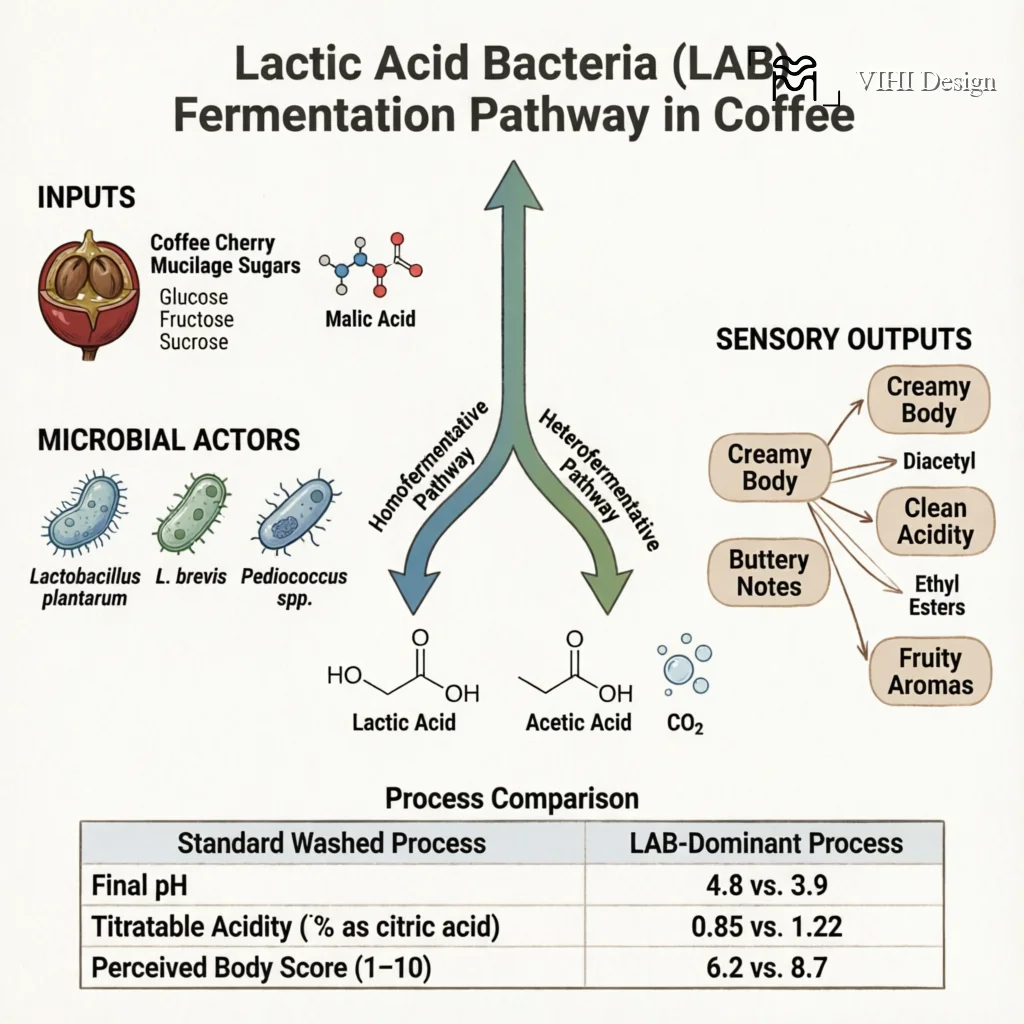
Lactic Acid Bacteria are a phylogenetically diverse group of Gram-positive, acid-tolerant, facultative anaerobic bacteria. In coffee fermentation, genera such as Lactobacillus, Leuconostoc, Pediococcus, and Weissella are commonly isolated. Their core metabolism involves the conversion of hexose sugars into lactic acid via homofermentative or heterofermentative pathways. Homofermentative LAB (e.g., Lactobacillus plantarum) yield primarily lactic acid, contributing to a sharp, direct acidity. Heterofermentative strains (e.g., Leuconostoc mesenteroides) produce lactic acid, carbon dioxide, and acetic acid/ethanol, creating a more complex acid profile. Beyond acid production, many LAB strains are prolific producers of exopolysaccharides (EPS)—long-chain carbohydrate polymers that can significantly alter the viscosity and texture of fermented substrates.
2. Biochemical Pathways to Sensory Outcomes
The influence of LAB on final cup quality is mediated through several interconnected biochemical pathways:
A. Acid Profile Modulation: Lactic acid (a non-volatile organic acid) has a smoother, milder perceived acidity compared to the sharper, more astringent citric or malic acids prevalent in coffee. A dominant lactic acid production can shift the overall acid profile, leading to a perceived “cleaner,” yogurt-like acidity that is bright without being harsh. Furthermore, LAB can metabolize certain precursors of undesirable acids, potentially reducing perceived sourness or fermentative off-notes.
B. Mouthfeel and Body Enhancement: The proposed mechanism for creamy body development is twofold. First, the production of EPS by LAB can lead to residual polysaccharides in the green bean. During roasting, these may contribute to increased viscosity in the brewed coffee. Second, LAB metabolism may influence the degradation of pectin and other cell wall components, altering the extractability of oils and soluble solids that contribute to mouthfeel. The result is a shift from a thin or watery body to a rounded, creamy, and often silky texture.
C. Flavor Precursor Formation: LAB activity influences the pool of sugars, amino acids, and organic acids available for Maillard and Strecker degradation reactions during roasting. By altering this precursor landscape, LAB can indirectly shape the flavor and aroma compounds (e.g., pyrazines, furans) in the roasted bean, potentially enhancing sweetness and suppressing bitterness.
3. Synergies and Antagonisms in Microbial Consortia
LAB rarely act in isolation. Their interaction with yeasts is particularly crucial. Yeasts often initiate fermentation, consuming simple sugars and lowering pH to create a favorable environment for LAB. In return, LAB can produce compounds that stimulate or inhibit yeast growth. A well-balanced consortium can lead to a sequential or synergistic fermentation where the metabolic products of one group become substrates for another, leading to greater complexity and stability than monoculture fermentation. Understanding these interactions is key to designing effective starter cultures.
In summary, the theoretical foundation for using LAB in coffee fermentation rests on applied food microbiology principles, where controlled metabolic output is directed toward specific sensory goals. This approach transforms fermentation from an artisanal practice into a reproducible science of flavor.
Lactic Acid Bacteria in Coffee Fermentation: Creating Creamy Body and Clean Acidity
Part 2: Translating Science into the Sensory Experience
Building on the scientific foundation, the true test of lactic acid bacteria (LAB) fermentation happens in the cup. For baristas and coffee enthusiasts, understanding how these microscopic processes manifest sensorially is key to unlocking their potential. This section bridges the gap between farm-level processing and cafe-level execution.
Interpreting LAB-Processed Coffees on the Cupping Table
When you encounter a coffee labeled as “LAB-fermented” or “lactic process,” your cupping protocol should adjust to seek out its signature traits. Unlike the often funky, winey notes of spontaneous fermentations, a well-executed LAB fermentation aims for clarity and enhanced mouthfeel.
- Aroma: Expect a clean, often fruit-forward profile. Common descriptors include bright citrus (like bergamot or sweet lemon), stone fruit (yellow peach, nectarine), or even tropical hints of pineapple. The “clean” factor is paramount—it should smell sweet and precise, not musty or acetic.
- Acidity: This is where LAB shines. The malic and citric acids preserved or produced create a “clean acidity.” Taste for a crisp, sparkling quality that resembles green apple, pear, or citrus zest. It’s an acidity that brightens the coffee without sharpness or vinegar-like tang.
- Body & Mouthfeel: The most distinctive contribution. The production of polysaccharides and other compounds directly increases the perceived viscosity. Look for a silky, creamy, or juicy body that coats the palate. It’s often described as “round” and substantial, even in coffees with high acidity.
- Flavor & Aftertaste: The flavor should be a clear expression of the coffee’s origin, with the acidity and body as supporting actors. The finish is typically clean and sweet, with a lingering, pleasant mouthfeel rather than a dry or ferment-y aftertaste.
Brewing for Creamy Body and Clean Acidity: A Practical Guide
To showcase the unique texture and brightness of a LAB-fermented coffee, your brewing parameters must be intentional. The goal is to achieve high extraction of the desirable sugars and acids while avoiding harshness.
Target Foundation: Start within the industry-standard ranges for optimal extraction, then fine-tune.
- Total Dissolved Solids (TDS): Aim for 1.15% – 1.45%. The higher end of this range will emphasize the creamy, syrupy body.
- Extraction Yield (EY): Target 18% – 22%. LAB coffees often have a complex sugar structure that can support a higher extraction without turning bitter.
Brew Method Recommendations:
- Pour-Over (V60, Kalita Wave): Excellent for highlighting clean acidity. Use a medium-fine grind and a controlled pour to increase agitation slightly. This helps extract the bright acids and silky body. Water temperature of 92°C-96°C (198°F-205°F) is ideal.
- Flat-Bed Brewer (e.g., Orea, NextLevel): These brewers can maximize the creamy texture. A finer grind and higher temperature (up to 96°C / 205°F) with gentle pours will produce a cup with incredible clarity and weight.
- Espresso: LAB coffees can make stunning espresso. Pull slightly longer ratios (1:2.5 to 1:3) at a lower pressure (8-9 bar) to gracefully extract the acidity and sweetness. Expect a viscous, honey-like texture with a sparkling finish.
Mastering the brew of a LAB-fermented coffee is a rewarding exercise in texture management. By respecting the science that created its unique profile and applying precise brewing techniques, you can consistently deliver a cup that is both vibrantly acidic and luxuriously creamy—a testament to the beautiful synergy between microbiology and craft.
Learn More: For a comprehensive understanding, explore our main guide on The Complete Guide to Coffee Processing Microbiology: Yeast, Bacteria, and Mold in Flavor Development.