
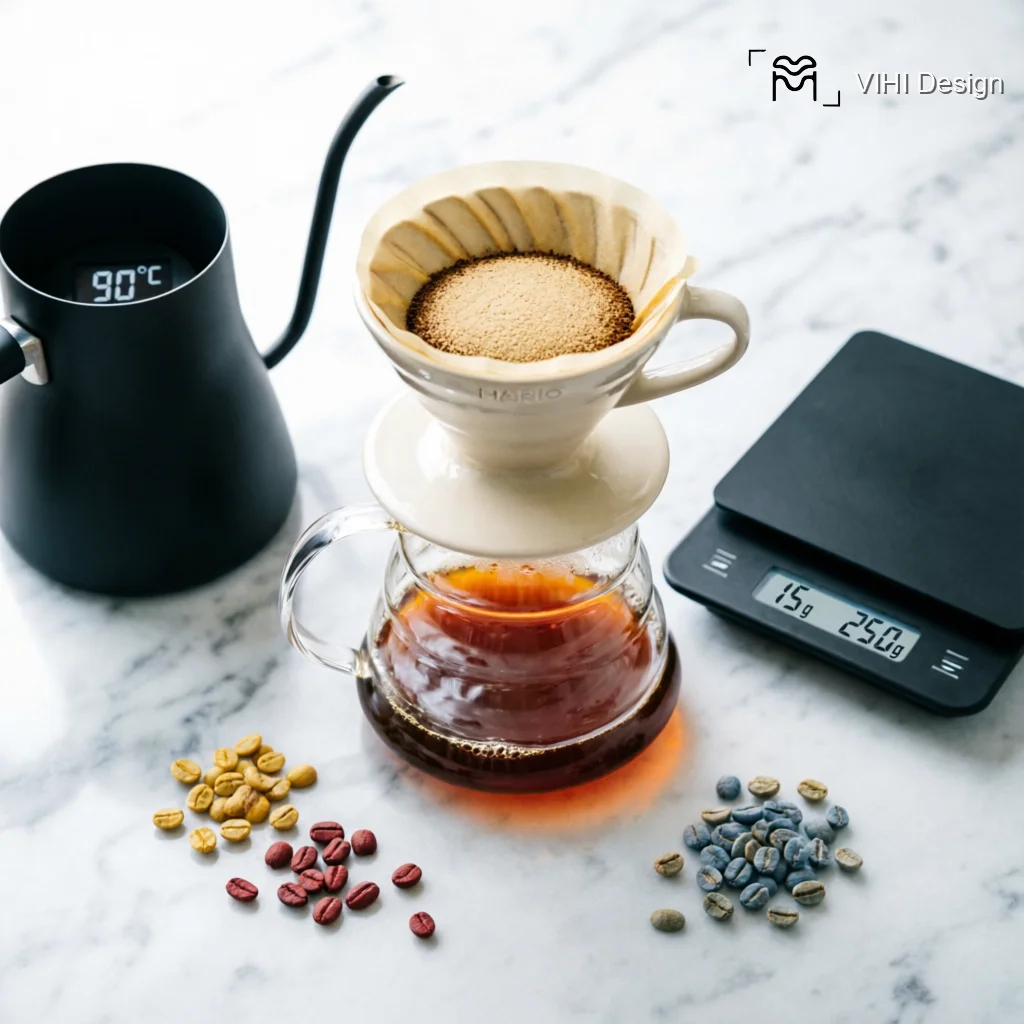
How to Brew Precision-Processed Coffees: A Guide for Maximum Expression
Introduction: Why Precision-Processed Coffees Require Specialized Brewing Approaches
The evolution of specialty coffee has entered a phase defined by post-harvest processing as a primary vector for flavor development. Traditional processing methods—washed, natural, and honey—established foundational sensory profiles. In contrast, contemporary precision-processing techniques, including anaerobic fermentation, carbonic maceration, and enzyme-assisted fermentation, represent a deliberate manipulation of microbial and biochemical environments. These methods are engineered to augment specific volatile organic compounds and soluble solids within the coffee seed. Consequently, the resulting coffees exhibit complex and often intense aromatic and gustatory signatures that are intrinsically linked to their processing parameters.
Standard brewing protocols, optimized for conventionally processed coffees, frequently fail to achieve the complete sensory expression of these precision-processed lots. The elevated concentration of certain organic acids, esters, and phenolic compounds can lead to imbalance when extracted uniformly. Therefore, a brewing methodology must be adapted to target the specific chemical composition imposed by the process. This guide establishes a theoretical framework for such adaptation, positing that maximum expression is achieved not through universal recipes, but through the alignment of extraction variables with the distinct physicochemical profile of the coffee.
Understanding Coffee Processing Methods: A Biochemical Foundation
Coffee processing is the series of operations that remove the fruit material from the seed and prepare it for roasting. Precision processing extends beyond mere removal to include controlled, often anaerobic, fermentation stages that direct metabolite production. The core principle is the management of substrates (sugars, pectins), microorganisms (yeasts, bacteria), and environmental conditions (pH, temperature, oxygen) to predetermine flavor precursors.
Anaerobic Fermentation
Anaerobic fermentation involves submerging coffee cherries or mucilage-covered seeds in a sealed tank, typically with added water, to create an oxygen-depleted environment. This restricts aerobic microbial activity and promotes fermentation by facultative or obligate anaerobic bacteria and yeasts. The primary biochemical pathways shift towards lactic acid fermentation or alcoholic fermentation, depending on microbial inoculum and temperature. This results in a marked production of lactic acid, acetic acid (in controlled amounts), and various esters such as ethyl acetate and ethyl lactate. Sensory profiles are characterized by pronounced winey acidity, creamy body, and fruity or fermented notes. The challenge in brewing lies in managing the heightened perceived acidity and complex ester profile without extracting excessive sourness or unbalanced fermentation flavors.
Carbonic Maceration
Adapted from winemaking, carbonic maceration places intact, whole coffee cherries in a sealed vessel flooded with carbon dioxide. The CO2 atmosphere rapidly induces anoxia, causing intracellular fermentation within the cherry fruit itself (auto-fermentation) while simultaneously inhibiting external microbial growth. This process emphasizes the action of endogenous fruit enzymes, breaking down sugars into acids and alcohols within the cherry pulp. The resulting flavor compounds diffuse into the seed. Coffees processed via carbonic maceration often exhibit intense, candy-like fruit notes (e.g., strawberry, raspberry), sparkling acidity, and low perceived bitterness. Brewing must aim to preserve these highly volatile top notes while achieving sufficient extraction of sugars to support the aromatic profile.
Enzyme-Assisted Fermentation
This method involves the exogenous application of specific pectolytic or other enzymes (e.g., pectinase, cellulase) to the fermentation tank. These enzymes catalyze the breakdown of the fruit’s pectin layer, a polysaccharide substrate that is otherwise slowly degraded by microbial pectinases. The accelerated and targeted breakdown of pectin releases a rapid, high concentration of simple sugars and pectin fragments into the fermentation milieu. This provides an immediate, abundant substrate for microbial metabolism, often leading to a more efficient and consistent production of flavor-active compounds like certain esters and alcohols. The sensory outcome can be a coffee with enhanced clarity of a specific fruit note, a silkier mouthfeel, and a distinctively clean fermentation character. Brewing must account for potentially altered solubility and the specific acid profile generated.
Ultra-Clean or Controlled Aerobic Fermentation
Positioned as a precision version of traditional washed processing, ultra-clean fermentation focuses on meticulous control of aerobic conditions. It utilizes temperature-controlled tanks, frequent monitoring of Brix and pH, and sometimes selected yeast strains to guide a rapid, consistent, and clean aerobic fermentation. The goal is to remove mucilage efficiently while producing a minimal but defined set of flavor metabolites, avoiding the off-flavors associated with uncontrolled or prolonged fermentation. The resulting coffees showcase high clarity, bright but balanced acidity, and well-defined inherent origin characteristics. Brewing these coffees requires techniques that emphasize clarity and separation of flavors, akin to traditional high-quality washed coffees, but with adjustments for their often heightened sweetness and acidity.
The biochemical alterations from these processes—varying concentrations of organic acids, a distinct spectrum of volatile aromatics, and modified sugar and polysaccharide structures—directly determine the coffee’s extraction behavior during brewing. The subsequent phases of this guide will apply this theoretical understanding to practical brewing parameters, including grind size, water temperature, agitation, and contact time, to optimize the extraction of these engineered flavor compounds.
Grind Size: The Primary Control for Solubility Profiles
Grind size dictates the available surface area for extraction, but its interaction with processed coffees is non-linear. The altered bean density and cellular structure from processing demand a recalibration of your standard settings. Anaerobic and carbonic maceration coffees often exhibit higher solubility due to acid and enzyme activity breaking down cell walls. A finer grind than usual can lead to rapid, uncontrolled extraction of dominant fermentative compounds, resulting in a muddy and overwhelmingly funky cup. Conversely, many washed coffees, with their intact polysaccharide matrix, often require a slightly finer grind than one might assume to efficiently extract their complex acidity and sugars at standard brew times.
- Target Particle Size Ranges: For pour-over methods targeting a 3:00-3:30 contact time, aim for a particle distribution where 70% of grounds fall between 600-800 microns. This is broadly analogous to table salt. Use this as a baseline and adjust based on process.
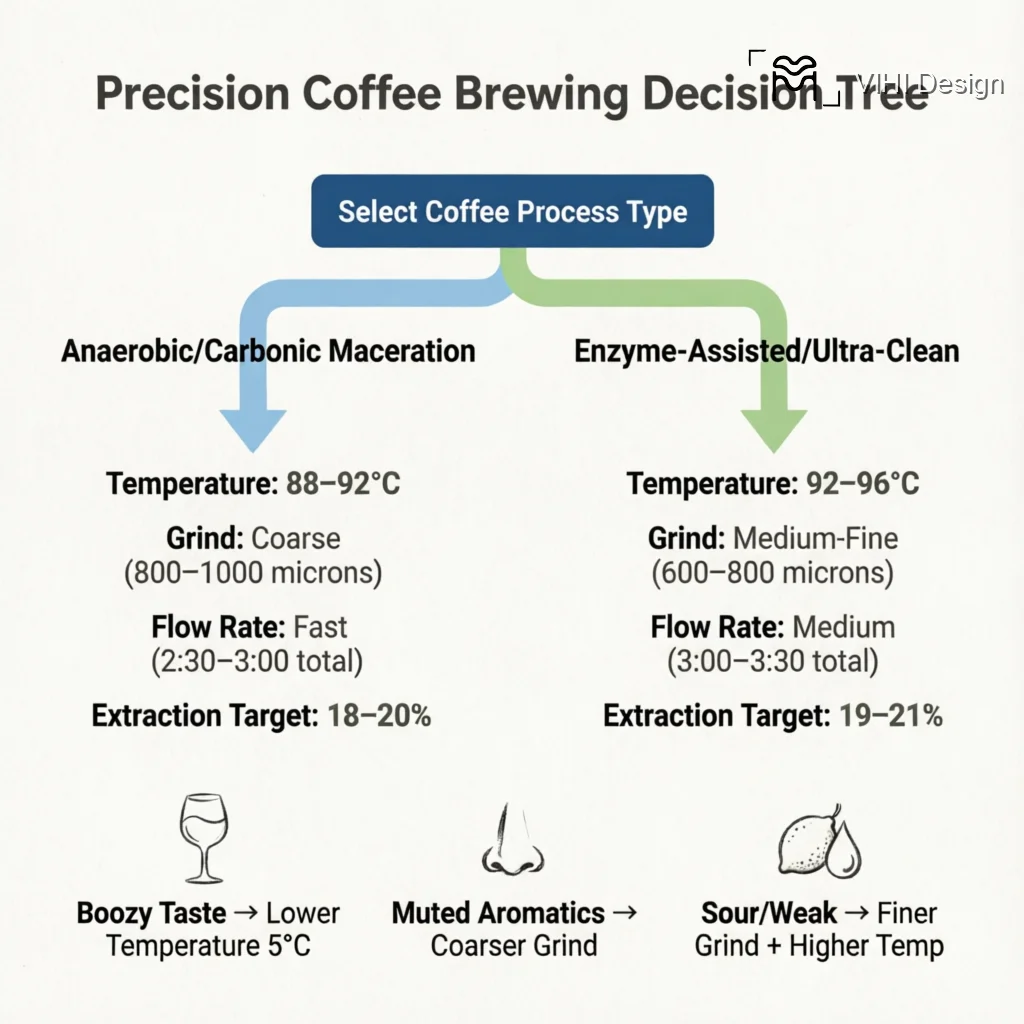
- Anaerobic/Carbonic Maceration: Start 15-20% coarser than your washed coffee baseline. This slows the extraction of highly soluble acids and ferment-derived compounds, allowing for better balance.
- Washed/Honey: Use your standard benchmark grind. The structure is more predictable, allowing grind size to directly control extraction rate and strength.
- Natural: Proceed with caution. Fines production is often higher. A moderately coarse grind with a consistent particle distribution (e.g., from a high-end burr grinder) is critical to avoid astringency from over-extracted fruit pulp remnants.
Water Temperature: Modulating Kinetic Energy for Volatile Preservation
Water temperature is not merely an extraction driver; it is a volatile compound gatekeeper. Boiling water (100°C/212°F) provides maximum kinetic energy but can volatilize and strip away the delicate ester and aldehyde top notes that define processed coffees. The goal is to use the minimum temperature required to effectively extract the target solubles, thereby preserving aromatic complexity. Washed coffees, with their reliance on citric and malic acids for structure, generally withstand and often require hotter water (92-96°C/198-205°F) for full expression. Processed coffees, already rich in soluble compounds, benefit from a restrained approach.
- Anaerobic Fermented Coffees: Start at 88-91°C (190-195°F). This range effectively extracts sugars and acids while mitigating the aggressive volatilization of heavy alcohols and ethyl acetate (nail polish remover notes).
- Carbonic Maceration: Similar to anaerobic, but often slightly more heat-tolerant. Try 90-93°C (194-199°F) to better extract the winey, berry-like complexity.
- Natural Process: Use 89-92°C (192-198°F). Lower temperatures help control the extraction of fruity-sweetness without pulling excessive bitterness from the dried fruit material.
- Washed Process: Apply 93-96°C (199-205°F) to ensure complete dissolution of the less-soluble, sugar-based sweetness and phosphoric acid clarity.
Agitation & Contact Time: Directing the Extraction Pathway
Agitation—through pouring technique, stirring, or bloom—physically forces water through the coffee bed, influencing which compounds dissolve and in what order. For processed coffees, the aim is often to limit aggressive early-stage agitation to avoid immediately saturating the slurry with the most soluble (and often most intense) ferment-derived compounds. A gentle, controlled pour that minimizes turbulence can create a more sequential extraction. Contact time must then be viewed in partnership with grind and temperature. A longer contact time with a coarser grind and lower temperature for an anaerobic coffee can yield a more integrated, balanced cup than a short, turbulent brew with a fine grind.
- Bloom Phase: For processed coffees, use 2.5-3x the coffee weight in water. Pour gently in a tight spiral to wet all grounds, then do not stir aggressively. Allow 45-60 seconds for degassing and initial hydration without forcing extraction.
- Main Pour: Employ a slow, center-focused pour or multiple low-pulse pours to maintain a steady, gentle rise in the water bed without causing a swirling vortex or churning the grounds.
- Total Contact Time: Target 3:00 to 3:30 for most pour-over methods. Let taste guide you: a sour, sharp cup indicates under-extraction—lengthen time or use slightly hotter water. A boozy, muddy cup indicates chaotic over-extraction of the wrong compounds—coarsen grind, reduce agitation, or lower temperature.
Barista’s Field Notes: Addressing Common Struggles
Translating theory to practice reveals consistent pain points. Here’s how to navigate them.
Problem: Spending $30 on a fancy anaerobic coffee only to brew it like regular coffee and get overwhelmed by fermented notes.
Solution: Reset your parameters. Treat it as a new category. Start coarse (800-1000 microns), low temp (89°C), with a gentle pour. Your goal is finesse, not power.
Problem: Wasting expensive precision coffees by using boiling water that destroys delicate volatile compounds.
Solution: Think of water temperature as a brightness dial. For delicate, floral, or tea-like processed coffees, start at 85-88°C. You can always increase heat on the next brew if the cup lacks body.
Problem: Getting confused when the same V60 recipe produces completely different results with different process types.
Solution: The recipe is a framework, not a law. The process dictates the necessary adjustments. Keep a log: note the process, then your starting grind, temp, and time. The pattern will emerge: fermented = coarser/cooler; washed = finer/hotter.
Problem: Struggling to balance intensity vs clarity when brewing experimental processing methods.
Solution: This is the core challenge. Clarity often comes from restricting early extraction of dominant flavors. Use a coarser grind to slow the extraction rate, and a lower brew ratio (e.g., 1:14) to increase perceived intensity without over-extracting. Pro-Tip: For anaerobic coffees tasting too boozy or fermented, try a ‘double bypass’ method: brew at a strong 1:10 ratio normally, then dilute with 50% hot water post-brew. This preserves aromatics while taming overwhelming fermentation notes that home grinders can’t fully control through grind size alone.
Quantifying Success: TDS, EY, and Sensory Alignment
Objective metrics validate sensory experience. Use a refractometer to measure Total Dissolved Solids (TDS) and calculate Extraction Yield (EY). For processed coffees, the ideal range is often narrower than for traditional coffees. A high EY from an anaerobic coffee typically means you have over-extracted harsh fermentals, not more sweetness. Aim for a balance where the numbers support the taste.
- Target TDS Range: 1.15% – 1.35%. This lower strength range, compared to a traditional 1.35%-1.45%, often enhances the perceived clarity and complexity of processed coffees, preventing the cup from becoming cloying or heavy.
- Target EY Range: 18.5% – 20.5%. Pushing extraction beyond 21% with processed coffees almost invariably introduces negative, over-extracted flavors (astringent, boozy, chemical). A superb, balanced anaerobic coffee may taste complete at 19.2% EY.
- The Alignment Check: If your TDS is 1.4% and EY is 21% but the cup tastes fermented and harsh, the metrics are misleading you. Trust your palate first, then adjust parameters to bring the numbers into a range that correlates with a delicious cup.
Technical Summary
- Grind size must be adjusted for bean solubility: coarser for high-solubility anaerobic/carbonic coffees to control extraction pace, standard to fine for structured washed coffees.
- Water temperature acts as a volatile preservative. Use lower temperatures (88-93°C) for processed coffees to retain delicate aromatics and higher temperatures (93-96°C) for washed coffees to ensure full extraction.
- Modulate agitation to steer extraction; gentle pours and blooms prevent the rapid dissolution of dominant, highly-soluble compounds in processed coffees.
- Target a brew strength (TDS) of 1.15-1.35% and an extraction yield (EY) of 18.5-20.5% for most experimentally processed coffees, using sensory analysis as the ultimate guide.
- Employ techniques like the ‘double bypass’ dilution method to rescue brews where fermentation intensity overpowers clarity, especially when grind adjustment alone is insufficient.
“`json
“`
Leave a Reply