
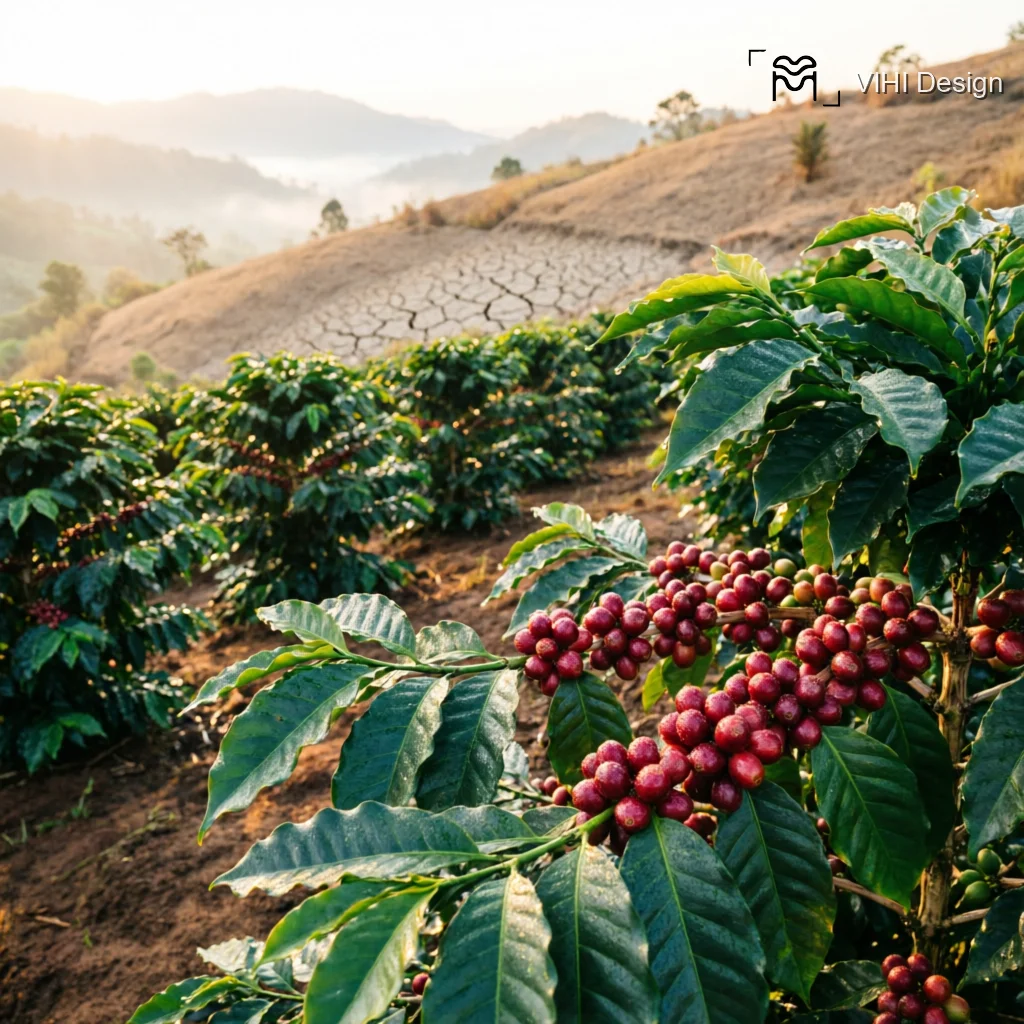
Introduction: The Dual Promise of F1 Hybrids – Bridging the Gap Between Agronomy and Specialty Coffee
The global coffee sector, particularly the production of Coffea arabica L., faces a critical juncture defined by two converging pressures. First, the accelerating impacts of climate change—including increased temperature variability, altered precipitation patterns, and heightened pest and disease pressure—threaten the viability of traditional cultivation in many established regions. Second, the specialty coffee market continues to elevate its demand for exceptional, distinctive cup quality, creating a premium for sensory excellence. Historically, a trade-off has existed between these two imperatives. High-yielding, disease-resistant cultivars often fail to meet the complex sensory standards of specialty markets, while traditional heirloom varieties prized for cup profile are frequently susceptible to agronomic stressors. The emergence of F1 hybrid coffee varieties represents a targeted genetic strategy to resolve this dichotomy by simultaneously addressing agronomic resilience and cup potential through controlled interspecific crossing.
F1 hybrids, or first-generation hybrids, are the direct progeny of a cross between two genetically distinct, homozygous parent lines. This technology, foundational to modern agriculture in crops like maize and rice, has only recently been systematically applied to the perennial, predominantly self-pollinating coffee plant. The development and deployment of F1 hybrids in coffee signify a paradigm shift from mass selection and traditional breeding towards a precision-based, heterosis-exploiting model. This introduction posits that F1 hybrids are not merely incremental improvements but constitute a distinct class of cultivars engineered to fulfill a dual promise: providing farmers with a more resilient and productive agricultural asset while offering the specialty coffee value chain a reliable source of coffee with inherent quality potential. This paper will establish the theoretical genetic foundations of F1 hybrids and analyze their specific implications for climate adaptation and sensory excellence.
Section 1: The Science of F1 Hybrids – Defining First-Generation Crosses, Heterosis (Hybrid Vigor), and Genetic Uniformity
The agronomic and qualitative performance of F1 hybrid coffee varieties is a direct phenotypic expression of underlying genetic principles. A precise understanding of these mechanisms is essential for evaluating their potential and limitations.
1.1 Genetic Architecture of an F1 Hybrid
An F1 hybrid is defined as the first filial generation resulting from the cross-pollination of two genetically distinct, pure-line parents (P1 and P2). For coffee, these parent lines are typically developed through several generations of self-pollination to achieve a high degree of homozygosity, ensuring genetic uniformity within each parent line. The critical genetic event occurs during the creation of the F1 seed: the fusion of a haploid gamete from P1 with a haploid gamete from P2. This produces a diploid zygote that is 100% heterozygous at all loci where the parental lines differ. This structured heterozygosity is the source of the hybrid’s unique properties and distinguishes it from open-pollinated or traditionally bred cultivars, which exhibit a broader range of heterozygosity and homozygosity.
1.2 Heterosis (Hybrid Vigor) and Its Physiological Manifestations
Heterosis, or hybrid vigor, refers to the phenomenon where the F1 hybrid exhibits superior performance for certain traits compared to the mid-parent value or, in cases of best-parent heterosis, exceeds the performance of the superior parent. The genetic basis of heterosis is explained by two primary, non-mutually exclusive models:
- Dominance Model: Posits that deleterious recessive alleles present in one parent are masked by dominant favorable alleles from the other parent at multiple loci. The hybrid benefits from the complementation of these dominant alleles, leading to improved overall fitness and productivity.
- Overdominance Model: Proposes that the heterozygous state at specific loci is superior to either homozygous state. The interaction of two different alleles at a single locus (A1A2) results in a physiological advantage not present in either homozygous parent (A1A1 or A2A2).
In coffee, heterosis is most consistently observed in agronomic traits critical for climate resilience and farm economics. These include:
- Biomass and Growth Rate: Accelerated vegetative growth leading to earlier bearing and higher architectural robustness.
- Yield Potential: Significant increases in cherry production per tree, often documented as 30-50% above standard varieties under comparable conditions.
- Root System Development: Enhanced root mass and architecture, improving water and nutrient uptake efficiency under abiotic stress.
- Disease Resistance: The combination of major resistance genes (R-genes) from both parents can provide broader-spectrum or more durable resistance to pathogens like coffee leaf rust (Hemileia vastatrix) and coffee berry disease (Colletotrichum kahawae).
1.3 Genetic Uniformity and Its Implications
While the F1 hybrid individual is genetically heterozygous, the population of F1 plants derived from the same parental cross is genetically uniform. Every seed from the controlled P1 x P2 cross possesses an identical heterozygous genotype. This uniformity ensures predictable phenotypic expression across a plantation, which is a key agronomic and commercial advantage. Farmers can expect consistent tree size, ripening behavior, disease response, and harvest timing. For the specialty coffee sector, this genetic uniformity translates to potential consistency in raw seed composition (size, density) and, by extension, more uniform post-harvest processing and roasting outcomes. However, this uniformity is ephemeral. The defining characteristic of an F1 hybrid is that its superior traits are not fixed in subsequent generations. If seeds are saved from the F1 plants (F2 generation), Mendel’s law of segregation leads to a drastic recombination of alleles, resulting in extreme genetic segregation and loss of both heterosis and uniformity. Therefore, the commercial value of F1 hybrids is dependent on a continuous cycle of controlled cross-pollination by the breeder to produce new hybrid seeds for planting.
The Genetic Architecture of F1 Hybrids: Beyond the First Cross
The commercial necessity of re-purchasing F1 hybrid seeds stems from their fundamental genetic design. The parental lines are not just different varieties; they are highly inbred, homozygous lines developed over multiple generations. This homozygosity ensures that each parent contributes a uniform set of alleles. When crossed, the resulting F1 generation is uniformly heterozygous at the loci controlling key traits. This heterozygosity is the engine of heterosis, or hybrid vigor, but it is a temporary state. The moment an F1 plant produces gametes for the next generation (F2), Mendel’s law of segregation dictates that those alleles separate and recombine randomly. The result is a genetically chaotic F2 population where the prized uniformity and optimized trait combinations shatter. This biological reality creates the breeder-dependent seed system, securing investment return for the breeding program and guaranteeing performance consistency for the farmer.
Agronomic Precision: Quantifying the Field Advantage
The value proposition for farmers is quantifiable and significant. F1 hybrids are engineered for resilience and efficiency, directly impacting yield stability and input costs.
- Disease Resistance: Built-in resistance genes for major threats like Coffee Leaf Rust (CLR) and Coffee Berry Disease (CBD) drastically reduce fungicide applications and crop loss.
- Compact Architecture: Dwarf or semi-dwarf growth habits enable higher planting density, improving land-use efficiency and simplifying harvest.
- Yield Stability: Hybrid vigor often manifests as more prolific flowering and improved fruit set, leading to higher and more reliable yields even under suboptimal conditions.
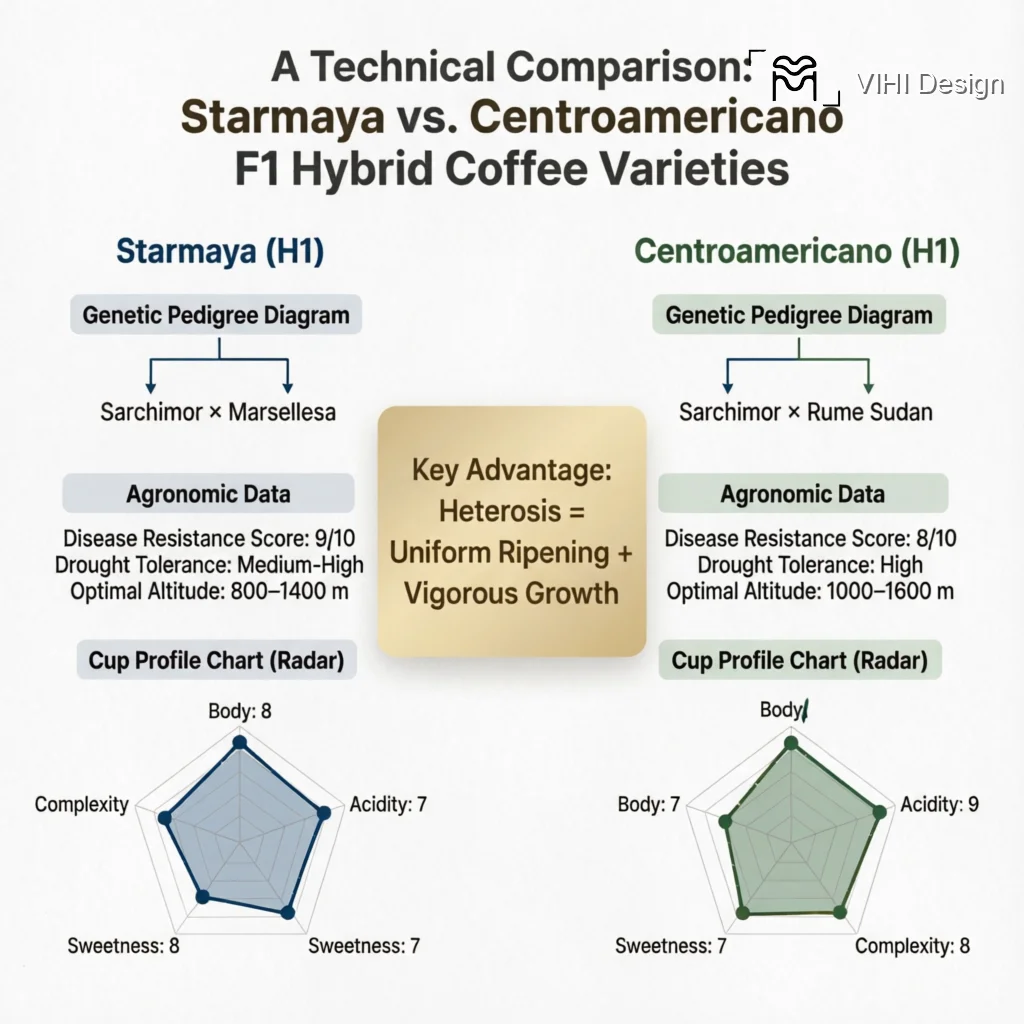
- Uniform Ripening: Genetic uniformity translates to a concentrated harvest window, reducing the labor cost of multiple passes and improving the percentage of ripe cherry delivered to the mill.
The Cup Potential: Unlocking Flavor Through Genetic Vigor
The narrative that hybrids sacrifice cup quality for agronomic performance is a pervasive myth. In reality, the physiological robustness of F1 plants can be a direct contributor to superior seed development and, consequently, flavor potential. The plant’s enhanced vascular system and nutrient partitioning efficiency often lead to denser, more developed beans. This cellular density becomes the canvas for flavor. In the roaster, these dense beans can withstand a more developed roast profile without tipping, allowing for full sugar caramelization. In the cup, this frequently translates to:
- Exceptional sucrose content and sustained sweetness.
- A dense, syrupy body that provides a weighty mouthfeel.
- A resilient acidity that integrates rather than dominates.
This structural integrity makes F1 hybrids like Centroamericano or Marsellesa exceptionally tolerant of innovative post-harvest processing. The bean’s strength allows it to undergo intense anaerobic fermentations or extended drying phases without developing off-flavors, enabling producers to explore bold, clean, and complex flavor profiles.
Barista’s Field Notes: Addressing Common Struggles
Having worked directly with producers growing F1 hybrids for over a decade, I’ve witnessed the market’s confusion firsthand. The specialty sector often struggles to categorize these coffees.
Pain Point 1: Roasters and buyers, steeped in the romance of heirloom varieties, sometimes dismiss hybrids as “generic” or lacking terroir expression. This is a critical error. Terroir is an interaction. A genetically vigorous plant in a unique microclimate can express that site with more clarity, as it’s less stressed by disease or nutrient deficiency. The “terroir” is in the bean’s chemistry, not just its pedigree.
Pain Point 2: Farmers invest in these seeds for their survival, yet at the buying station, they receive no premium for the sophisticated genetics, only for the physical bean quality. We must create a market language that values genetic investment as a component of sustainability and quality.
Pain Point 3: Consumers see “F1 Hybrid – Centroamericano” and disengage. We must translate. Instead of leading with the technical name, lead with the experience: “A coffee bred for resilience, delivering a cup of profound sweetness and structure.”
Pro-Tip: When cupping F1 hybrids like Starmaya, pay close attention to the mid-palate. The genetic vigor often translates to an exceptional, sustained sweetness and dense body that can carry complex processing experiments (like anaerobic fermentation) without losing clarity, making them ideal candidates for innovative lots. Dial in your extraction to highlight this: aim for a slightly higher TDS (1.35-1.45%) to showcase the body, and ensure even particle distribution to balance the intense sweetness with acidity.
Optimizing Extraction for Hybrid Bean Density
The physical density of F1 hybrid beans demands adjustment in both roasting and brewing. Their compact cellular structure requires more energy to fracture during grinding and more heat to develop during roasting.
- Roasting: Extend the drying phase to ensure even heat penetration. A more gradual ramp to first crack helps prevent a baked or grassy flavor. Expect a slightly longer development time after crack to achieve full flavor development.
- Grind Particle Size: Aim for a medium-fine grind (similar to table salt). Dense beans can produce more fines; consider a tool like the Kruve sifter to improve uniformity if needed.
- Total Dissolved Solids (TDS): Target 1.15% – 1.45%. The higher end of this range complements the innate body and sweetness of many hybrids.
- Extraction Yield (EY): Target 18% – 22%. Due to their high sucrose content, hybrids can often tolerate a higher extraction without excessive bitterness, unlocking more complex sugars.
- Water Temperature: Use water at 92°C – 96°C (197°F – 205°F) to ensure efficient extraction of the dense cellular matrix.
Brewing Parameters (Pour-Over as Benchmark):
Technical Summary
- F1 hybrid seeds must be repurchased each cycle due to genetic segregation in the F2 generation, which destroys uniformity and heterosis.
- Key agronomic benefits include built-in disease resistance, compact growth for higher density, and uniform ripening—all reducing chemical inputs and labor costs.
- Cup quality is not compromised; genetic vigor often enhances bean density, leading to superior sweetness, body, and resilience to experimental processing.
- Optimal brewing for dense hybrid beans involves a medium-fine grind, water at 92°C-96°C, targeting a TDS of 1.15%-1.45% and an EY of 18%-22%.
- Market advancement requires translating genetic terminology into flavor and sustainability narratives that resonate across the value chain, from farmer to consumer.
Leave a Reply