1. Introduction: The Global Water Crisis in Your Coffee Cup
The global coffee industry is a significant yet often overlooked contributor to freshwater resource strain. While consumer attention frequently focuses on agricultural water use for irrigation, the post-harvest processing stage represents a critical nexus of water consumption, pollution, and environmental impact. Coffee processing, the method by which the coffee seed is removed from its surrounding fruit, is fundamentally a biochemical and mechanical operation requiring substantial water inputs. The predominant methods—fully washed, semi-washed, and natural processing—have distinct but collectively substantial hydrological footprints. This phase generates wastewater characterized by high concentrations of organic pollutants, including sugars, pectin, and phenolic compounds, leading to severe eutrophication and oxygen depletion if discharged untreated. Effective water management in coffee processing is therefore not merely an operational concern but a fundamental requirement for the environmental sustainability and social license of the global coffee supply chain.
2. The Coffee Processing Water Footprint: Quantifying the Problem
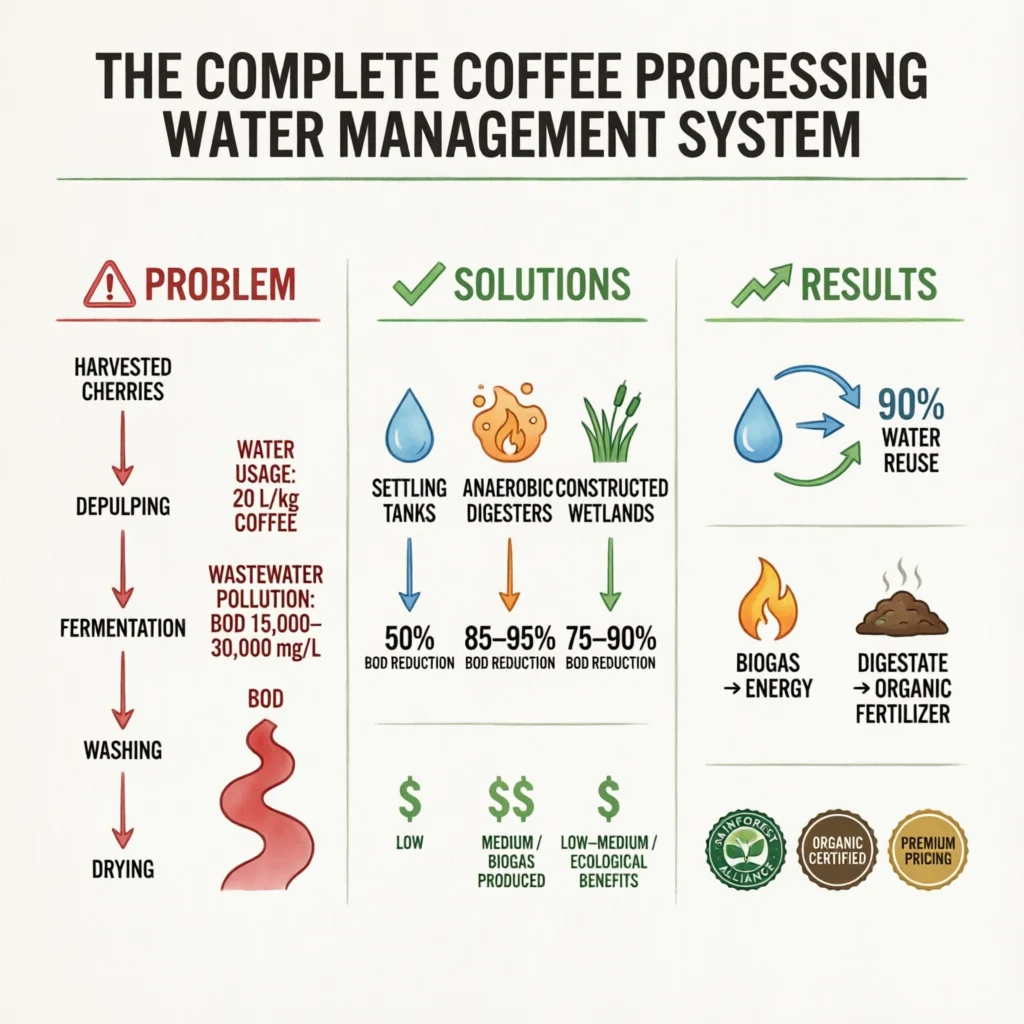
The water footprint of coffee processing is a function of the processing method, technological efficiency, and operational practices. It is analytically separated into three components: blue water (surface and groundwater consumption), green water (rainwater consumed during growth), and grey water (the volume of freshwater required to assimilate pollutant loads). This analysis focuses on the direct blue water use and grey water footprint generated at the processing mill.
2.1. Water Consumption by Processing Method
Water application varies significantly across processing techniques:
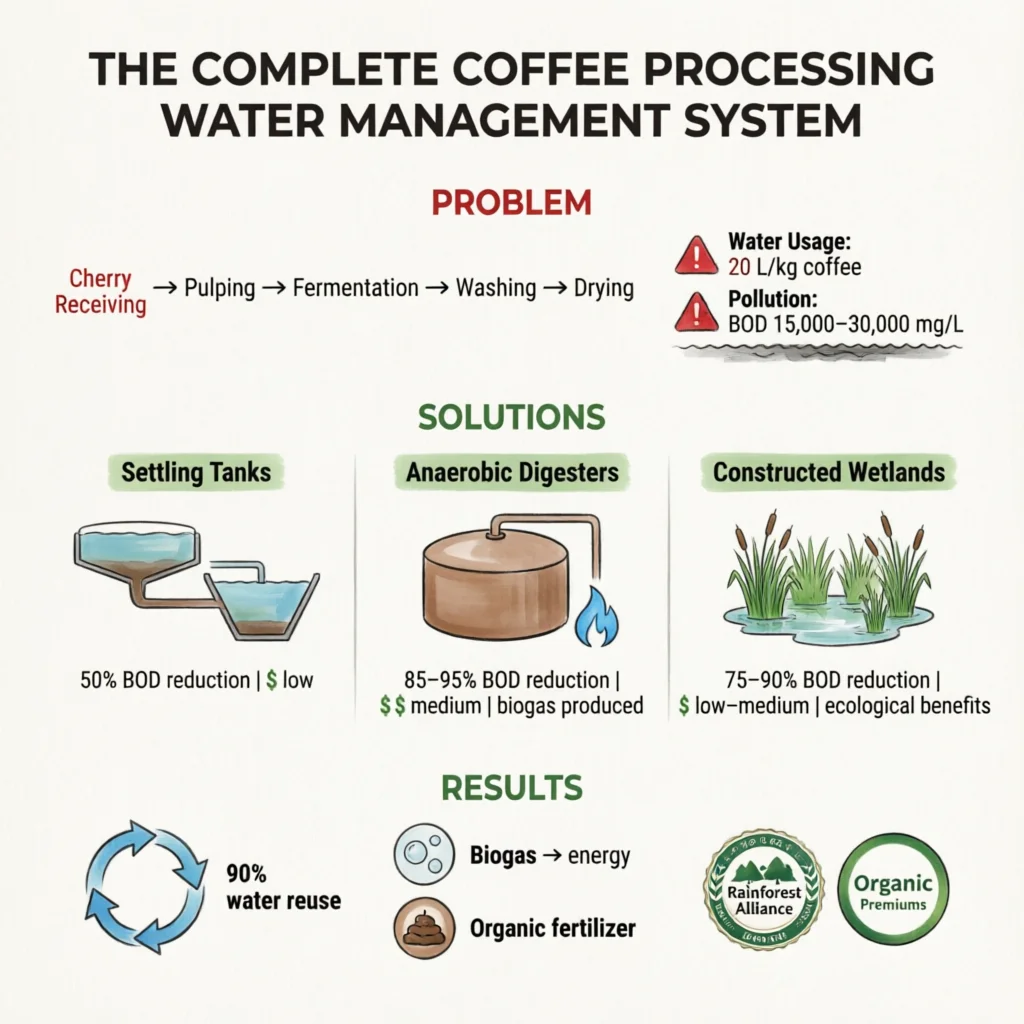
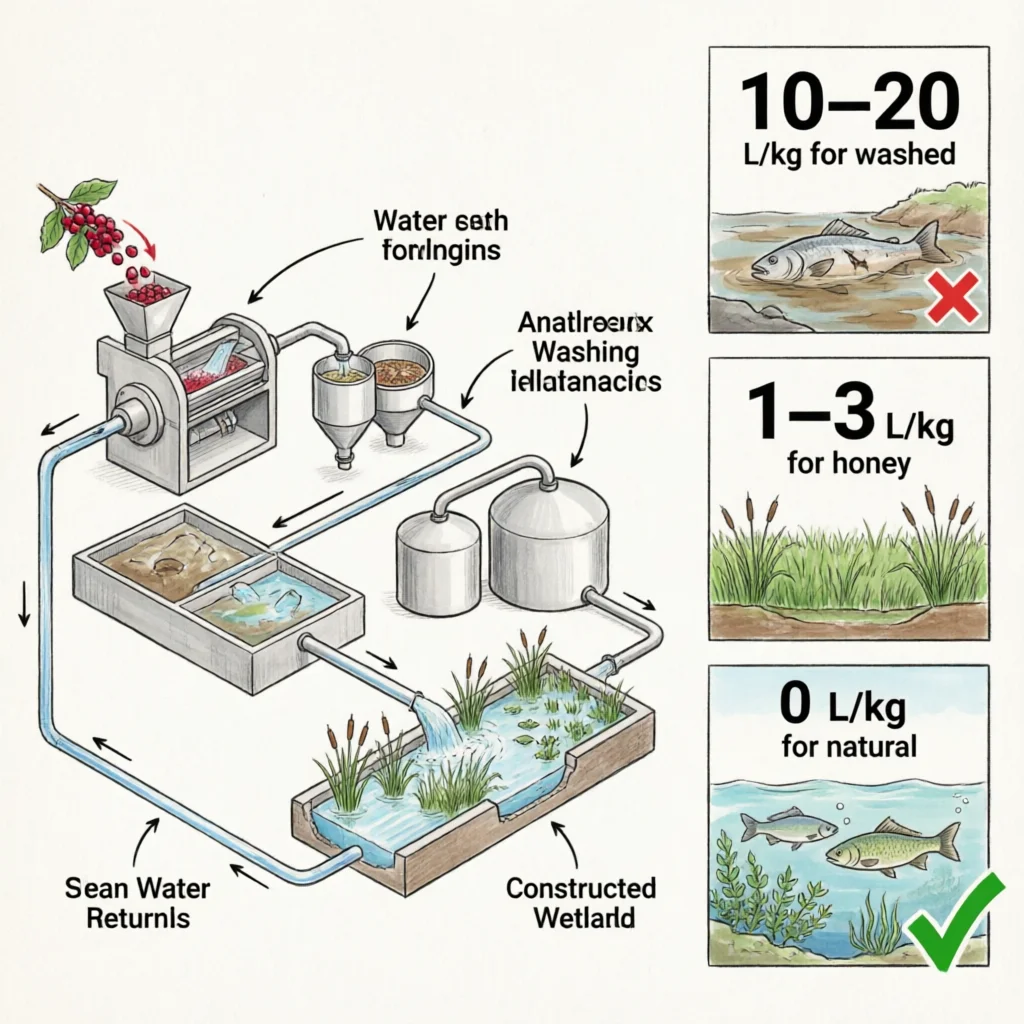
- Fully Washed (Wet) Processing: This method is the most water-intensive. It involves pulping, fermentation, and subsequent channel washing to remove mucilage. Traditional practices can use between 5 to 40 liters of water per kilogram of fresh coffee cherries (L/kg). The upper range is typical for older, inefficient systems using continuous flow flumes.
- Semi-Washed (Honey/Pulped Natural) Processing: This method reduces water use by mechanically removing most mucilage after pulping, minimizing or eliminating the fermentation and washing stages. Water consumption typically ranges from 1 to 10 L/kg.
- Natural (Dry) Processing: This method involves drying the whole cherry, using virtually no process water (0-1 L/kg), making it the least hydrologically intensive. However, it is highly dependent on specific climatic conditions.
2.2. Characteristics and Pollutant Load of Coffee Processing Wastewater (CPW)
The environmental hazard of CPW is defined by its physicochemical properties. It is characterized by:
- High Organic Load: Measured as Biochemical Oxygen Demand (BOD5) and Chemical Oxygen Demand (COD). COD values typically range from 15,000 to 50,000 mg/L, exceeding domestic sewage by two orders of magnitude.
- Low pH: Due to the release of organic acids during fermentation, pH can fall below 4.0.
- Elevated Nutrients: Significant levels of nitrogen and phosphorus from fruit pulp contribute to eutrophication.
- Solid Content: Total Suspended Solids (TSS) can exceed 10,000 mg/L.
The discharge of untreated or partially treated CPW into aquatic ecosystems leads to rapid dissolved oxygen depletion, fish kills, and degradation of riverine biodiversity. The grey water footprint, calculated as the volume needed to dilute pollutants to acceptable concentrations, often represents the most substantial component of the total water footprint for washed coffee processing.
2.3. Systemic Drivers of Water Inefficiency
High water use and pollution are not inherent to coffee processing but are outcomes of specific technical and economic conditions. Key drivers include:
- Use of obsolete, open-channel pulping and washing equipment designed for continuous water flow.
- Lack of volumetric measurement and water recirculation infrastructure at processing sites.
- Economic constraints limiting capital investment in efficient technology and wastewater treatment systems at the producer/mill level.
- Inadequate regulatory frameworks and enforcement in major producing regions.
Quantifying this footprint provides the essential baseline for evaluating intervention strategies aimed at conservation, internal reuse, and terminal treatment to mitigate environmental impact.
Intervention Strategies: From Conservation to Treatment
Addressing coffee’s water footprint demands a multi-stage approach, prioritizing source reduction, internal reuse, and finally, terminal treatment. The most sustainable solutions prevent contamination at the processing stage.
- Water Conservation: Implementing closed-loop systems for pulping and grading recirculates water, cutting fresh water demand by up to 90%.
- Process Modification: Shifting from fully washed to honey or natural processes eliminates fermentation water entirely. Mechanical demucilagers (discussed below) offer a middle ground.
- Constructed Wetlands: These passive, biological systems use plants and microbial communities to treat effluent, offering a low-cost, low-energy solution suitable for co-ops or larger farms.
- Anaerobic Digestion: Advanced systems capture methane from wastewater for energy production while reducing organic load by over 80%, transforming a waste problem into an energy asset.
Barista’s Field Notes: Addressing Common Struggles
Two decades behind the bar and in origin warehouses reveal the human and commercial realities behind the data. These are the recurring struggles I’ve witnessed.
- The Small Farmer’s Dilemma: I’ve stood with farmers watching their communal stream turn acidic and dark each harvest. They know it’s wrong, but a $50,000 treatment plant might as well be $50 million. Their struggle isn’t indifference; it’s economic paralysis.
- The Exporter’s Compliance Crisis: An exporter in Central America once showed me a canceled contract from a European buyer. Their mill’s wastewater discharge, legal locally, failed the importer’s new private sustainability standard. Market access now hinges on water stewardship.
- The Roaster’s Revelation: We once cupped a fantastic, “certified” coffee. A visit revealed it was polluting a vital watershed. Certification didn’t cover water. This taught me that true due diligence requires looking beyond the label to specific mill practices.
- The Knowledge Gap: On a traditional farm, I observed a hose left running during pulping for “cleanliness.” That simple act wasted thousands of liters daily. The farmer had no concept of the volume or that adjusting a valve could save his water and money.
Pro-Tip: The most effective water conservation often happens BEFORE treatment. Implement ‘dry demucilaging’ or mechanical mucilage removal systems. These machines scrub the mucilage off the parchment with minimal water, reducing usage by 70-80% compared to traditional washing. This single investment dramatically lowers both fresh water needs and the scale (and cost) of required wastewater treatment. This is the open secret of top sustainable farms in Colombia and Costa Rica.
The Roaster’s Role: Connecting Process to Profile
Water management at origin directly influences the green coffee we roast. Understanding this link is crucial for quality control and ethical sourcing.
- Processing Method & Flavor: A washed coffee from a mill with inconsistent water quality during fermentation may develop off-flavors (e.g., harsh acidity, ferment) that no roast profile can fully rectify. Consistent, clean water is a prerequisite for clean cup profile.
- Density and Roast Dynamics: Over-fermented beans, often a result of poor water management and temperature control, can have compromised cellular structure. These beans roast faster and less evenly, leading to baked or scorched flavors.
- Analytical Benchmarks for Sourcing: When evaluating samples, consider the water story. A coffee boasting bright acidity but sourced from a region with severe water contamination issues presents an ethical and quality risk. Demand transparency on mill wastewater practices.
Technical Parameters for Quality & Sustainability
Optimizing both yield and cup quality requires precise measurement. These parameters form the bridge between environmental practice and sensory excellence.
- Total Dissolved Solids (TDS): Target 1.15% – 1.45% in the brewed cup. This range typically corresponds to a balanced extraction. Water used in processing with high mineral content can subtly affect bean mineral uptake, potentially influencing this final metric.
- Extraction Yield (EY): Aim for 18% – 22%. Achieving this optimal range depends on grind consistency and roast evenness—factors impacted by bean health at the processing stage. Poorly processed beans extract unevenly, making this target difficult to hit consistently.
- Particle Size Distribution: A uniform grind is non-negotiable for even extraction. However, beans damaged by erratic fermentation or improper drying (core water management issues) create more fines during grinding, destabilizing the brew bed and leading to channeling and over-extraction.
Technical Summary
- Coffee processing generates wastewater with high organic load, depleting oxygen in ecosystems and threatening community health.
- Effective mitigation follows a hierarchy: maximize water conservation and process change (e.g., mechanical demucilaging) before investing in terminal treatment systems.
- Water management practices at the mill directly influence green coffee density, structural integrity, and sensory potential, impacting roast development and final cup quality.
- Key brewing metrics (TDS: 1.15%-1.45%, EY: 18%-22%) rely on bean uniformity, which is fundamentally determined by careful, consistent water use during post-harvest processing.
- Industry solutions must address economic barriers for producers, as market access increasingly depends on verifiable water stewardship, moving beyond generic sustainability certifications.