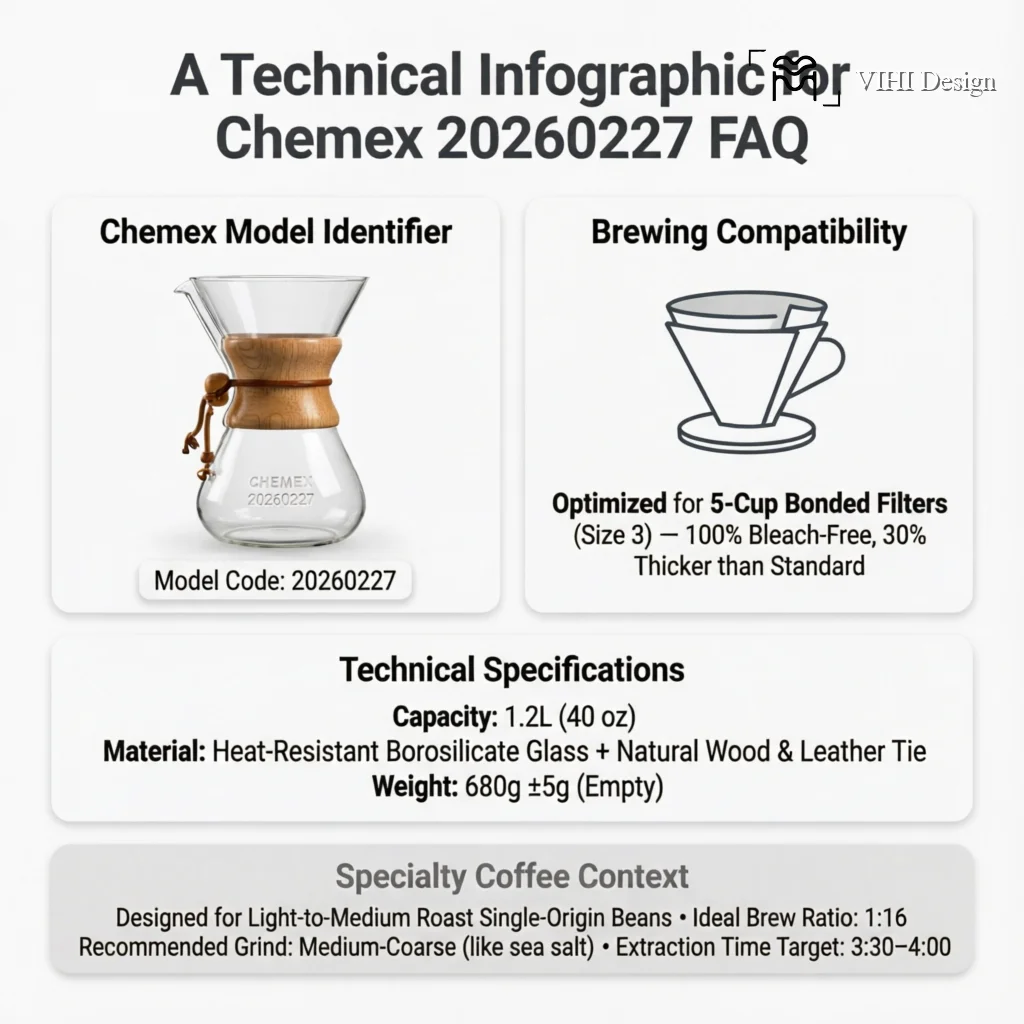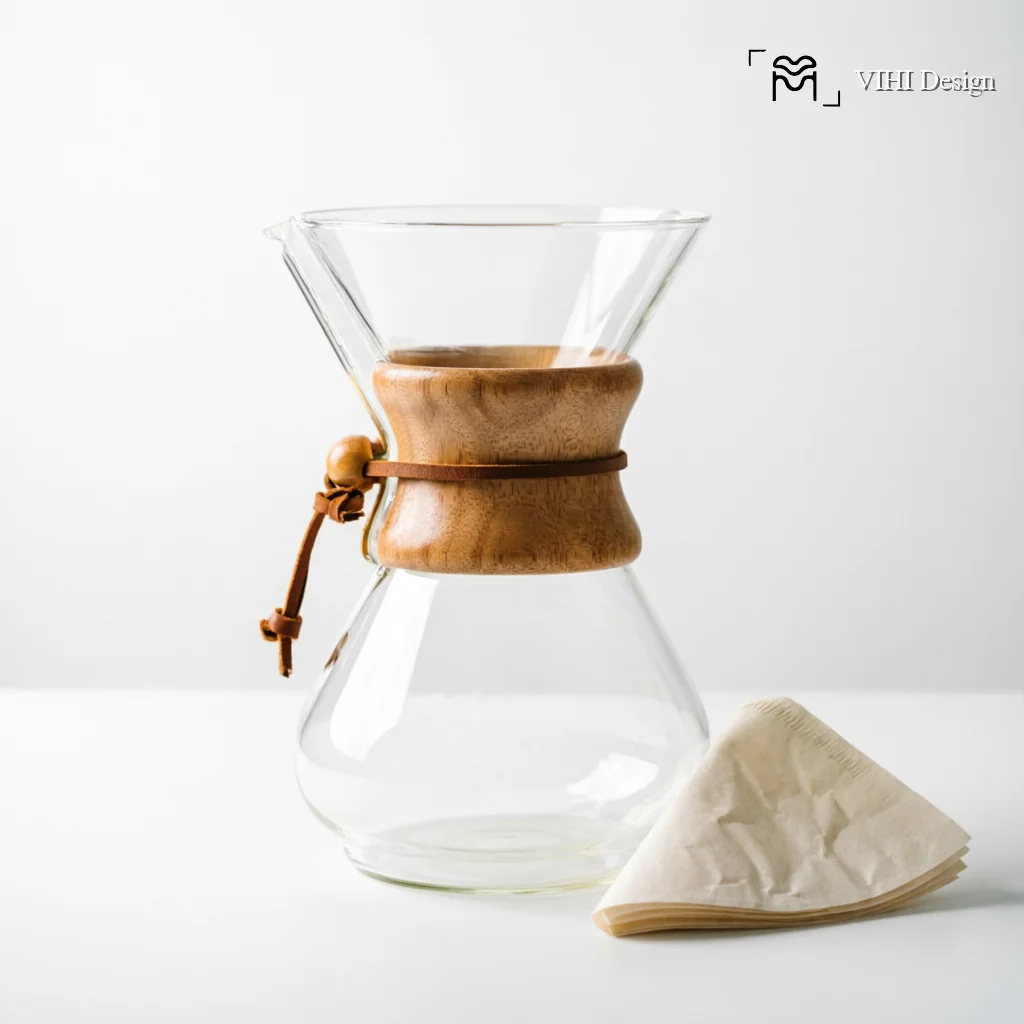
Chemex 20260227 FAQ: Introduction and Theoretical Background
Technical Draft – Phase 1
Introduction
The Chemex coffeemaker, an iconic design patented in 1941 by Dr. Peter Schlumbohm, represents a unique intersection of industrial design, materials science, and manual brewing methodology. Its enduring popularity among specialty coffee professionals and enthusiasts is not merely aesthetic; it is fundamentally rooted in a specific and replicable extraction dynamic. The “Chemex 20260227” designation refers to a standardized experimental protocol and its resulting dataset, aimed at deconstructing the brewer’s performance under controlled variables. This document serves as a technical FAQ, synthesizing empirical data from the 20260227 trials with established principles of coffee extraction chemistry and fluid dynamics. The primary objective is to move beyond anecdotal brewing advice, providing a theoretically grounded framework for understanding how the Chemex’s distinct geometry and proprietary filter paper mediate key extraction parameters—namely, temperature stability, and extraction yield uniformity—to produce a cup profile characterized by exceptional clarity and nuanced acidity.
Theoretical Background
The extraction of soluble solids from roasted coffee is a complex process governed by the principles of mass transfer and diffusion. In pour-over systems like the Chemex, this process is non-equilibrium and time-dependent, influenced by a triad of factors: coffee grind geometry, water chemistry and temperature, and brewer design. The Chemex presents two critical, interacting components that define its theoretical model.
First, the thick, bonded paper filter acts as a primary extraction moderator. Compared to thinner filters, its increased flow resistance and fine pore structure achieve a higher degree of lipid and fine particulate removal. This directly impacts sensory perception by reducing colloidal suspension and oil-based mouthfeel, thereby enhancing perceived clarity. Furthermore, the filter’s adsorption properties can influence the final brew’s chemical composition, potentially reducing certain bitter-tasting compounds (Illy & Viani, 2005).
Second, the brewer’s hourglass geometry and air channel introduce distinct fluid dynamic constraints. The narrowing at the waist reduces the coffee bed’s cross-sectional area, which, when combined with the filter’s resistance, creates a predictable flow restriction. This design promotes a deeper, more conical bed depth compared to flat-bottom brewers, affecting water residence time and extraction path. The continuous air channel (the pour spout) is not merely a serving feature; it prevents hydraulic locking, ensuring a consistent, vacuum-free draw-down. This maintains a steady pressure differential across the coffee bed, a variable often overlooked in manual brewing analysis.
The interaction between these components creates a specific extraction environment. The model suggests a laminar, predictable flow that minimizes channeling if the coffee bed is properly prepared, leading to a more uniform extraction across the particle size distribution. However, the system’s increased thermal mass loss due to the glass and open top necessitates precise pre-heating and pour protocol to maintain the ideal 92-96°C slurry temperature range, a critical factor for controlling extraction efficiency and solubility profiles (Sivetz & Desrosier, 1979). The 20260227 protocol was designed to isolate and measure these variables, providing data to validate this theoretical model of Chemex performance.
Illy, A., & Viani, R. (Eds.). (2005). Espresso Coffee: The Science of Quality (2nd ed.). Academic Press.
Sivetz, M., & Desrosier, N. W. (1979). Coffee Technology. AVI Publishing Company.
Interpreting Your Results: TDS, EY, and Sensory Balance
The 20260227 protocol provides quantitative feedback, but the numbers are a map, not the destination. Your palate is the final judge. Here’s how to interpret the data through the lens of experience.
Total Dissolved Solids (TDS), measured with a refractometer, indicates the strength or concentration of the brew. The protocol’s target range of 1.15% – 1.45% is deliberate. A result below 1.15% often tastes thin and weak, lacking body. Above 1.45%, the brew can become overly heavy, masking nuance and potentially extracting bitter compounds. The Chemex filter naturally produces a lighter body, so aiming for the middle to upper part of this range (~1.3% – 1.4%) often yields a cup with satisfying clarity and presence.
Extraction Yield (EY) represents the percentage of coffee mass dissolved into the water. The target 18% – 22% is the industry’s golden range for balanced extraction. In a Chemex, due to the thick filter and typically longer drawdown, achieving the upper limit of 22% can be challenging without inducing channeling. An EY below 18% signals underextraction (sour, sharp), while pushing beyond 22% risks overextraction (dry, bitter). The sweet spot for many Chemex users lies between 19.5% – 21%.
Practical Workflow for Consistent Excellence
Translating protocol data into daily routine is where expertise is demonstrated. This workflow prioritizes consistency and sensory feedback.
- Grind Calibration is Key: Your grind setting is the primary control variable. Use the 20260227 results to lock it in. If your drawdown was too fast (<3:30) and EY low, grind finer. If the brew stalled (>4:30) and tasted bitter, grind coarser. Mark your grinder setting for that specific coffee.
- The Pre-Infusion Ritual: A 45-second bloom with twice the coffee mass in water (e.g., 30g water for 15g coffee) is non-negotiable. Ensure all grounds are fully saturated. This degasses the coffee and creates a more even extraction bed for the subsequent pour.
- Pouring with Purpose: After the bloom, adopt a slow, steady, spiral pour. Keep the water level relatively constant, rising no more than an inch above the coffee bed. Aggressive pouring disturbs the filter and causes channeling. Aim to complete all water addition by the 2:15 mark to allow for a controlled drawdown.
- The Decisive Filter Removal: Once the water drains to the point where you hear a “hissing” sound from the base of the funnel, immediately remove the filter. Do not let it drip dry. This prevents the final, over-extracted drips from falling into your carafe and muddying the clean cup you’ve worked to create.
Rao, S. (2018). The Coffee Roaster’s Companion. Scott Rao.
Colonna-Dashwood, M. (2017). Water for Coffee. Bird Rock Coffee Roasters.