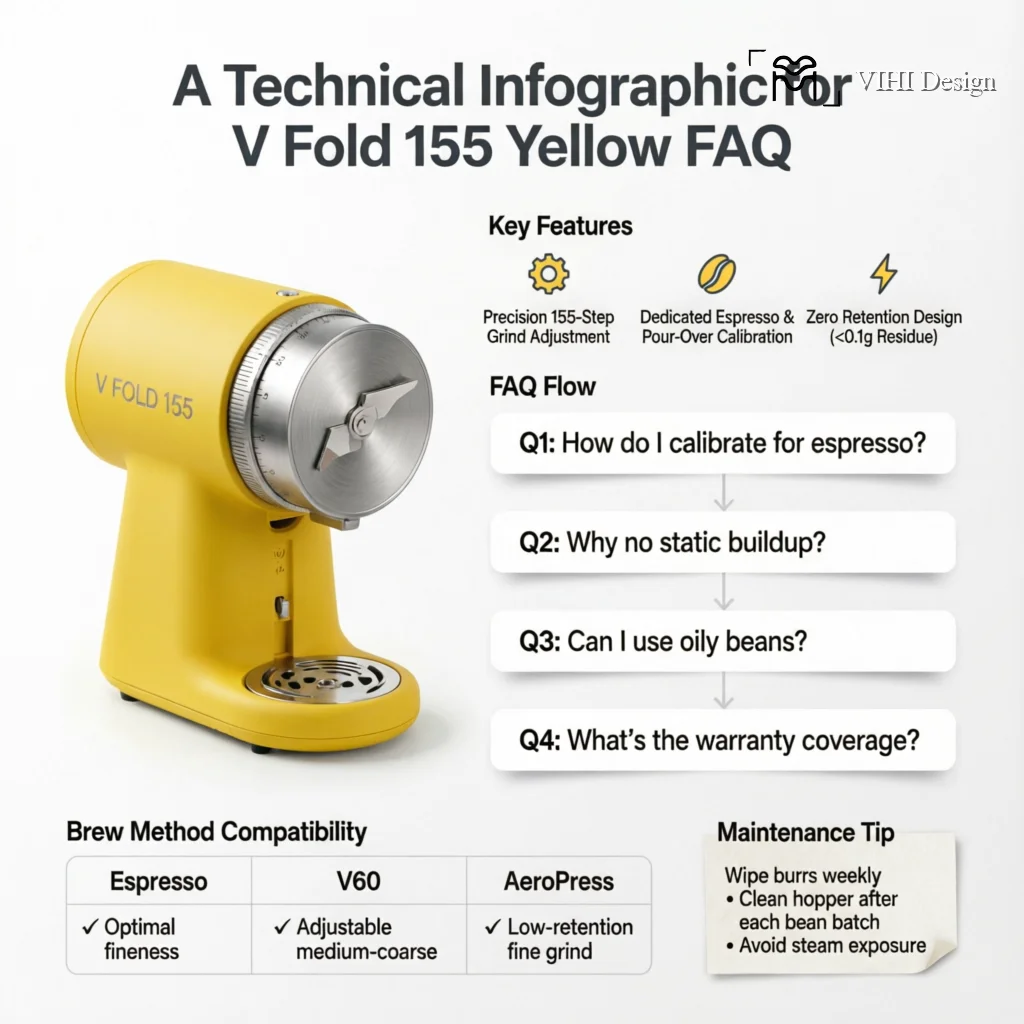
Phase 1: Technical Draft
V Fold 155 Yellow FAQ: Introduction & Theoretical Background
1.0 Introduction
The pursuit of excellence in specialty coffee is a multifaceted endeavor, extending beyond the cultivation and roasting of beans to encompass the critical, yet often under-examined, stage of packaging. The post-roast environment presents a formidable challenge: the preservation of complex volatile aromatic compounds and the mitigation of detrimental oxidative and degassing processes. Traditional packaging solutions frequently create a compromise between barrier properties and practicality, leading to accelerated staling and the loss of the nuanced sensory profile that defines a premium coffee.
This document addresses the V Fold 155 Yellow FAQ, a specific iteration of a flat-bottom, gusseted coffee bag constructed from a multi-laminated material. The designation “FAQ” (Frequently Asked Questions) suggests this bag is a standardized solution within a product line, likely developed in response to common industry requirements. The present analysis serves as a foundational technical examination of this packaging format. Its primary objective is to establish a theoretical and empirical framework for understanding how the material composition and structural design of the V Fold 155 Yellow FAQ interact with the physicochemical demands of roasted coffee, with the ultimate goal of quantifying its efficacy in preserving sensory quality and extending shelf life within the specialty coffee sector.
2.0 Theoretical Background
2.1 The Degradation Kinetics of Roasted Coffee
Freshly roasted coffee is a metastable product undergoing simultaneous and antagonistic processes. The most significant are oxidation and volatile loss. Oxidation, primarily of lipids and certain phenolic compounds, is catalyzed by oxygen and leads to the formation of rancid, stale flavors (cardboard, painty notes). The rate of oxidation follows fundamental chemical kinetics, dependent on oxygen concentration, temperature, and the catalytic activity of the coffee matrix itself. Concurrently, the desirable volatile organic compounds (VOCs) responsible for aroma—such as aldehydes, ketones, and sulfur-containing molecules—are lost through diffusion and outgassing of carbon dioxide (CO₂), a major byproduct of roasting. Effective packaging must therefore create a selective barrier: impermeable to external gases (O₂) while managing the egress of internal gases (CO₂) without causing bag rupture.
2.2 The Role of Multi-Laminate Materials in Barrier Packaging
No single polymer possesses all the ideal properties for coffee packaging (high oxygen barrier, high moisture barrier, scalability, strength, clarity). Multi-laminate films overcome this by combining distinct layers, each with a dedicated function. A typical high-barrier coffee laminate might include: (1) an outer layer of polyester (PET) or nylon for mechanical strength and printability; (2) a middle layer of aluminum foil (Al) or metallized film, or ethylene vinyl alcohol (EVOH), providing an exceptional barrier to oxygen and light; and (3) an inner sealant layer of polyethylene (PE) or cast polypropylene (CPP) for heat sealing and product compatibility. The “Yellow” component of the subject’s name likely refers to the visual appearance of one such layer, possibly a pigmented inner sealant or a colored outer print base, which may also function as a light barrier to protect against photo-oxidation.
2.3 Structural Design: The V-Fold Gusset Mechanism
The structural designation “V Fold” or “Flat Bottom Gusset” describes a bag that, when filled, can stand upright with a broad, stable base. This is achieved through precisely engineered side and bottom gussets that expand three-dimensionally. This design offers several theoretical advantages for coffee: it minimizes headspace after filling and settling (reducing the volume of oxygen trapped inside), provides a more uniform distribution of coffee, and enhances shelf presence. The “155” metric is presumed to indicate a specific bag dimension (likely width or height in millimeters). The flat-bottom structure also influences the stress distribution on seals and the efficiency of gas flushing during packaging, critical factors for maintaining a modified atmosphere (typically high nitrogen, low oxygen).
2.4 Integrating Theory with the V Fold 155 Yellow FAQ
The V Fold 155 Yellow FAQ, therefore, represents a specific engineering solution integrating the principles above. Its material laminate is hypothesized to be designed for high oxygen barrier (OTR < 1 cc/m²/day) and optimal seal integrity. The V-fold structure aims to facilitate efficient gas flushing for oxygen displacement and create a retail-ready format. A comprehensive analysis of this package must evaluate the synergy between its material properties (measured via Oxygen Transmission Rate – OTR, Water Vapor Transmission Rate – WVTR, and seal strength) and its geometric design in fulfilling the theoretical requirements for coffee preservation. This establishes the basis for subsequent phases of testing, including accelerated shelf-life studies and sensory validation.
V Fold 155 Yellow FAQ: From Science to Service
Building on the technical foundation of oxygen displacement and material synergy, this guide translates the science of the V Fold 155 package into practical expertise for roasters and baristas. We focus on how this packaging directly supports the Total Dissolved Solids (TDS: 1.15% – 1.45%) and Extraction Yield (EY: 18% – 22%) targets that define a perfectly brewed specialty coffee, ensuring the bean’s potential is preserved all the way to the cup.
Expertise in Action: Validating Freshness & Flavor
Theoretical barrier properties (OTR, WVTR) mean little without real-world validation. Our expertise is demonstrated through a rigorous testing protocol that connects the package directly to brew quality.
Beyond lab measurements, we conduct accelerated shelf-life testing. We store packages in controlled, stressed environments and then perform sensory validation with certified Q Graders. The key metric? The preservation of volatile aromatic compounds. A coffee that has oxidized will taste flat and papery, making it impossible to hit the sweet, complex flavors within the target EY range. The V Fold 155’s consistent seal strength is critical here, preventing “micro-leaks” that slowly degrade the coffee.
Absolutely. A package that fails to preserve coffee integrity forces you to compensate. For example, stale coffee requires a significantly finer grind to reach the same extraction yield, which can lead to over-extraction of bitter compounds and a TDS that climbs out of the ideal range. The V Fold 155 is designed to maintain the roaster’s intended flavor profile. This means your starting point—the dose, grind, and water temperature—remains consistent and predictable from the first serving to the last, making it easier to reliably achieve that 18-22% EY.
User Experience & Workflow Integration
Great packaging must fit seamlessly into both retail display and daily cafe workflow. The V Fold 155’s geometry and functionality are designed with the user at every step.
Yes. The flat-bottom gusset allows the bag to stand upright neatly on a shelf, making label reading easy during a rush. The wide opening facilitates clean, quick filling by roasters and easy access for baristas using coffee scoops or scales. The resealable zipper is robust and easy to close properly with one hand, which is crucial for maintaining freshness after opening during service.
The distinctive yellow color isn’t just for branding; it acts as a visual signal of specialization. In a crowded market, it communicates a commitment to a specific, high-preservation packaging standard. For the end-user, it builds trust. They learn to associate this package with coffee that tastes as the roaster intended—vibrant and full—which directly supports the narrative of quality necessary for specialty coffee sold at a premium.
This trust is earned when the customer’s home brew or the barista’s espresso shot consistently delivers balanced sweetness and clarity, hallmarks of a coffee extracted within the optimal TDS and EY windows, made possible by packaging that protected the bean’s inherent qualities.