Lactic Acid Bacteria (LAB) in Coffee: Beyond Acidity to Creamy Body and Umami
Introduction
The pursuit of quality and complexity in specialty coffee has driven the industry to scrutinize every stage of the value chain, from seed to cup. While fermentation has long been recognized as a critical post-harvest process, its scientific understanding and deliberate application have historically lagged behind its agricultural and roasting counterparts. Traditionally, fermentation was viewed primarily as a means of mucilage removal, with a secondary, often incidental, influence on acidity. However, a paradigm shift is underway, reframing coffee fermentation as a targeted microbiological intervention capable of precisely shaping a coffee’s sensory profile.
Within this new paradigm, Lactic Acid Bacteria (LAB) have emerged as microorganisms of profound interest. Once considered merely contributors to a clean, sharp acidity, contemporary research suggests their role is far more nuanced and influential. This paper posits that LAB, through their metabolic activities during controlled fermentation, are key agents in the development of not only refined acidity but also of textural attributes like a creamy, silky body and the elusive fifth taste: umami. Moving beyond the simplistic association with “sourness,” we explore how specific LAB strains and their symbiotic interactions with yeasts and other microbes can metabolize coffee substrates to produce a spectrum of organic acids, exopolysaccharides, and amino acid derivatives that directly enhance mouthfeel and savory depth.
Theoretical Background
The theoretical foundation for this research rests upon three interconnected pillars: the established role of fermentation in food science, the specific ecology of coffee fermentation, and the unique metabolic capabilities of Lactic Acid Bacteria.
Fermentation as a Biochemical and Sensory Engineering Tool
In food science, fermentation is defined as the anaerobic catabolism of organic compounds by microorganisms to produce energy, resulting in a variety of metabolic end-products. These products—including organic acids, alcohols, esters, and polysaccharides—are fundamental determinants of a food’s flavor, aroma, texture, and preservation. In dairy (yogurt, cheese), charcuterie, and fermented vegetables (kimchi, sauerkraut), starter cultures of LAB are employed specifically to predictably generate desired sensory and textural outcomes, such as tanginess, creaminess, or umami richness. The theoretical leap for coffee involves applying this principle of directed microbial inoculation to the coffee cherry and seed, treating the fermentation tank as a bioreactor where substrate (sugars, acids, proteins) conversion can be guided.
Microbial Succession in Coffee Fermentation
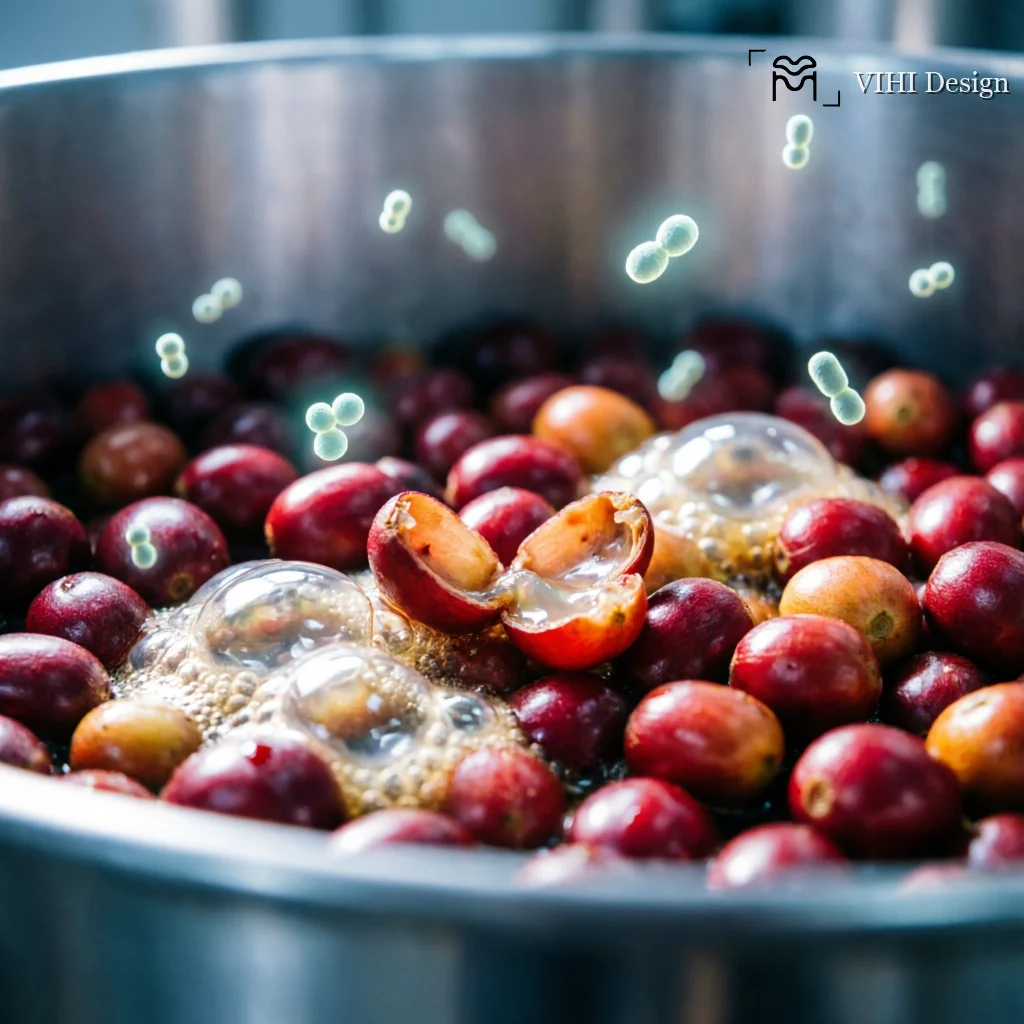
Natural coffee fermentation is a dynamic ecosystem involving yeasts, bacteria, and fungi. A typical succession begins with enterobacteria and wild yeasts, which consume simple sugars and lower the pH, creating a selective environment. As pH drops below 5.0, acid-tolerant LAB, primarily from genera such as Lactobacillus, Leuconostoc, and Pediococcus, become dominant. Their metabolism is not isolated; they engage in complex interactions with yeasts. Yeasts can hydrolyze complex pectins into simpler sugars that LAB utilize, while LAB can produce compounds that stimulate or inhibit yeast growth. This microbial consortia approach is critical, as the final sensory profile is a composite of metabolites from all active microorganisms, not a single species.
Metabolic Pathways Linking LAB to Creamy Body and Umami
The connection between LAB activity and sensory attributes beyond acidity is explained through specific metabolic pathways:
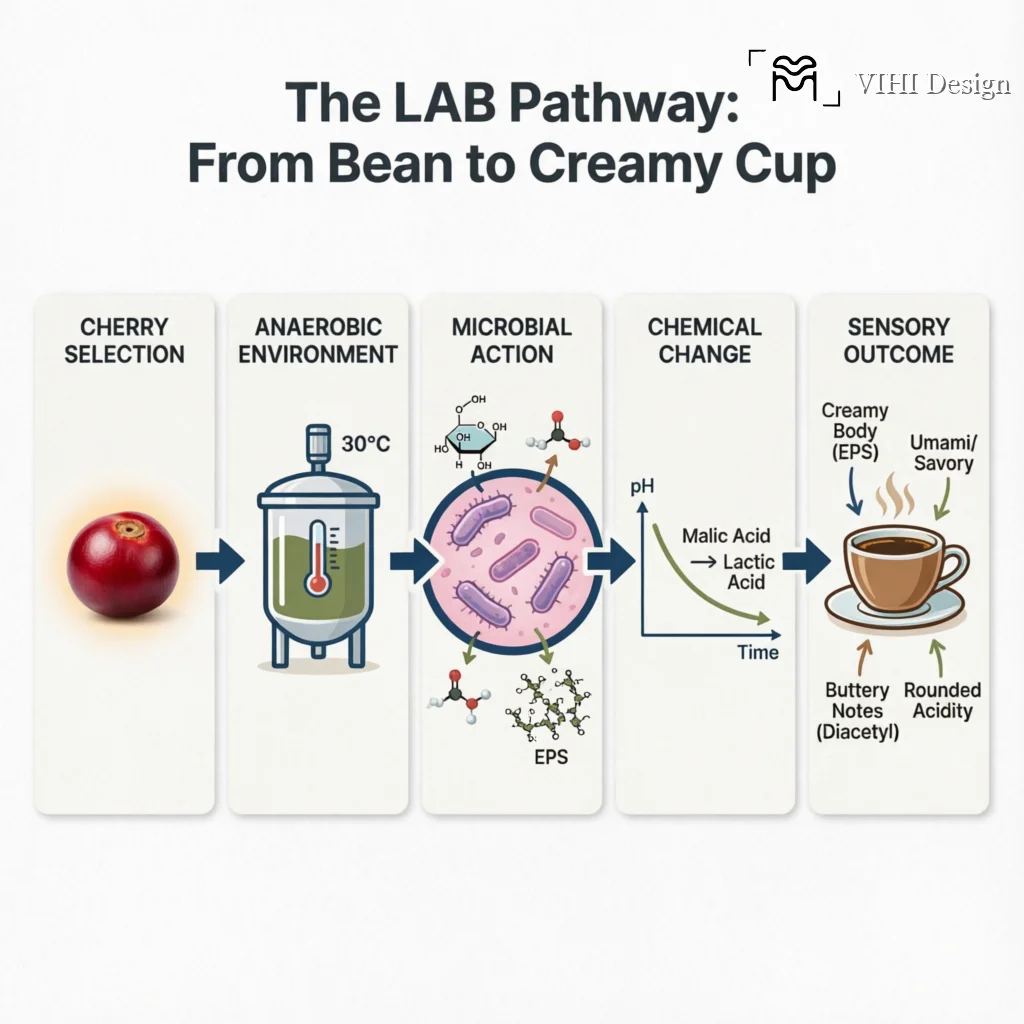
1. Exopolysaccharide (EPS) Production: Certain LAB strains are prolific producers of EPS—long-chain sugar polymers excreted into their environment. In fermented milk, these EPS are directly responsible for a ropy, creamy texture. In coffee fermentation, it is hypothesized that LAB-produced EPS may adhere to or interact with coffee compounds, potentially contributing to an enhanced, viscous mouthfeel perceived as “creamy body” in the final brew. The presence of residual polysaccharides could also influence the coffee’s solubility and extractability.
2. Proteolysis and Umami Generation: LAB possess proteolytic systems that can break down coffee proteins into peptides and free amino acids. The amino acid L-glutamate is the primary compound responsible for umami taste. Through proteolytic activity and subsequent metabolism, LAB can increase the pool of free glutamate in the fermenting mass. Furthermore, the degradation of certain peptides can reduce perceived bitterness, allowing savory and sweet notes to become more prominent. The degradation of phenolic compounds through microbial activity may also reduce astringency, further smoothing the mouthfeel and unveiling underlying savory characteristics.
3. Organic Acid Profile Modulation: While LAB produce lactic acid as a primary metabolite, many strains also produce acetic, succinic, and malic acids in varying ratios. This specific acid profile, rather than total acidity alone, dictates the quality of perceived acidity. A balanced, complex acid profile can create a perceived “roundness” and fullness that supports a creamy texture, contrasting with a sharp, singular acidity that can feel thin. The interaction of these acids with other compounds forms esters and other volatile aromatics that define the overall flavor bouquet.
Thus, the theoretical background establishes that through selective pressure, inoculation strategies, and control of fermentation parameters (time, temperature, pH, oxygenation), it is possible to steer LAB community structure and metabolic output. This directed metabolism offers a scientific pathway to intentionally cultivate coffees with hallmark notes of creamy body and umami, moving the application of LAB in coffee far beyond its traditional association with basic acidity.
Lactic Acid Bacteria (LAB) in Coffee: Beyond Acidity to Creamy Body and Umami
From Theory to Cup: Translating LAB Metabolism into Sensory Experience
The science is compelling, but how does a barista translate controlled fermentation into a tangible experience for the customer? The answer lies in the unique chemical fingerprint LAB leaves on the bean. Unlike acetic acid bacteria which can produce sharp, vinegar-like notes, LAB fermentation, when managed for body and umami, increases the concentration of specific compounds like certain polysaccharides and peptides. These compounds directly influence mouthfeel and taste perception, creating a texture that is often described as “silky,” “yogurt-like,” or “brothy,” with a savory depth that rounds out the coffee’s profile.
For the practicing barista, this means coffees processed with a focus on LAB can be surprisingly forgiving and expressive. The heightened body can help bridge the gap between perceived acidity and sweetness, making even complex, light-roast coffees feel more approachable. The umami character doesn’t taste like soy sauce; instead, it manifests as a lingering, pleasant savoriness that enhances the inherent sweetness of the coffee, much like a pinch of salt in chocolate.
Dialing In: The Optimal Extraction Window for LAB-Processed Coffees
To showcase the textural and savory qualities cultivated through LAB fermentation, precise brewing is non-negotiable. These coffees often possess a different soluble structure, requiring a tailored approach to extraction.
Target Parameters for Highlighting Body & Umami:
- Total Dissolved Solids (TDS): Aim for the higher end of the standard range, 1.35% – 1.45%. This slightly increased strength supports the weight and creaminess of the coffee on the palate.
- Extraction Yield (EY): Stay within 18% – 22%, but be mindful of the flavor balance. Pushing extraction too high (e.g., above 22%) can over-dissolve compounds that introduce unwanted astringency, masking the delicate umami. Often, the sweet spot is found between 19.5% and 21%.
Practical Grind and Pour Strategy: Start with a slightly finer grind than you would for a similarly roasted washed coffee to achieve the target TDS. However, monitor flow rate closely. If you notice any hint of dryness or papery texture in the cup, coarsen the grind incrementally. This often means you are extracting the “right amount” of solids, but with a more favorable particle distribution that minimizes harsh polyphenols. A steady, controlled pour with intentional agitation (such as a gentle spiral) will help achieve an even extraction that unifies acidity, sweetness, and body.
Curating the Experience: Serving and Pairing for Maximum Impact
Presenting a LAB-focused coffee is an opportunity for storytelling and enhanced customer experience. Your guidance can direct the drinker’s attention to the very qualities the process was designed to create.
Serving Advice: Encourage customers to let the coffee cool slightly. As the temperature drops, the perception of body and umami often intensifies, while harsh acids recede. This allows the creamy, savory characteristics to become the star. Serve in a pre-warmed cup or mug to maintain an ideal temperature window longer.
Food Pairing Suggestions: Leverage the umami quality by suggesting complementary foods. The creamy body pairs wonderfully with soft, rich textures like mascarpone cheese, brioche, or almond croissants. The savory umami note creates a fantastic synergy with dishes that have a similar profile—think aged cheeses, roasted mushrooms, or even a simple slice of tomato and olive oil on sourdough. Avoid pairing with overly citrusy or acidic pastries, which can clash with the coffee’s integrated acidity.
By understanding the science behind the process and mastering the brew parameters that highlight its results, baristas can move beyond simply serving coffee to curating a distinct sensory experience. LAB fermentation, when harnessed with intention, offers a powerful tool to explore the vast, untapped potential of coffee’s flavor spectrum, delivering cups of remarkable complexity, comfort, and depth.