Post-Harvest Processing for Low-Acidity Coffee: Methods for a Smoother Cup
Introduction
Acidity is a fundamental and prized attribute in specialty coffee, often described with terms like “bright,” “vibrant,” or “wine-like.” It provides structure, complexity, and liveliness to the cup. However, consumer preferences are diverse, and a significant segment of the market seeks a smoother, less acidic coffee experience. This demand may stem from personal taste, sensitivity to acidic foods and beverages, or a preference for the heavy-bodied, chocolaty, and nutty flavor profiles often associated with low-acidity coffees. Traditionally, achieving lower acidity has been approached primarily through darker roasting, a method that can diminish nuanced origin characteristics and introduce bitter compounds.
This research posits that the quest for a smoother cup should begin not at the roastery, but at the farm. Post-harvest processing—the series of operations that transform coffee cherries into stable green beans—represents a critical, yet underexplored, frontier for intentionally modulating perceived acidity. By understanding and manipulating biochemical pathways during processing, producers can develop targeted protocols to reduce specific acidic compounds while preserving desirable sweetness, body, and flavor clarity. This approach offers a more nuanced and sustainable alternative to blanket roast profiling, empowering producers to create differentiated products that cater to evolving market niches.
Theoretical Background
The perceived acidity in brewed coffee is a complex sensory phenomenon influenced by the concentration and balance of numerous organic acids, the coffee’s pH, and the interaction of these acids with other compounds like sugars and salts. Key acids include citric, malic, and tartaric (associated with fruitiness), quinic (a degradation product linked to astringency), and chlorogenic acids (CGAs), which are abundant in green coffee but break down during roasting into quinic and caffeic acids. A reduction in perceived acidity can be achieved by decreasing the concentration of these specific acids or by increasing the presence of compounds that buffer or counterbalance their sharpness.
Biochemical Foundations of Acidity Development
In the coffee seed, acidity is not static; it is dynamically shaped by the metabolism of the seed and the activity of microbes during processing. Two primary biochemical processes are paramount:
1. Seed Metabolism and Fermentation: After depulping, the mucilage-coated seeds undergo fermentation. Microbial (yeast and bacteria) consumption of mucilage sugars produces metabolites, including various organic acids. The type, duration, and conditions of fermentation (aerobic vs. anaerobic) directly influence which acids are produced or degraded. For instance, prolonged fermentation can lead to increased acetic acid (vinegar-like), while controlled anaerobic fermentation may promote malic acid conversion to lactic acid, which is perceived as softer and creamier.
2. Enzymatic Activity and Acid Degradation: The seed’s own enzymes remain active post-harvest. Through extended contact time between the seed and mucilage or through specific resting (reposo) stages, enzymes can catalyze the breakdown of complex acids into simpler, sometimes less sharp-tasting compounds. This enzymatic “mellowing” is a key target for low-acidity processing protocols.
Processing Methods as Acidity Modulators
Each major processing method establishes a distinct biochemical environment that dictates acid profile development:
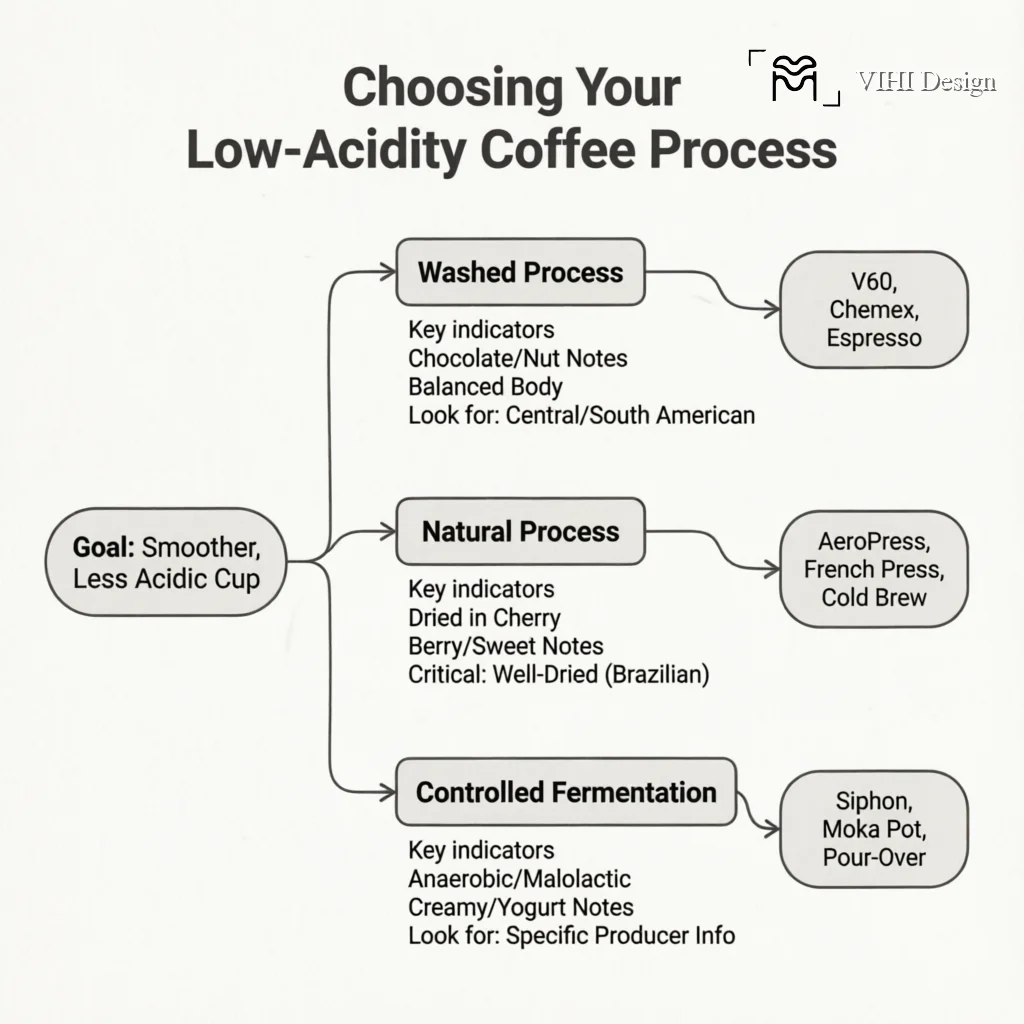
Washed (Wet) Processing: This method, involving rapid depulping and fermentation followed by washing, typically preserves higher levels of citric and malic acids, resulting in the “clean” and bright acidity for which it is famous. Modifications here focus on fermentation control and washing techniques.
Natural (Dry) Processing: Drying the whole cherry allows sugars from the fruit pulp to migrate into the seed, often leading to a fruitier, heavier-bodied cup with a different acid profile. The slow drying and constant sugar presence can promote microbial activities that modify acidity, sometimes leading to fermented or winy notes rather than crisp brightness.
Honey/Pulped Natural Processing: This intermediate method, where some mucilage remains on the seed during drying, offers a direct pathway for acidity modulation. By varying the amount of mucilage retained (e.g., yellow, red, black honey) and the drying kinetics, producers can finely tune the balance between sugar infusion, fermentation intensity, and acid degradation. It is a particularly promising method for developing smoother profiles.
Experimental Methods: Techniques like anaerobic fermentation, carbonic maceration, and prolonged underwater soaking (e.g., “Killing Man” or *Koji* inoculation) represent advanced tools. These methods create highly controlled, often oxygen-restricted environments that can steer microbial metabolism toward the production of specific, less-harsh acids (like lactic acid) and promote unique enzymatic breakdowns of sharper acidic compounds.
Sensory Perception vs. Measurable pH
A crucial distinction must be made between instrumental pH measurement and sensory perception. While a lower pH generally indicates higher acidity, the perceived acidity is a psycho-sensory construct. A coffee with significant sweetness or high body can “buffer” the perception of acidity, making it taste smoother even if its pH is similar to a brighter-tasting coffee. Therefore, successful low-acidity processing must target both the chemical composition (reducing specific acids) and the overall sensory balance (enhancing sweetness and body). This theoretical framework guides the investigation into specific post-harvest protocols designed to achieve this dual objective.
Post-Harvest Processing for Low-Acidity Coffee: Crafting a Smoother Cup
As established, the quest for a low-acidity profile isn’t just about stripping acids away; it’s a deliberate re-balancing act. The goal is to reduce specific sharp-tasting acids while simultaneously fostering the development of compounds that enhance sweetness, body, and complexity. This creates a “buffered” sensory experience where the coffee feels inherently smoother and more rounded. Let’s explore the processing methods that excel at this dual objective.
Extended Fermentation and Anaerobic Processing: Depth Over Brightness
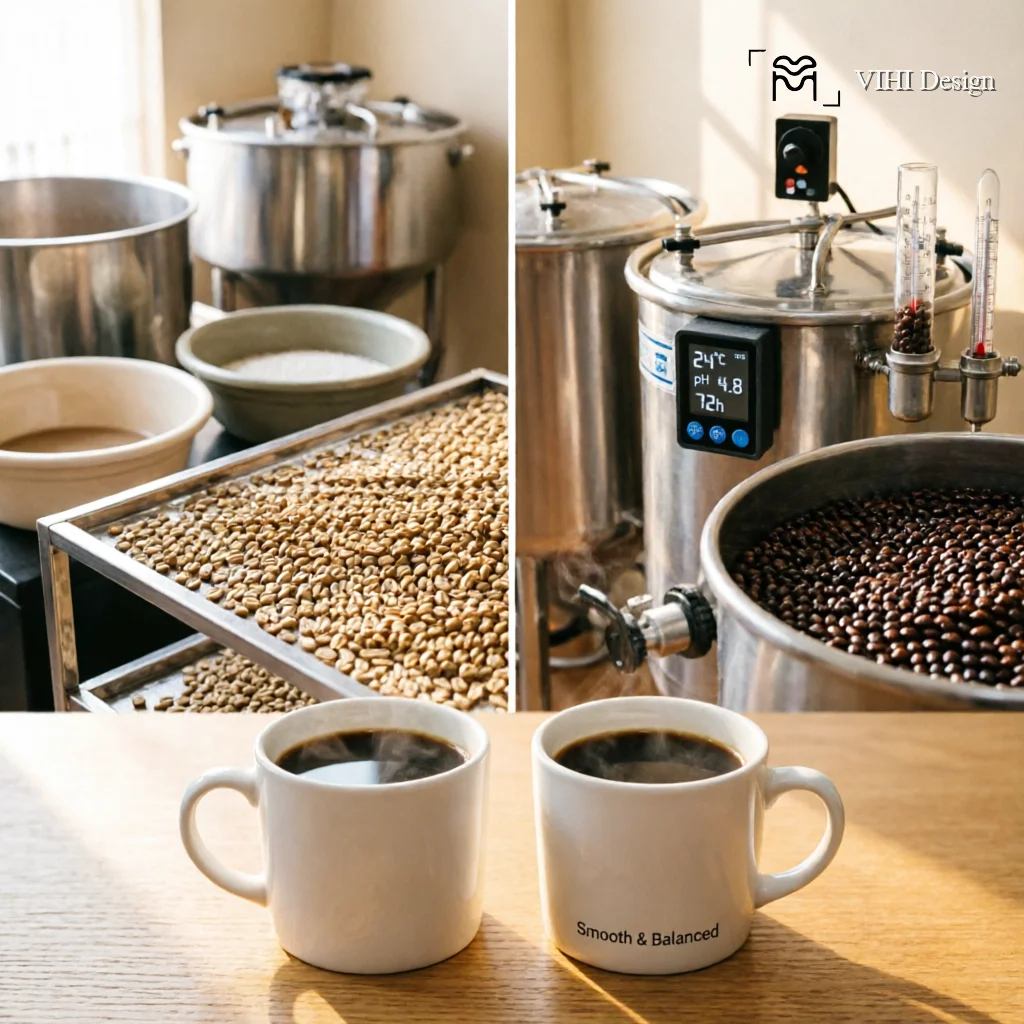
While traditional washed processing can highlight clarity and acidity, controlled extended fermentation—particularly in anaerobic (oxygen-free) environments—is a powerful tool for shifting the balance. By placing cherry or pulped coffee in sealed tanks, producers can guide microbial activity towards metabolic pathways that convert sugars and acids into new compounds.
The Science & Experience: In an anaerobic environment, different yeasts and bacteria thrive. These microbes often produce alcohols and esters through fermentation, which can contribute intense fruity, winey, or lactic notes (like yogurt or ripe cheese). Crucially, this process consumes malic and citric acids, directly reducing the sources of apple-like and citrus-like acidity. The resulting cups are frequently described as deeply sweet, with heavy body and complex, fermented fruit flavors, but with a rounded, low-pitched acidity that supports rather than dominates the profile.
Coffees from anaerobic processes often have a dense, syrupy body. To accentuate their smooth, sweet character and avoid over-extracting bitter compounds, use slightly cooler water (90°C-92°C / 194°F-198°F). A longer ratio (e.g., 1:17) can help articulate their complexity without becoming cloying. Always grind coarser than you would for a typical washed coffee of the same roast level.
Carbonic Maceration and Thermal Shock: Innovative Acidity Management
Building on anaerobic principles, Carbonic Maceration (inspired by winemaking) involves flooding a sealed tank with carbon dioxide before fermentation begins. This aggressively stifles aerobic processes and promotes unique enzymatic breakdown inside the intact cherry. Some producers combine this with “thermal shock,” alternately exposing tanks to hot and cold water, to physically rupture cell structures and further influence fermentation.
The Science & Experience: The CO2 environment and temperature manipulation lead to exceptionally high production of fruity esters and lactic acid. While lactic acid is technically an acid, it is perceived as much softer, creamier, and less sharp than citric or malic acid. The resulting coffees can be explosively fruity in aroma (think strawberry, bubblegum, or brandy) yet paradoxically smooth and creamy on the palate, with a pronounced, rounded body that mutes any residual sharpness.
• TDS (Strength): Aim for 1.15% – 1.45%. The lower end highlights clarity; the higher end emphasizes body and perceived sweetness.
• EY (Extraction Yield): Target 18% – 22%. Stay in the lower-mid range (18%-20%) for very dense, processed coffees to preserve sweetness and avoid dry, over-extracted tones.
Roast Profile and Final Brew: The Consumer’s Role in Smoothness
The processor’s work sets the potential, but the roaster and barista (or home brewer) complete the journey. A roaster aiming for smoothness will often extend the development time after the first crack, allowing more time for the breakdown of chlorogenic acids (a major source of perceived sourness and bitterness) and the development of sugar browning compounds (caramelization).
The Experience & Practical Application: You’ll often find low-acidity processed coffees roasted to medium or medium-dark levels. As a brewer, your job is to extract this developed sweetness fully. This requires ensuring an even, consistent grind and managing agitation carefully.
1. Grind: Slightly coarser than medium (similar to coarse sea salt) to promote even flow and reduce astringency risk.
2. Water: Use water with balanced mineral content (not too soft). A temperature of 93°C (199°F) is a great starting point.
3. Method: Immersion methods like the French Press or Clever Dripper are exceptionally forgiving and highlight body. For pour-over, try a single-pour method (like the Hario Switch closed) or a pulsed pour with minimal agitation to control extraction of the front-end sweetness.
4. Taste & Adjust: If your cup tastes flat or woody, your extraction is too low—grind finer or increase water temperature slightly. If it tastes ashy or bitter, your extraction is too high—grind coarser or lower the temperature.
Ultimately, the pursuit of low-acidity coffee through post-harvest processing is a testament to coffee’s incredible versatility. By understanding the methods—from extended anaerobic ferments to thermal shock—and partnering that knowledge with thoughtful roasting and brewing, we can consistently unlock cups that are profoundly sweet, complex, and seamlessly smooth.