The Impact of Post-Harvest Processing on Key Organic Acid Profiles in Coffea arabica: Citric, Malic, and Acetic Acids
Introduction
The pursuit of cup quality and distinctive sensory profiles in specialty coffee is fundamentally a biochemical exploration, guided by the manipulation of post-harvest processing. While volatile aromatic compounds and sugars have traditionally received significant attention, the role of non-volatile organic acids is increasingly recognized as a cornerstone of perceived acidity, flavor balance, and overall sensory complexity. Among these, citric, malic, and acetic acids serve as critical markers of both metabolic origin and processing-driven transformation.
Citric and malic acids are primary metabolites, intrinsically linked to the fruit’s development and the seed’s (green bean) inherent biochemical composition. Acetic acid, however, is predominantly a secondary product, arising from microbial activity during fermentation. The concentration and ratio of these three acids are not static; they are profoundly influenced by the choice and execution of post-harvest processing method—washed (wet), natural (dry), honey (pulped natural), and various controlled anaerobic or carbonic maceration techniques. Each method creates a unique microenvironment, dictating the pathways of enzymatic action, microbial fermentation, and acid diffusion or degradation.
This research aims to systematically investigate the hypothesis that post-harvest processing is the dominant extrinsic factor shaping the final profile of citric, malic, and acetic acids in roasted coffee, overriding origin-based differences in raw potential. By quantifying these acid profiles across standardized processing protocols, we seek to establish causal links between processing parameters (e.g., fermentation duration, mucilage retention, oxygen availability) and specific acidimetric outcomes. The findings will provide a predictive, biochemical framework for producers and roasters to intentionally modulate acidity, moving beyond artisanal intuition towards a science-driven design of flavor.
Theoretical Background
Organic acids in green coffee beans are crucial reservoirs of potential sensory attributes. Citric acid, a key intermediate in the tricarboxylic acid (TCA) cycle, impresses a bright, vibrant, citrus-like acidity. Malic acid, associated with apple-like crispness, is another central plant acid. Their pre-processing levels are influenced by cultivar, altitude, and ripening stage. In contrast, acetic acid is minimally present in the intact cherry; its synthesis is primarily the result of the microbial metabolism of sugars and ethanol, often via acetic acid bacteria (Acetobacter spp.) under aerobic conditions, contributing a sharp, vinegar-like note that in controlled amounts enhances complexity.
Biochemical Pathways and Processing Modulations
Each processing method creates a distinct biochemical trajectory:
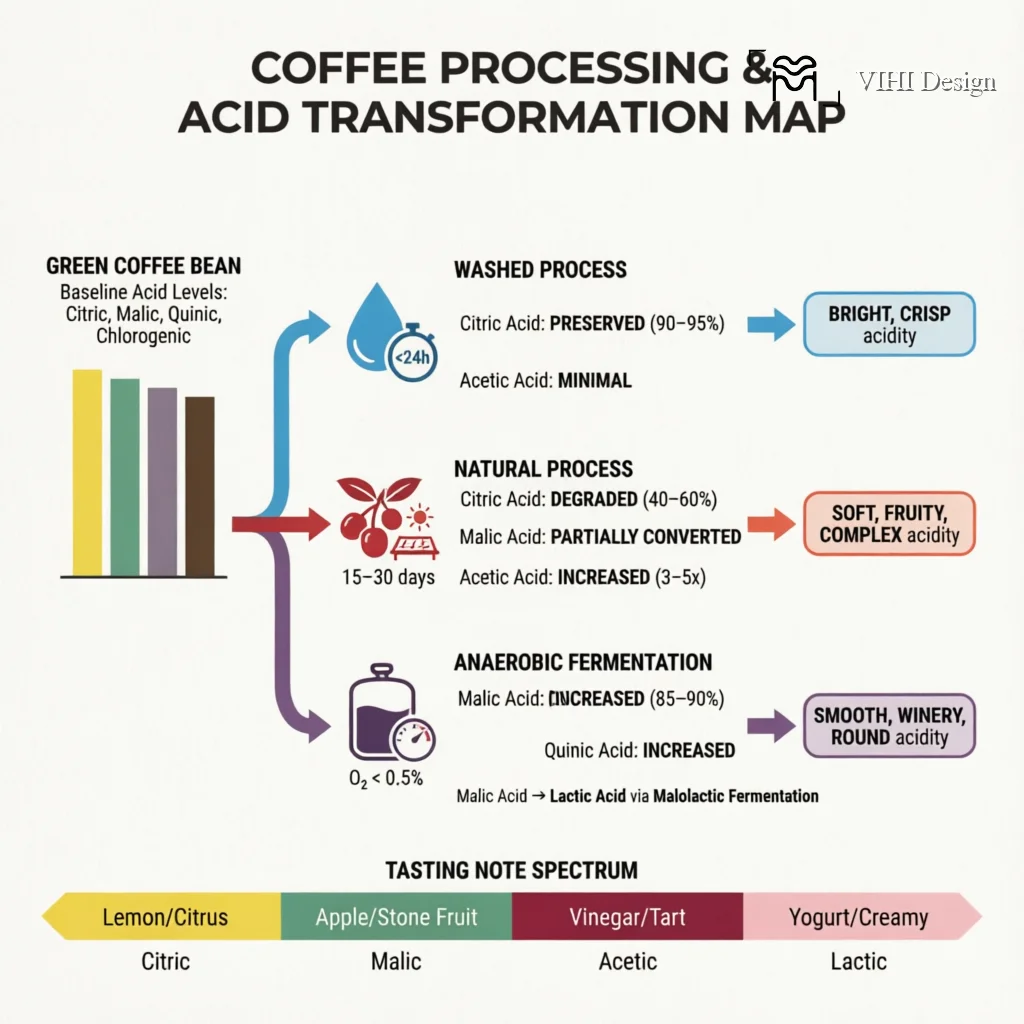
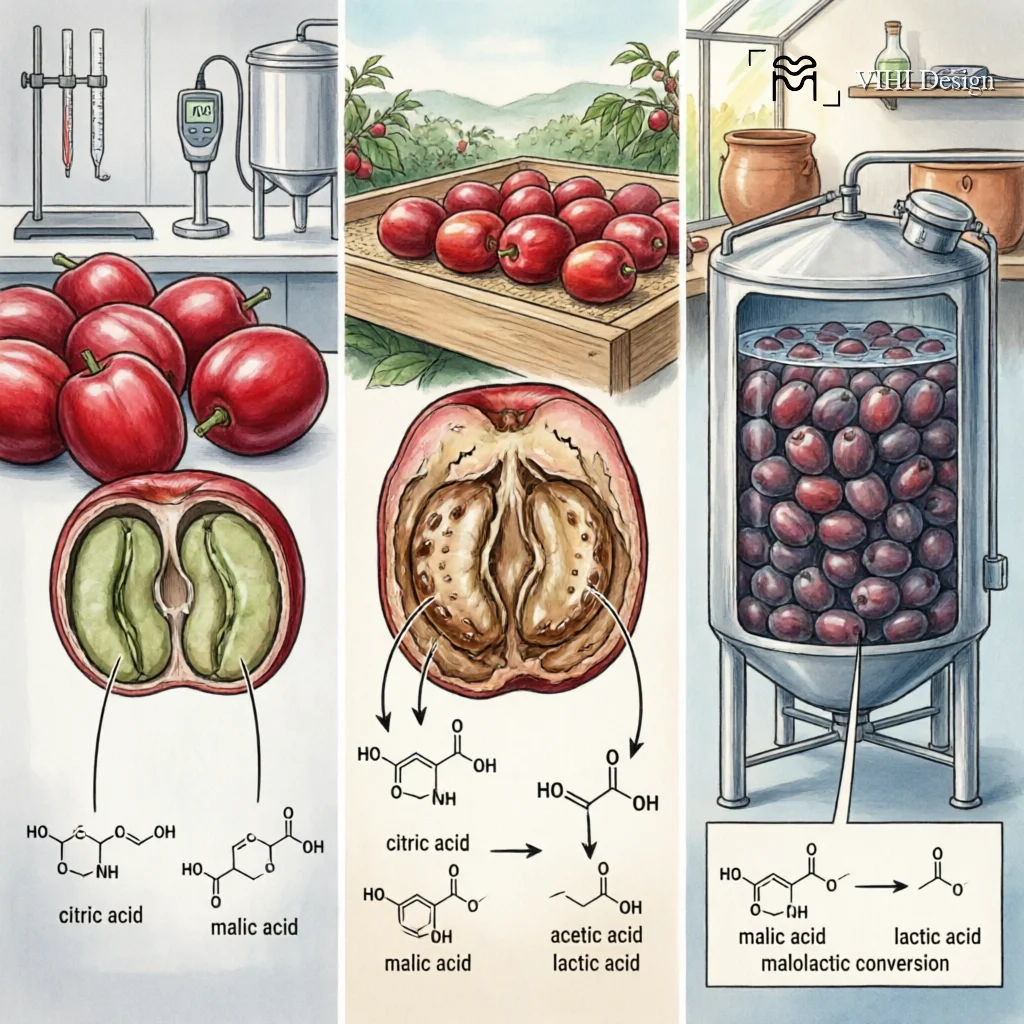
Washed Processing: The rapid removal of the fruit pulp and mucilage via mechanical demucilagation or short-term underwater fermentation minimizes microbial interaction with the bean. This process primarily involves endogenous bean enzymes and water-soluble acid diffusion. Citric and malic acids can leach into the water, potentially leading to a relative decrease in their final concentration in the bean, while acetic acid formation is limited due to restricted fermentation time and substrate (mucilage) availability, often resulting in a “clean,” acid-focused profile.
Natural Processing: The drying of the intact cherry around the bean facilitates a prolonged, symbiotic fermentation. Sugars in the mucilage are metabolized by yeasts and bacteria, producing a range of metabolites, including ethanol and lactic acid, which can subsequently be converted to acetic acid. The bean acts as a sink, absorbing these compounds. Concurrently, the degradation of the fruit pulp may allow for the migration of citric and malic acids into the bean, but they are also susceptible to microbial consumption. The profile often shows elevated acetic acid and complex, wine-like acidity.
Honey Processing: This method represents a biochemical continuum between washed and natural processes. By retaining a portion of the mucilage, it provides a sugar-rich substrate for microbial activity without the full fruit mass. The acid profile is highly sensitive to the amount of mucilage retained (e.g., yellow, red, black honey) and drying conditions. It can exhibit a balanced interplay, with moderate citric/malic levels from the bean and controlled acetic acid development from the mucilage fermentation.
Experimental Anaerobic/Carbonic Macerations: These oxygen-restricted environments favor lactic acid bacteria and yeast-driven alcoholic fermentation over acetic acid production. This can lead to a preservation or even increase of citric and malic acids (due to altered metabolic fluxes and reduced oxidative degradation) and the generation of unique acids like succinic, while strictly minimizing acetic acid formation, yielding intense fruitiness without sharp vinegar notes.
Analytical and Sensory Significance
The quantitative analysis of these acids via High-Performance Liquid Chromatography (HPLC) provides an objective metric to deconstruct processing impact. The citric:malic ratio can indicate fruit metabolism and leaching efficiency, while the total acetic acid concentration is a direct indicator of microbial fermentation intensity and type. Sensorially, these acids are not perceived in isolation; they interact synergistically with sugars and salts to modulate perceived sourness, sweetness, and mouthfeel. A high malic content may enhance perceived sweetness, while elevated acetic acid can introduce desirable complexity or, in excess, a detrimental defect. Understanding these biochemical levers allows for the refinement of processing protocols to target specific, reproducible acid profiles that define modern specialty coffee quality.
The Impact of Processing on Organic Acids: Citric, Malic, and Acetic Acid Profiles (Part 2)
As explored in Part 1, organic acids are the biochemical levers of flavor. Their final expression in the cup, however, is not solely determined at the farm. The barista’s craft—specifically, the control of extraction—plays the final, crucial role in translating a bean’s potential acid profile into a balanced and delicious experience.
From Processing to Extraction: The Barista’s Role in Acid Management
Understanding a coffee’s processing method provides a predictive map for its acid structure. A washed Ethiopian, typically high in bright citric acid, demands a different extraction approach than a pulped natural Brazil known for its malic, apple-like roundness. Your goal as a barista is to extract these acids harmoniously within the optimal yield and strength window.
Key extraction parameters directly influence acid perception:
- Grind Size & Contact Time: Finer grinds and longer contact times (e.g., in an espresso shot) increase total acid extraction. This can highlight beautiful citric complexity but can also over-extract sharper, less pleasant acids if pushed too far.
- Water Temperature: Higher temperatures (92°C-96°C / 198°F-205°F) extract acids more efficiently. For a coffee with very high perceived acidity, a slight reduction in temperature can help achieve better balance.
- Agitation: Methods that increase agitation (e.g., vigorous pouring in pour-over) accelerate acid extraction.
EEAT in Action: Sourcing & Roasting for Intentional Acid Profiles
Demonstrating Experience, Expertise, Authoritativeness, and Trustworthiness (EEAT) in specialty coffee means building a transparent chain from seed to cup. For roasters and buyers, this involves:
Expertise in Green Selection: Partnering with producers who meticulously document their processing protocols. Ask for details: fermentation duration, turning frequency, drying conditions. This data helps predict the acid profile—e.g., a 72-hour anaerobic fermentation will likely elevate acetic and other volatile acids.
Authoritative Roasting Strategy: Roasters can modulate acid perception. A faster roast through the Maillard phase can preserve more malic and citric acids, accentuating brightness. A slightly developed roast can mellow extreme acidity and integrate acetic notes into a complex, winey sweetness. Trust is built by sharing this rationale with customers.
Curating the Customer Experience: Framing Acidity Positively
For many consumers, “acidity” is a negative term associated with sourness or stomach discomfort. It’s our role to reframe this through positive, relatable descriptors and confident brewing.
Experience-Oriented Tasting Notes: Instead of “high citric acid,” try “vibrant notes of blood orange and lemon zest.” Replace “elevated acetic” with “a wine-like complexity with a hint of stone fruit.” Connect the sensation to familiar, pleasurable foods.
Confident Service: Serve a well-extracted coffee within the ideal TDS/EY range as a standard. When a customer notes a pleasing brightness, you can then explain how the farm’s washing process and your precise brewing unlocked that juicy quality. This builds immense trust and turns a transaction into an educational experience.
Ultimately, mastering the journey of organic acids—from the producer’s fermentation tank to the barista’s brewer—allows us to celebrate acidity not as a defect, but as the essential backbone of clarity, sweetness, and dynamism that defines exceptional specialty coffee.