Mapping Microbial Metabolites to Flavor Notes: A Guide to Fermentation Flavors in Specialty Coffee
Introduction
The pursuit of flavor in specialty coffee has evolved from a focus on terroir and cultivar to a sophisticated understanding of post-harvest processing as a critical determinant of cup quality. Central to this evolution is the recognition of fermentation not merely as a step for mucilage removal, but as a deliberate, microbially-driven biochemical process that directly shapes the sensory profile of the final brew. Historically, fermentation was often viewed as a necessary, yet risky, phase to be controlled to prevent defects. Today, it is increasingly regarded as a creative tool, where the guided activity of yeasts, bacteria, and fungi can be harnessed to produce an expansive spectrum of novel and desirable flavors.
This paradigm shift, however, has outpaced the availability of clear frameworks linking specific microbial processes to their tangible sensory outcomes. Producers and roasters often operate with experiential or anecdotal knowledge, describing flavors as “winey,” “fruity,” or “fermented” without a precise understanding of the underlying biochemical pathways. This gap between microbial action and sensory perception represents a significant frontier in coffee science. The objective of this work is to construct a foundational guide that maps key microbial metabolites—the chemical products of fermentation—to the specific flavor notes they impart in roasted coffee. By elucidating these connections, we aim to provide a scientific basis for intentional process design, quality control, and the informed appreciation of fermentation-derived complexity in the cup.
Theoretical Background
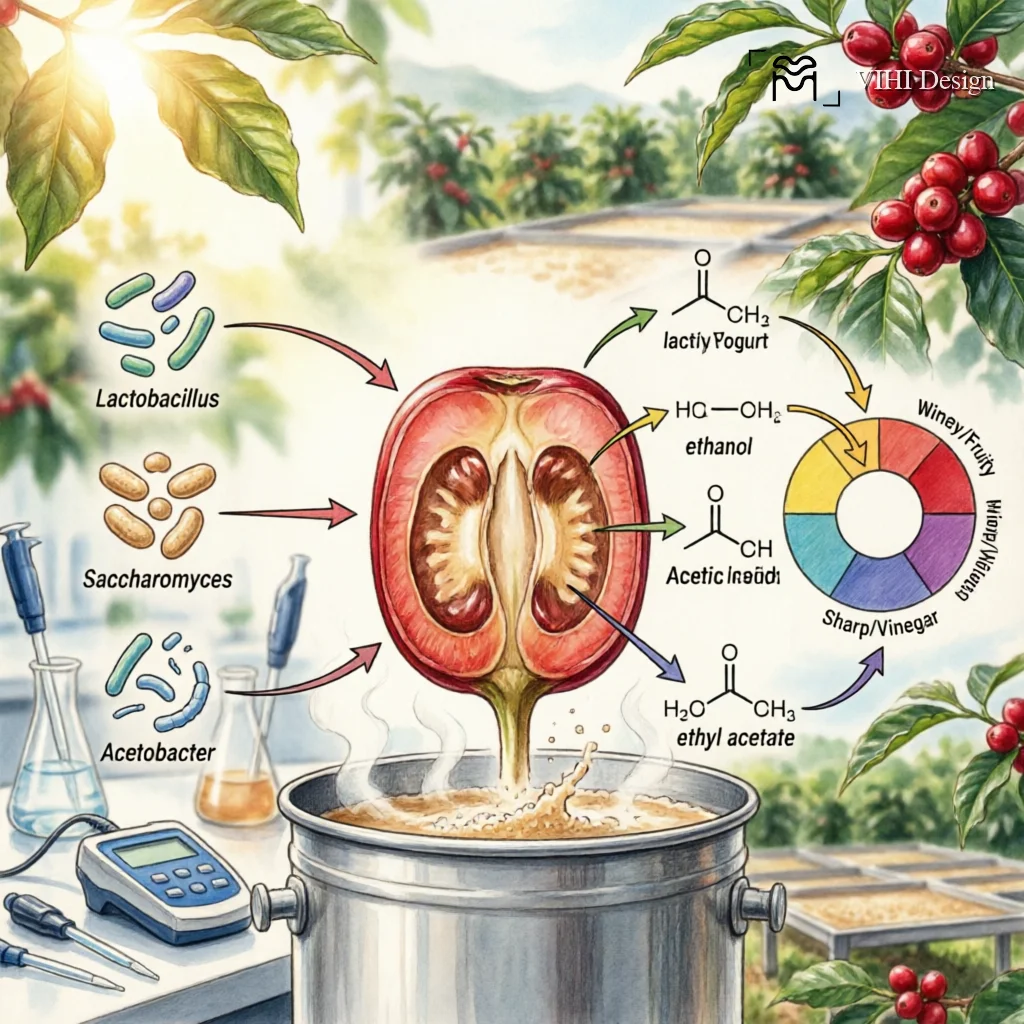
The fermentation of coffee is a complex ecological succession involving diverse microbial communities, primarily yeasts (e.g., Saccharomyces, Pichia, Hanseniaspora), lactic acid bacteria (LAB; e.g., Lactobacillus, Leuconostoc), and acetic acid bacteria (AAB; e.g., Acetobacter). These microorganisms metabolize the sugars, acids, and other compounds present in the coffee mucilage and seed, producing a suite of metabolites that become embedded in the green bean. The metabolic pathways activated during fermentation—such as glycolysis, alcoholic fermentation, malolactic fermentation, and various esterification reactions—are the direct sources of flavor precursors.
Key Metabolic Pathways and Their Outputs
The sensory impact of fermentation is governed by three primary classes of microbial metabolites: organic acids, volatile esters and higher alcohols, and carbonyl compounds. Each class arises from distinct biochemical routes and contributes uniquely to the flavor matrix.
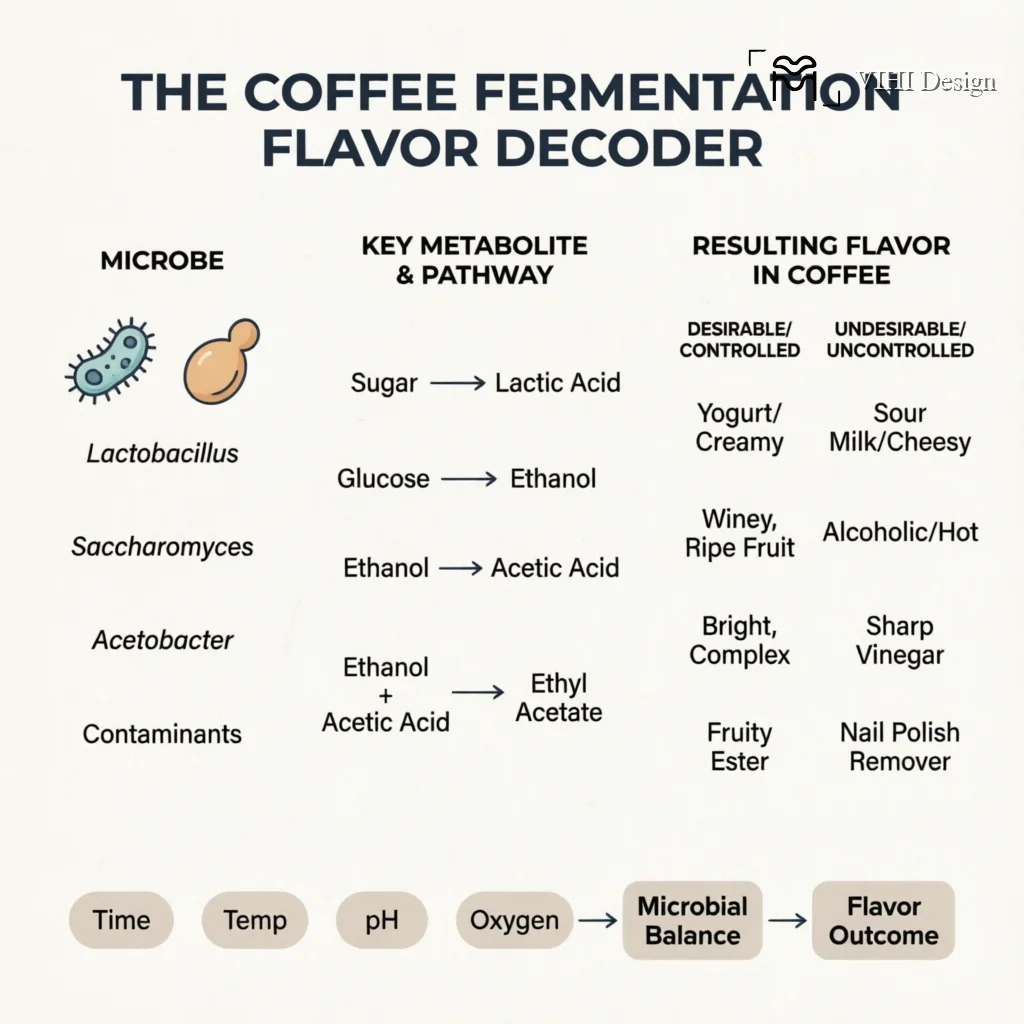
1. Organic Acid Production: Lactic acid bacteria homoferment sugars to produce predominantly lactic acid, imparting a clean, tangy, or yogurt-like acidity. Heterofermentative LAB and AAB produce acetic acid (vinegar), which in low concentrations can enhance perceived brightness and complexity, but in excess leads to sourness and vinegar defects. The modulation of citric and malic acid by microbial activity also directly influences the perceived fruitiness and sharpness of acidity.
2. Ester and Higher Alcohol Synthesis: This is the most significant pathway for positive, fruity, and floral flavor development. Yeasts and some bacteria produce higher alcohols (fusel alcohols) like isoamyl alcohol (banana) and phenylethyl alcohol (rose) via the Ehrlich pathway from amino acids. Crucially, these alcohols can react with acyl-CoA compounds derived from fatty acid or sugar metabolism to form esters. Esters such as ethyl acetate (solvent, pineapple), isoamyl acetate (banana), and phenethyl acetate (honey, floral) are potent aroma compounds that define many sought-after fruit-forward profiles in processed coffees.
3. Carbonyl Compound Formation: Aldehydes and ketones are formed through pathways including fatty acid oxidation and amino acid degradation. Compounds like acetaldehyde (green apple, fresh) and diacetyl (buttery, creamy) are key contributors. Their concentration is critical, as they can contribute desirable top notes at low levels but become overpowering or defect-associated at higher concentrations.
The Flavor Precursor Paradigm
It is essential to distinguish between the direct aroma impact of volatile microbial metabolites present in the green bean and their role as precursors for reactions during roasting. Many fermentation-derived compounds are thermally labile or serve as reactants in Maillard reactions and Strecker degradation. For instance, sugars and amino acids modulated by microbial activity determine the potential for caramelization and the formation of pyrazines (nutty, roasty) and furans (caramel, sweet). Therefore, fermentation does not simply add discrete flavors; it fundamentally alters the chemical substrate upon which roasting acts, setting the stage for the development of the final flavor profile.
This theoretical background establishes that the flavor of fermented coffee is not arbitrary but is a direct, mappable consequence of microbial ecology and metabolism. The following sections will detail this map, connecting specific metabolite groups to their sensory descriptors, thereby providing a scientific lexicon for the flavors of fermentation.
The Flavor Map: Key Metabolite Groups and Their Sensory Signatures
With the substrate set by fermentation, we can now chart the primary chemical pathways that lead to recognizable flavor notes. This map is a tool for anticipation and diagnosis, linking lab science to sensory experience.
Esters: The Fruit Basket
Produced primarily by yeasts (like Saccharomyces and Pichia) through esterification, these volatile compounds are the hallmark of fruity and floral complexity. Ethyl acetate (solvent-like at high levels, fruity at low), isoamyl acetate (banana), and phenethyl acetate (rose, honey) are classic examples. Their presence is a signature of controlled, often anaerobic, yeast fermentation.
Organic Acids: Structure and Brightness
Lactic acid (from Lactobacillus) imparts a creamy, tangy yogurt-like acidity, while acetic acid (from Acetobacter) gives a sharp, vinegar-like punch. In balance, they create a structured, wine-like complexity. Malic acid (green apple) and citric acid can also be microbially influenced. The ratio of lactic to acetic acid is a key indicator of fermentation health.
Alcohols and Carbonyls: Depth and Complexity
Higher alcohols (fusel oils) like phenethyl alcohol (floral) contribute to aromatic depth. During roasting, these alcohols can oxidize into aldehydes and ketones, which are precursors to nutty, caramel, and chocolatey flavors. Diacetyl (a vicinal diketone from lactic acid bacteria) gives a distinct buttery or butterscotch note.
From Map to Menu: Practical Brewing for Fermented Coffees
Understanding this map transforms how you approach these coffees behind the bar. They are not simply “weird” or “funky”; they have a predictable chemical logic that informs extraction strategy.
Diagnosing and Adjusting Your Brew
Use the flavor map in reverse. A coffee tasting overwhelmingly of vinegar or nail polish remover (ethyl acetate gone wild) suggests an acetic or ester imbalance, often from uncontrolled aerobic fermentation. You may need to grind finer and use a lower temperature to tame excessive volatility. A coffee with incredible jammy fruit but a flat body likely has high esters but lower sugar content; a slightly lower extraction yield can preserve the fruit without highlighting a hollow mid-range.
Curating the Customer Experience
Your role is to be a guide. When serving a lactic-fermented coffee with notes of cultured cream and lemon curd, frame it as such. Explain that this creamy texture is a direct gift from specific bacteria. For an anaerobic natural bursting with ethyl hexanoate (strawberry candy), connect the dots for the customer: “This intense strawberry note comes from the yeast metabolism during its sealed fermentation.” This storytelling, rooted in scientific truth, builds immense trust and transforms a tasting note from marketing into a meaningful narrative.
Offer comparative tastings. Brew the same fermented coffee at two ends of the acceptable spectrum—first at a 1.18% TDS to highlight acidity and fruit, then at a 1.38% TDS to emphasize body and deeper sugars. This experiential lesson demonstrates how brewing parameters interact with the coffee’s foundational chemistry, empowering your customers and showcasing your expertise.