1. Introduction: The Invisible Workforce – Defining Microbial Fermentation in Coffee
Coffee fermentation is a critical, controlled post-harvest process initiated after the fruit (cherry) is harvested. It is defined as the microbial and enzymatic degradation of the mucilage layer—a complex pectin-rich polysaccharide matrix—that surrounds the coffee bean within the parchment. This process is essential for the removal of this adhesive layer to facilitate drying and, more significantly, to initiate biochemical transformations that directly influence the sensory profile of the final roasted beverage. Unlike sterile, purely enzymatic maceration, coffee fermentation is a dynamic ecological succession involving a consortium of microorganisms originating from the farm environment (soil, air, equipment). The metabolic activities of these microbes—primarily yeasts, bacteria, and filamentous fungi—produce a spectrum of metabolites, including organic acids, alcohols, esters, and other volatile compounds. These compounds diffuse into the bean, where they interact with precursors and become substrates in subsequent roasting reactions, ultimately defining key attributes such as acidity, body, sweetness, and flavor complexity.
2. The Microbial Cast: A Taxonomy of Coffee’s Key Players (Bacteria, Yeast, Fungi)
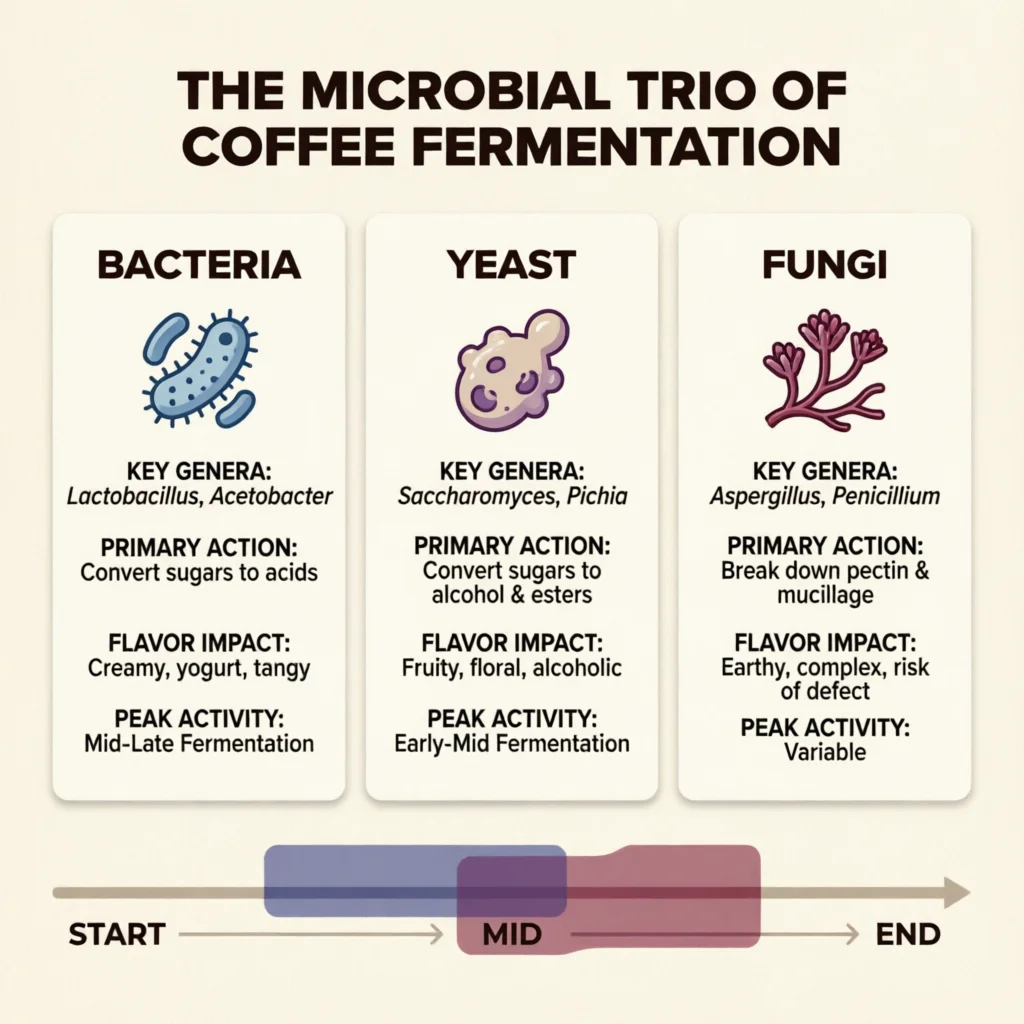
The fermentation ecosystem is a competitive and synergistic environment populated by microorganisms from three primary domains. Their prevalence and metabolic dominance are dictated by intrinsic factors (e.g., cherry maturity, native microbiota) and extrinsic processing parameters (e.g., oxygenation, temperature, pH, duration).
Bacteria: Prokaryotic Acidifiers and Aroma Producers
Bacteria are often the initial and terminal dominants in fermentation due to their rapid growth and adaptability. They are classified by metabolic output and environmental preference.
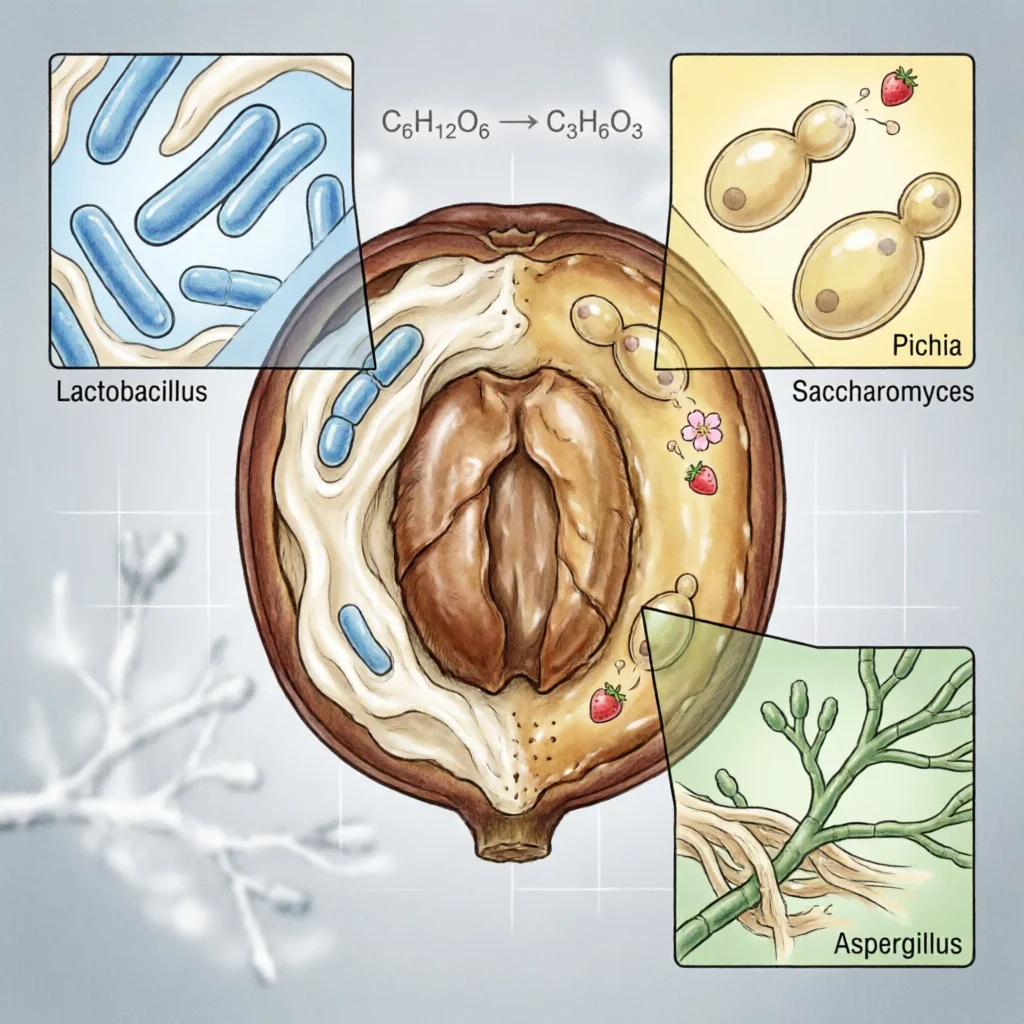
- Lactic Acid Bacteria (LAB): Genera such as Lactobacillus, Leuconostoc, and Pediococcus. They are facultative anaerobes that metabolize sugars (glucose, fructose) primarily into lactic acid via homofermentative or heterofermentative pathways. This action rapidly lowers the substrate pH, inhibiting spoilage organisms and contributing to a perceived clean, sharp acidity in the cup. Heterofermentative LAB also produce acetic acid, ethanol, and CO2.
- Acetic Acid Bacteria (AAB): Genera including Acetobacter and Gluconobacter. They are strict aerobes that oxidize ethanol produced by yeasts into acetic acid. While controlled activity can add desirable winey/vinegar complexity, proliferation is often associated with over-fermentation and defective sourness.
- Enterobacteria: A large family of Gram-negative bacteria (e.g., Erwinia, Klebsiella) prevalent in the early, aerobic stages. They contribute to pectinolytic breakdown but can also produce butyric acid and other compounds linked to fermentative defects if not succeeded by LAB.
Yeast: Eukaryotic Ethanol Producers and Flavor Architects
Yeasts are unicellular fungi that typically dominate the mid-phase of fermentation. Their primary ecological advantage is the production of ethanol and CO2 via the glycolytic (Embden-Meyerhof-Parnas) pathway, creating a selective, mildly anaerobic environment.
- Saccharomyces cerevisiae: The model fermentative yeast, prized for its efficient conversion of sugars to ethanol and CO2. It also produces a wide array of secondary metabolites, notably fruity esters (e.g., ethyl acetate, isoamyl acetate) and higher alcohols, which are direct precursors for roast flavors.
- Non-Saccharomyces Yeasts: This diverse group, including genera like Pichia, Hanseniaspora, Candida, and Torulaspora, is often more prevalent in spontaneous fermentations. They exhibit strong pectinolytic activity, breaking down mucilage structure, and produce unique volatile profiles. Pichia kluyveri, for example, is associated with enhanced fruitiness.
Yeast autolysis at the end of fermentation releases intracellular enzymes and compounds that may further interact with the bean matrix.
Filamentous Fungi: The Pectinolytic Specialists and Potential Threats
Filamentous fungi (molds) play a more nuanced and often detrimental role. Their hyphal growth provides superior penetration and enzymatic secretion capability.
- Aspergillus spp. and Penicillium spp.: These genera are common environmental saprophytes. While some strains produce potent pectinases that aid mucilage degradation, their presence is a major quality concern. Many species are prolific producers of mycotoxins, such as ochratoxin A, which are stable through roasting and pose a significant food safety hazard. Their growth is indicative of poor process control, often linked to slow drying or excessive moisture.
- Rhizopus spp. and Mucor spp.: Often involved in the spoilage of overripe or damaged cherries, contributing to off-flavors and bean degradation.
The functional taxonomy of these groups is not rigid; considerable metabolic overlap and succession exist. For instance, yeasts and LAB can exhibit mutualism, where yeast-produced vitamins stimulate LAB growth, and LAB acidification inhibits bacterial competitors. The precise outcome of fermentation is a direct function of which microbial group’s metabolism becomes dominant at each biochemical phase.
Microbial Metabolism: From Substrate to Sensory Profile
The sensory outcome of fermentation is a direct expression of microbial metabolism. Each group consumes specific substrates within the mucilage, producing distinct metabolites that become locked into the bean’s structure during drying.
- Yeasts (e.g., Saccharomyces, Pichia): Primarily consume sugars (sucrose, glucose, fructose) via glycolysis and the Krebs cycle, producing ethanol, CO₂, and a suite of volatile esters and higher alcohols. Esters like ethyl acetate (pineapple) and ethyl hexanoate (red fruit) are critical for top-note fruitiness.
- Lactic Acid Bacteria (LAB): Convert sugars into lactic acid via homofermentative pathways, sharply lowering pH. Heterofermentative LAB also produce acetic acid, ethanol, and CO₂. Their metabolism emphasizes body, creamy mouthfeel, and stable, yogurt-like acidity.
- Acetic Acid Bacteria (AAB): Oxidize ethanol produced by yeasts into acetic acid (vinegar). In controlled, aerobic conditions, this can add a pleasant winey complexity. In uncontrolled anaerobic environments, it leads to sharp, defective sourness.
This biochemical cascade directly dictates the organic acids, soluble solids, and aromatic precursors available for extraction during brewing.
Quantifying the Impact: Extraction Metrics for Fermented Coffees
Fermentation alters the bean’s cellular structure and soluble compound profile, which manifests in measurable brew parameters. Producers and roasters must adjust protocols to optimize these unique lots.
- Total Dissolved Solids (TDS): Target 1.15% – 1.45%. Intense anaerobic or carbonic maceration coffees often yield higher concentrations of fruity esters and complex sugars, benefiting from a slightly higher TDS (e.g., 1.35%-1.45%) to balance intensity without overwhelming acidity.
- Extraction Yield (EY): Target 18% – 22%. Coffees with high lactic acid content (from LAB) often extract efficiently; aim for the higher end (21%-22%) to maximize sweetness and body. Yeast-dominant, ester-heavy coffees can become unbalanced if over-extracted; stay closer to 19%-20.5%.
- Particle Size: Requires precise calibration. Fermentation can create a more brittle or more dense bean structure. Generally, a slightly coarser grind than usual for a given method can prevent over-extraction of aggressive acids, while ensuring sufficient contact time to solubilize complex aromatics.
Barista’s Field Notes: Addressing Common Struggles
Translating fermentation theory to the cupping table and espresso machine presents clear challenges. Here is a diagnostic guide for common issues.
- “Fermented” on the bag: Distinguish yeast from bacterial signatures. Yeast-driven “fermented” notes are typically clean, effervescent, and fruit-forward (think sparkling wine, ripe berry). Bacterial-driven notes lean savory, funky, or winey (think yogurt, red wine, dried fruit). Context from the producer is key.
- Cheesy/Vinegary Defects (Anaerobic Gone Wrong): Cheesiness indicates butyric acid from clostridial bacterial contamination, often due to low oxygen AND low acidity. Vinegar is pure acetic acid from uncontrolled AAB activity. Both signal a failure to manage anaerobic pH and temperature, allowing spoilage microbes to dominate.
- Steering Fermentation Without a Lab: Producers use sensory and environmental proxies. Time-Temperature-PH is the holy trinity. Monitoring mucilage texture (sliminess), bubble size (small for LAB, larger for yeast), and aroma daily allows for intervention—turning the mass to introduce oxygen (to stimulate yeast over bacteria) or halting fermentation via washing when the target aroma profile is reached.
Pro-Tip: When cupping, a sudden, vibrant fruit note like strawberry or bubblegum that appears as the coffee cools is often the signature of a successful wild yeast (Pichia) fermentation. This is different from the deeper, winey fruit of a long bacterial ferment.
Technical Summary
- Microbial succession (Yeasts, LAB, AAB) dictates the biochemical pathway of fermentation, directly determining the organic acid profile, ester production, and final sensory attributes of the coffee.
- Optimized extraction for processed coffees requires targeting a TDS of 1.15% – 1.45% and an EY of 18% – 22%, with particle size adjusted to account for fermentation-induced changes in bean density and solubility.
- Sensory defects like cheesy (butyric acid) or vinegary (acetic acid) notes are diagnostic for specific microbial contaminations, typically resulting from poor anaerobic environment control.
- Field-based fermentation management relies on monitoring time, temperature, and pH proxies, allowing producers to steer microbial activity through physical intervention without laboratory equipment.
- A distinct, cooling-stage aromatic burst of bright fruit (e.g., strawberry) is a key cupping indicator for a successful, clean wild yeast fermentation, distinguishing it from bacterial-driven profiles.