The Complete Guide to Advanced Coffee Post-Harvest Processing: From Tradition to Precision Fermentation
Introduction: Processing as Coffee’s Third Variable – Why It Now Rivals Origin & Roast
For decades, the primary determinants of coffee flavor and quality were understood to be genetic origin (variety, terroir) and roast profile. Post-harvest processing was largely viewed as a necessary, utilitarian step to stabilize the seed (bean) for transport and roasting. Contemporary specialty coffee research has fundamentally re-evaluated this position. Processing is now recognized as a third, equally potent variable that directly and deliberately shapes the chemical composition and sensory profile of the final beverage. This shift is not merely semantic; it represents a move from processing as a standardized agricultural procedure to processing as a targeted, biochemical intervention.
The impact of processing is profound because it governs the metabolic and microbial transformations of the coffee fruit (cherry) between harvest and the stable, dry seed. These transformations determine the degradation of fruit mucilage, the diffusion of compounds from the fruit into the seed, and the creation of new flavor-active compounds via fermentation. Unlike the fixed variable of origin or the later-stage application of heat in roasting, processing is a dynamic, controllable window where producers can intentionally modulate flavor precursors. Consequently, processing methodologies have evolved from broad traditions (e.g., “washed” or “natural”) into a spectrum of highly controlled techniques, making the understanding of their theoretical foundations essential for any advanced analysis of coffee quality.
Module 1: Historical Foundations – From Sun-Drying to Scientific Control
The historical development of coffee processing reflects an empirical progression from simple preservation to sensory manipulation. All methods share the core objective of reducing the moisture content of the coffee seed from approximately 60% (wet cherry) to 10-12% (stable for storage) while preventing spoilage.
Empirical Origins and Core Methodologies
The earliest and most rudimentary method is the natural or dry process, where whole coffee cherries are sun-dried intact. This method, dictated by water scarcity, relies on the diffusion of sugars and organic acids from the decomposing fruit flesh into the seed during the extended drying period. The controlled fermentation is largely anaerobic and microbial activity is unsuppressed, leading to pronounced fruit-forward and often wilder flavor profiles. The washed or wet process, developed later, introduced a key technological intervention: the mechanical removal of the fruit skin and pulp via a depulping machine, followed by the fermentation of the mucilage-coated seeds in water tanks. This fermentation, primarily driven by indigenous microbes (yeasts, bacteria) consuming the mucilage’s sugars and pectins, is terminated by washing, resulting in a cleaner, acidity-driven flavor profile emphasizing the seed’s intrinsic characteristics.
Theoretical Shift: From Observation to Biochemical Engineering
The historical “choice” between these methods was often resource-based. However, their sensory differences prompted scientific inquiry into the underlying biochemistry. Research identified that processing is not merely a drying operation but a series of controlled spoilage events. Key theoretical concepts emerged:
- Substrate Availability: The form and accessibility of sugars, pectins, and acids in the fruit flesh and mucilage dictate microbial metabolism.
- Microbial Succession: Fermentation is a non-sterile, ecological process involving sequential dominance of yeast, lactic acid bacteria, and acetic acid bacteria, each producing distinct metabolites (e.g., alcohols, organic acids, esters).
- Diffusion and Imbibition: Water-soluble compounds from the fruit, including organic acids, sugars, and phenolic compounds, migrate into the seed’s endosperm during the processing window, altering its precursor landscape.
This theoretical understanding laid the groundwork for the modern era of precision processing. By moving beyond empirical observation to control specific variables—microbial inocula, fermentation temperature, pH, oxygen levels, and duration—producers can now engineer these biochemical pathways with predictable sensory outcomes. Thus, the historical foundations provide the essential framework for analyzing advanced techniques such as anaerobic fermentation, carbonic maceration, and enzymatic processing, which are deliberate manipulations of these core principles.
Engineering the Fermentation Matrix: Variables and Volatiles
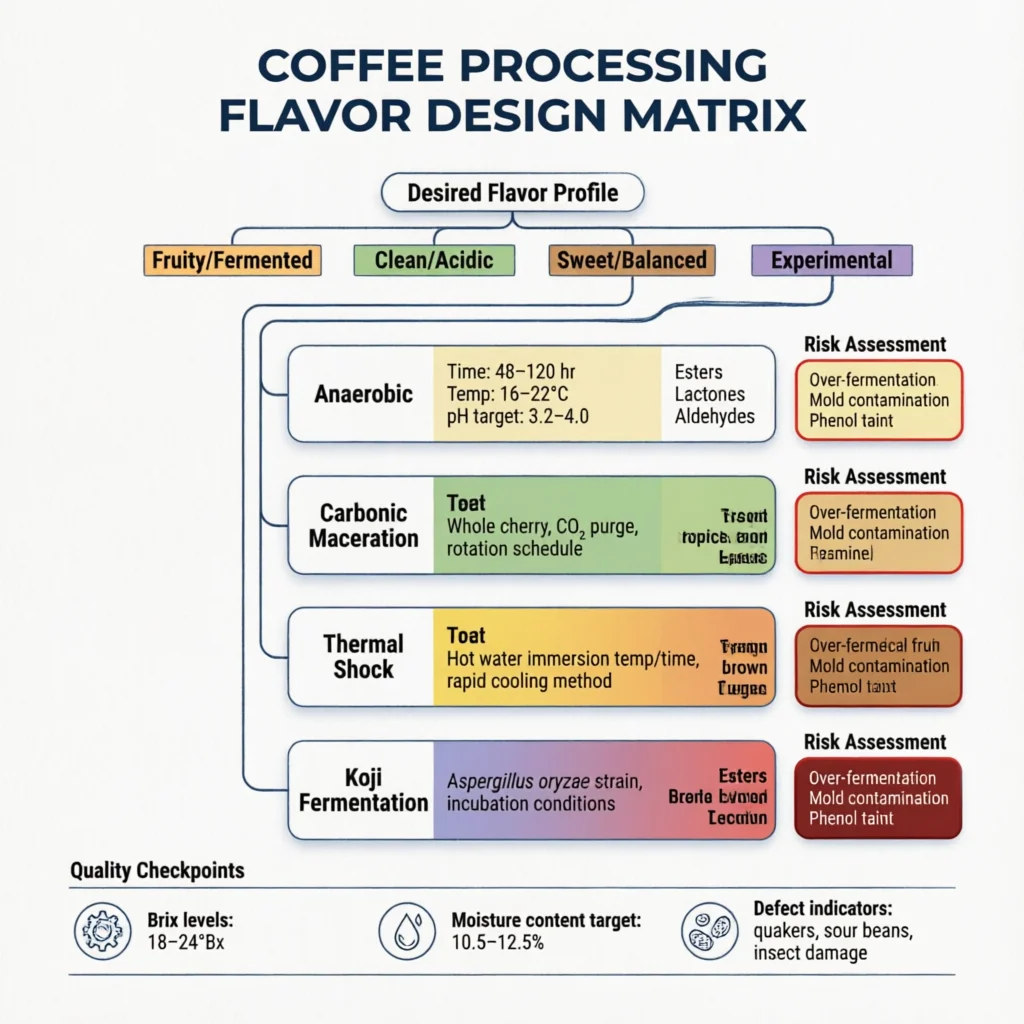
Modern processing techniques function as a controlled biochemical matrix. Each variable we manipulate directly influences the volatile and non-volatile compounds that define flavor. Understanding this matrix allows us to deconstruct marketing terms into tangible science.
- Temperature: Dictates microbial activity. Lower temps (15-20°C) favor slower, lactic acid production (yogurt, cream). Higher temps (30-35°C) accelerate metabolism, risking acetic acid (vinegar) and ethanol dominance.
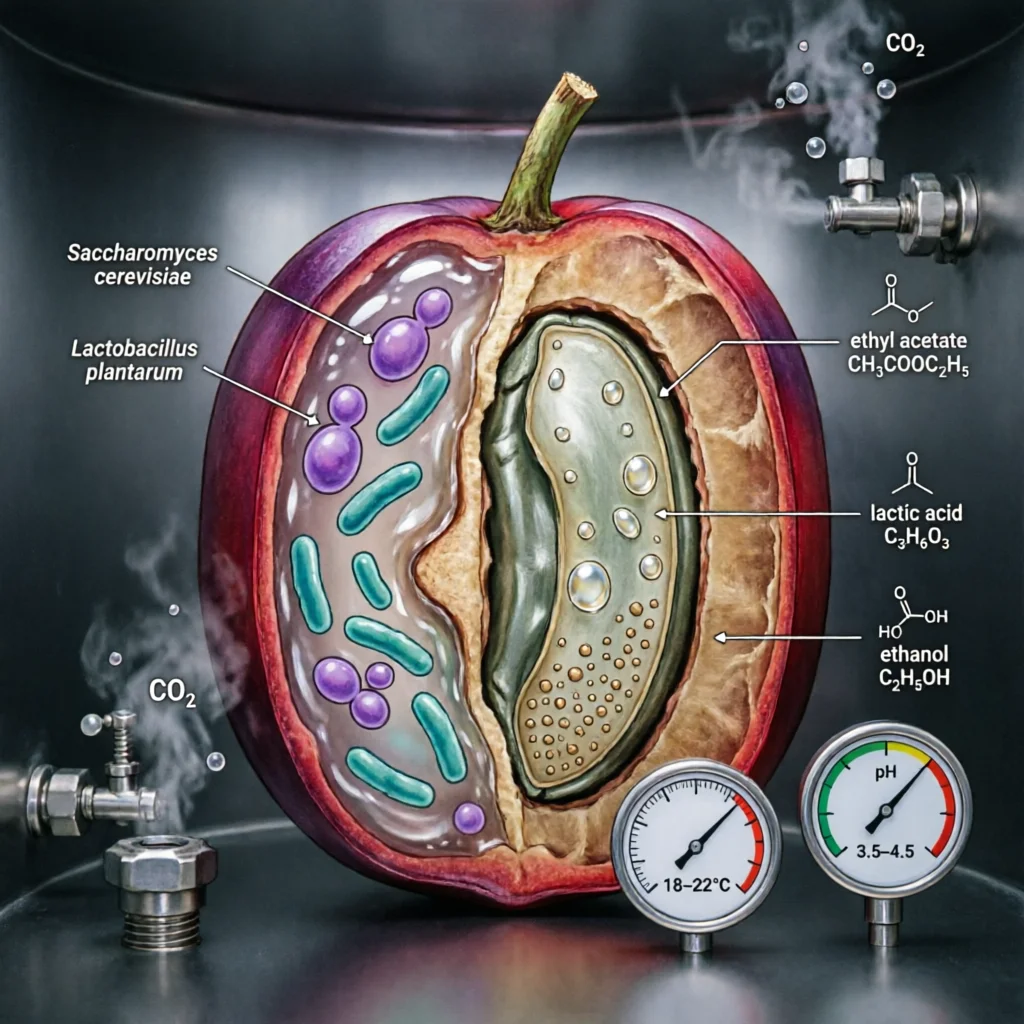
- pH Monitoring: The critical checkpoint. A controlled drop to pH 4.0-4.5 signals clean lactic/malic acid development. A rapid, uncontrolled crash below pH 3.8 often indicates rampant acetic acid production and defect.
- Oxygen Exclusion (Anaerobic): Not a flavor descriptor, but a metabolic switch. It forces microbes into heterolactic fermentation, generating a more complex bouquet of esters (fruit) and acids, while suppressing the growth of molds and aerobic bacteria that cause earthy off-notes.
- Duration: The balancing act. Extended fermentation (120+ hours) increases compound extraction from the mucilage but exponentially raises the risk of microbial byproduct accumulation tipping into defect.
Decoding the Lexicon: Anaerobic, Carbonic, and Enzymatic Processing
Clarity dissolves confusion. These are not synonyms but specific protocols with distinct sensory goals.
- True Anaerobic Fermentation: Cherries or mucilage are sealed in a tank with one-way valves to release CO2. The environment is actively anaerobic from microbial respiration. Sensory profile: High-intensity, winey, often lactic acid-driven (yogurt, ripe cheese).
- Carbonic Maceration (CM): A subset of anaerobic. Whole, intact cherries are placed in a tank pre-flushed with CO2 to create an instantly anaerobic environment from the start. This stresses the fruit, triggering intracellular fermentation within the cherry itself, leading to unique ester profiles (bubblegum, boozy berries) rarely found in other methods.
- Anaerobic Natural: A hybrid. Whole cherries undergo anaerobic fermentation before being dried intact. It combines the intense fruitiness of a natural process with the microbial complexity of an anaerobic environment. Risk of defect is higher if drying is not meticulously managed post-fermentation.
- Enzymatic Processing: The addition of exogenous enzymes (pectinase, cellulase) to break down mucilage and cherry structure at a targeted, accelerated rate. This is not fermentation but hydrolysis, allowing for precise extraction of sugars and precursors for cleaner, often intensely sweet, and specific fruit notes without the microbial risk.
Barista’s Field Notes: Addressing Common Struggles
Twenty years behind the bar and the cupping table reveals the gap between theory and practice. Here’s how to navigate the common pitfalls with processed coffees.
Pain Point 1: Buying an expensive “experimental” coffee that just tastes sour or fermented.
Diagnosis: You likely purchased a lot where fermentation variables (likely temperature or duration) were not controlled, leading to dominant acetic acid. It’s a processing defect, not a feature.
Pain Point 2: Confusion between “anaerobic natural” and “carbonic maceration.”
Clarification: Ask the roaster: “Were the cherries whole and was the tank pre-flushed with CO2?” If yes, it’s CM. If they were sealed to become anaerobic naturally, it’s standard anaerobic. If they were then dried whole, it’s an anaerobic natural.
Pain Point 3: Roasters facing inconsistent density or moisture.
Root Cause: Advanced processing drastically alters bean cellulose structure and moisture migration. Anaerobic beans often have a “spongier” microstructure, absorbing heat differently. You must roast by smell and sound, not just time/temperature curves. A longer drying phase is often critical.
Pain Point 4: Home brewers getting wild extraction swings.
The Fix: These coffees have radically different solubility. You must adjust your parameters:
- Grind: Start 15-20% coarser than for a washed coffee to compensate for higher solubility.
Temperature: Use a lower brew temperature (88-92°C) to tame excessive high-note acidity and avoid extracting harsh phenolics.
Ratio: Consider a slightly higher coffee-to-water ratio (e.g., 1:15) as these coffees can taste hollow at very high extraction yields due to their atypical compound profile.
Pro-Tip: The Processing Defect Isolation Cupping: Brew the same advanced-process coffee at 3 strict temperatures: 88°C, 92°C, and 96°C. Taste systematically. Over-fermentation defects (acetic acid/vinegar, sourness) amplify at lower temperatures. Phenolic defects (medicinal, band-aid, excessive booziness) become harsh and apparent at higher temperatures. A well-executed process will show a harmonious, evolving acidity across the spectrum, not a spike in off-flavors.
Optimizing Extraction for Engineered Coffees
Precision brewing is non-negotiable. The target ranges for washed coffees often fail here. Engineered coffees demand a tailored approach to reveal their intention without highlighting their flaws.
- Total Dissolved Solids (TDS): Target 1.15% – 1.35%. These coffees often present intense flavor at lower concentrations. Pushing beyond 1.4% frequently leads to a muddy, overwhelmingly fermented character, masking clarity.
- Extraction Yield (EY): Aim for 18% – 20.5%. Their altered cellulose structure and compound makeup make them more soluble; chasing a 22% EY often over-extracts atypical compounds, resulting in astringent, chemical-like finishes.
- Particle Size Distribution: Consistency is paramount. A wide distribution will simultaneously under-extract fibrous material and over-extract the more soluble, processed compounds. Use high-quality burrs and sieve if necessary. Target a mean particle size slightly coarser than your standard washed brew to modulate the extraction rate of highly soluble sugars and acids.
Technical Summary
- Advanced coffee processing is the deliberate control of a microbial and biochemical matrix—temperature, pH, oxygen, and duration—to engineer specific sensory outcomes.
- Anaerobic fermentation, carbonic maceration, and enzymatic processing are distinct protocols with defined parameters, not interchangeable marketing terms.
- Roasters must adapt to the altered physical structure of processed beans, prioritizing sensory development over rigid roast profiles to avoid baking or scorching.
- Brewing requires parameter adjustment: coarser grinds, lower temperatures (88-92°C), and moderated TDS (1.15-1.35%) to account for significantly higher and atypical solubility.
- The “Processing Defect Isolation” cupping method (88°C, 92°C, 96°C) is a critical tool for distinguishing intentional processing notes from technical failures like acetic acid or phenolic contamination.