
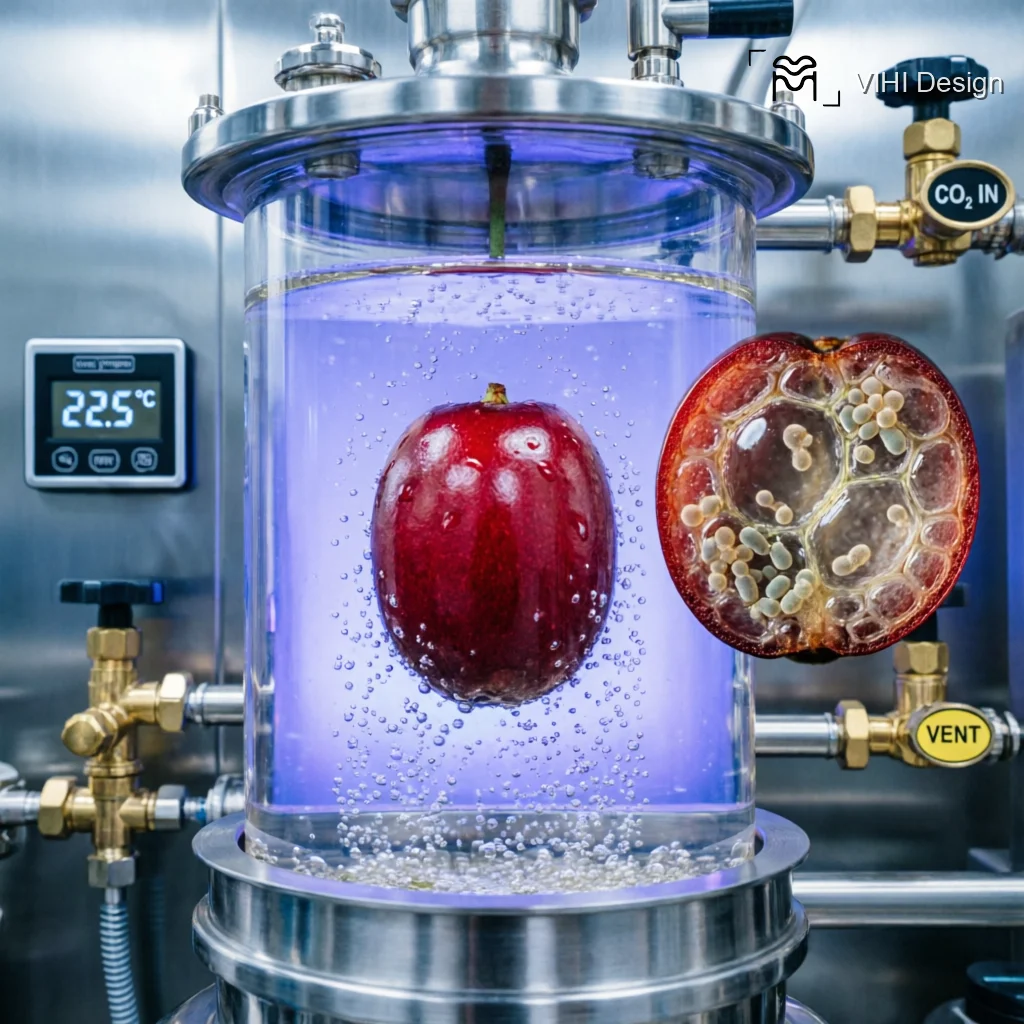
Carbonic Maceration Coffee Explained: From Beaujolais to Your Cup
Introduction: The Beaujolais Connection – How Winemaking’s Carbonic Maceration Revolutionized Specialty Coffee Processing
The post-harvest processing of coffee, a critical determinant of final cup quality and sensory profile, has historically been dominated by three primary methods: the dry (natural), wet (washed), and honey (pulped natural) processes. These techniques fundamentally rely on the metabolic activity of ambient microorganisms present on the cherry and in the environment to drive fermentation. However, the early 21st century has seen the specialty coffee industry engage in intensive experimentation with processing methodologies, leading to the adoption and adaptation of techniques from other food and beverage fermentation sciences. Among these, carbonic maceration, a vinification method traditionally associated with the production of Beaujolais Nouveau wines in France, has emerged as a transformative innovation.
The transfer of this technology represents a significant cross-disciplinary application of biochemical principles. In winemaking, carbonic maceration is employed to produce wines with low tannin extraction, vibrant fruitiness, and reduced acidity. The core objective is to induce an intracellular fermentation within the intact grape berry under a carbon dioxide-rich atmosphere, prior to conventional yeast-driven alcoholic fermentation. Researchers and progressive coffee producers recognized the potential of manipulating the fermentation environment through gas composition to steer metabolic pathways in coffee cherries differently. This deliberate control shifts the process from one dominated by exogenous microbial ecology to one emphasizing the cherry’s endogenous enzyme activity and unique biochemistry under anaerobic conditions.
The implementation of carbonic maceration in coffee processing is not a direct copy of the oenological protocol but a specialized adaptation for the Coffea fruit. Its adoption signifies a move towards more controlled, anaerobic fermentation environments, allowing for the development of distinct sensory profiles often characterized by pronounced fruity, winey, and sometimes fermented notes, with elevated perceived sweetness and body. This methodological shift has revolutionized certain segments of specialty coffee by providing a reproducible framework for creating novel and intense flavor experiences, moving beyond the variability inherent in fully open-air, aerobic fermentations.
The Core Process: Step-by-Step Breakdown of Placing Whole Coffee Cherries in Sealed Tanks, CO2 Flushing, and Controlled Fermentation
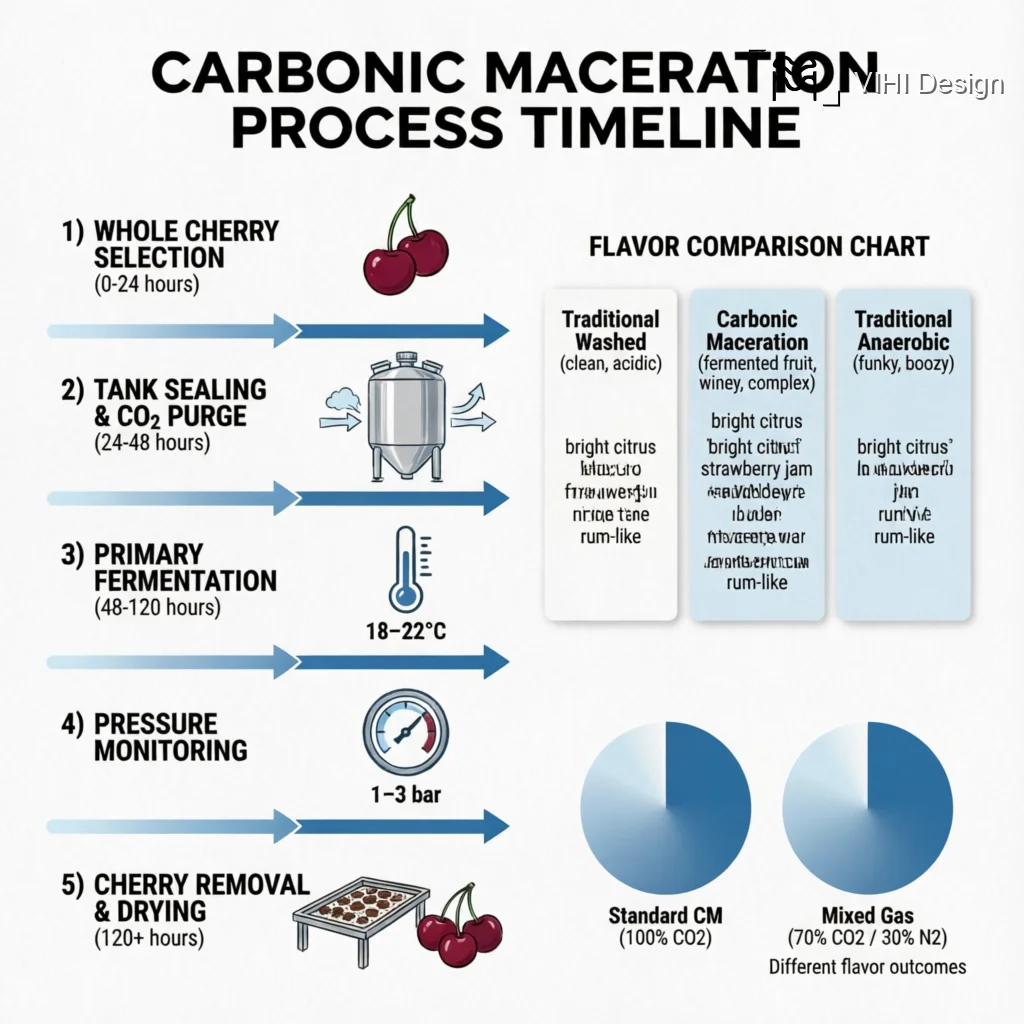
The carbonic maceration process for coffee is defined by the maintenance of an oxygen-depleted, carbon dioxide-saturated environment throughout the primary fermentation phase. This controlled atmosphere is applied to intact, whole coffee cherries. The process can be systematically broken down into sequential phases.
Phase 1: Cherry Selection and Tank Loading
Ripe coffee cherries are meticulously sorted to ensure uniform ripeness and to remove defects. The integrity of the cherry is paramount; the exocarp (skin) and mesocarp (mucilage) must remain unbroken. The whole cherries are then loaded into a fermentation tank. These tanks are specifically designed to be sealed and gas-tight, typically equipped with valves for gas introduction and release, and often with a pressure gauge. The fill level is carefully managed to avoid excessive compression and bruising of the lower layers of fruit, which could lead to uncontrolled juice release and localized aerobic conditions.
Phase 2: Carbon Dioxide Flushing and Atmosphere Establishment
Following sealing, the tank’s internal atmosphere is actively modified. The ambient air (approximately 78% nitrogen, 21% oxygen) is displaced by introducing pure carbon dioxide (CO2) into the tank. This is achieved by pumping CO2 gas into the bottom of the tank, allowing the denser CO2 to displace the lighter oxygen and nitrogen upwards and out through a purge valve. The objective is to achieve an environment with a CO2 concentration exceeding 95%, effectively creating an anaerobic condition. This oxygen exclusion is critical as it inhibits the growth of aerobic bacteria and fungi, selecting for anaerobic or facultative anaerobic microorganisms and triggering intracellular fermentation pathways within the cherry itself.
Phase 3: Controlled Intracellular and Microbial Fermentation
Under the anaerobic, CO2-rich environment, a complex series of biochemical reactions commence. Two primary processes occur concurrently:
- Intracellular Fermentation (Anaerobic Metabolism): Within the living cells of the intact coffee cherry, the lack of oxygen forces a shift from aerobic respiration to anaerobic glycolysis. Endogenous enzymes break down sugars, primarily into ethanol, carbon dioxide, and organic acids (like lactic and succinic acid). This self-fermentation of the fruit contributes directly to flavor precursor development.
- Limited Microbial Activity: Despite the anaerobic conditions, fermentation is not sterile. The environment selects for specific microbial groups, notably lactic acid bacteria (LAB) and some yeasts capable of anaerobic growth. These microbes metabolize sugars and acids, producing a range of metabolites including esters, higher alcohols, and other volatile compounds that define the final aroma and taste profile. The CO2 pressure and low pH from initial fermentation further shape this microbial community.
The duration of this sealed fermentation is a key control variable, typically ranging from 48 to 96 hours or longer, depending on the desired sensory outcome, ambient temperature, and cherry variety. Temperature is closely monitored, as exothermic reactions can increase tank temperature, accelerating metabolism.
Phase 4: Depulping and Drying
After the predetermined maceration period, the tank is depressurized and opened. The cherries are then depulped, removing the skin and most of the mucilage. The remaining parchment coffee, now infused with the metabolites from the carbonic maceration, proceeds to drying. Drying must be carefully managed to stabilize the bean without promoting mold growth or further uncontrolled fermentation, typically aiming for a final moisture content of 10-12%. The result is a processed green coffee bean with a distinct biochemical composition primed for specific flavor development during roasting.
Roasting for Biochemical Potential
Roasting carbonic maceration (CM) coffees demands a precise, responsive approach. The bean’s unique biochemical profile—rich in volatile esters and organic acids from the controlled fermentation—requires a roaster to target specific thermal milestones. We prioritize a gradual, conductive heat application in the drying and yellowing phases to stabilize the elevated moisture content within the parchment. The critical decision point arrives during first crack. Pushing development too far risks baking out the delicate, volatile top notes, while underdevelopment can lock in aggressive acidity. The optimal profile often features a slightly lower charge temperature, a steady ramp, and a truncated development time ratio (often 15-18% of total roast time) to preserve vibrancy while achieving sufficient sugar browning for balance.
Brewing Parameters & Extraction Optimization
Unlocking the intended profile of a CM coffee hinges on moving beyond standard brewing protocols. The bean’s altered structure and solubility profile necessitate tailored extraction strategies.
- Grind Particle Size: Aim for a slightly coarser setting than you would for a washed coffee of the same origin. This mitigates the risk of over-extracting ferment-derived compounds while still allowing for proper dissolution of sugars.
- Total Dissolved Solids (TDS) & Extraction Yield (EY): Target a TDS range of 1.15% – 1.45% and an EY of 18% – 22%. However, prioritize taste over numbers. A CM coffee tasting “clean” at 22% EY is an achievement; one tasting muddy at 19% EY indicates a recipe flaw.
- Water Temperature: Experiment with a lower brew temperature, starting at 88°C – 91°C (190°F – 196°F). This tames aggressive ferment notes and allows fruit clarity to emerge.
- Agitation: Use gentle, controlled agitation. Excessive turbulence can quickly over-extract the more soluble fermented compounds, leading to a harsh, boozy cup.
Barista’s Field Notes: Addressing Common Struggles
Translating processing theory into a stellar cup presents real hurdles. Here are solutions to frequent pain points.
Pain Point: Brewing CM coffee at standard temperatures (e.g., 93°C-96°C) and getting overwhelmingly fermented or sour notes that mask delicate fruit.
Solution: The high solubility of ferment metabolites means they extract rapidly. Lower your water temperature as outlined above. This increases the extraction window for sugars and fruit acids before the harsher compounds dominate. Also, ensure your coffee is rested post-roast (at least 10-14 days) to allow CO2 to dissipate.
Pain Point: Confusing carbonic maceration with traditional anaerobic processing.
Solution: Remember the catalyst: CO2. Traditional anaerobic processing relies on microbial metabolism in an oxygen-free tank to generate CO2. Carbonic maceration injects external CO2 from the start, creating a different biochemical pressure environment from hour one. This often results in a cup with more pronounced, wine-like acidity and cleaner fruit expression compared to the heavier, sometimes funky, profiles of some traditional anaerobics.
Pain Point: Identifying when fermentation has crossed from ‘intentionally winey’ to ‘unpleasantly boozy’.
Pro-Tip: When cupping carbonic maceration coffees, let them cool to 50-55°C (122-131°F) before serious evaluation. The intense fermented notes dominate at hotter temperatures, but as the cup cools, the intricate fruit complexities and subtle wine-like acidity emerge clearly, revealing the true craftsmanship of the processing method. A clean, complex CM coffee will showcase layered fruit (think red grape, raspberry, cherry) and a sparkling acidity at this cooler temperature. A flawed coffee will retain a sharp, solvent-like alcohol note or a dull, fermented sweetness that masks all other attributes.
Sensory Profile & Quality Assessment
A masterfully executed carbonic maceration coffee delivers a specific and replicable sensory experience. Expect a pronounced, often red-fruit dominant aroma (strawberry, cranberry, red grape). The acidity should be bright and wine-like—reminiscent of a Pinot Noir or Beaujolais—rather than a sharp citric or acetic bite. The body tends to be silky and rounded, with a flavor profile that integrates fermented complexity without letting it dominate. The finish is clean, with a lingering fruit sweetness. Defects manifest as overwhelming vinegar (volatile acidity), nail polish remover (ethyl acetate), or a cloying, rotten fruit sweetness indicating uncontrolled microbial activity during processing or drying.
Technical Summary
- Post-maceration, drying targets a final moisture content of 10-12% to stabilize the bean and halt fermentation.
- Roasting requires a modulated heat application and shorter development time to preserve volatile aromatic compounds.
- Optimal brewing targets a TDS of 1.15% – 1.45% and an EY of 18% – 22%, using lower water temperatures (88°C – 91°C) and coarser grinds.
- Sensory evaluation is most accurate at 50-55°C (122-131°F), where wine-like acidity and clean fruit complexity replace dominant fermented notes.
- Distinguish CM from anaerobic processing by its external CO2 injection, which typically yields cleaner, more acidic cups compared to microbially-generated CO2 methods.
“`json
“`
“`json
“`